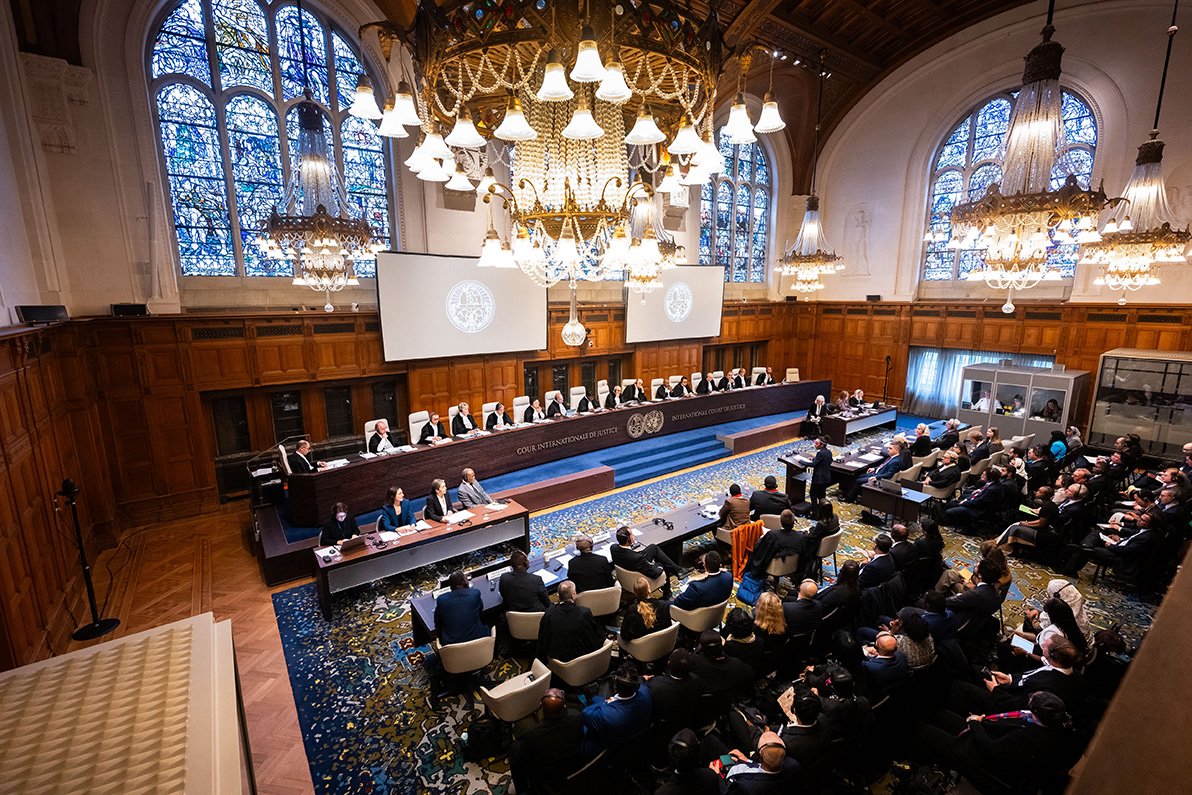




















































The International Court of Justice (ICJ) has scheduled a pivotal hearing for November 24, 2025, to determine whether Guatemala can formally intervene in an ongoing territorial dispute between Belize and Honduras over the Zapotillos Keys, a cluster of coral islands located approximately 52 kilometers off Guatemala’s Izabal coast.
Originally a bilateral case brought by Belize in 2022 to assert sovereignty over the Zapotillos Keys against rival claims from Honduras, the proceedings took an unexpected turn when Guatemala submitted a formal request in December 2023 to participate in the case. Guatemala argues that the disputed archipelago is already included in its long-running maritime and territorial claim against Belize and that any ruling in the Belize-Honduras matter could prejudice its own legal position.
The ICJ has agreed to hold a preliminary hearing to evaluate Guatemala’s request. According to a statement from the Belize Ministry of Foreign Affairs, the court will review whether Guatemala should be permitted to join the proceedings and, if so, will define the extent of its participation to ensure the primary dispute between Belize and Honduras is not derailed.
While Belize has not opposed Guatemala’s intervention, Honduras formally objected, necessitating this additional procedural step. Guatemala’s involvement is limited in scope; it does not seek to alter the core arguments of the Belize-Honduras case but wants to ensure its territorial interests are not adversely affected by any judgment the Court may issue.
The Zapotillos Keys hold geopolitical and economic significance due to their location in the southern Caribbean Sea, with implications for exclusive economic zones, marine resources, and regional navigation rights. These small islands have long been contested in regional diplomacy, and their strategic value has only increased as nations push for clearer maritime boundaries.
The case between Belize and Honduras formally began when Belize filed its claim at the ICJ in November 2022. Belize submitted its memorial in May 2023, and Honduras responded later that year in December. Both nations agreed to proceed to oral arguments without further written submissions, positioning the case for resolution. However, Guatemala’s late-stage request has introduced new legal complexity and could extend the timeline.
Guatemala’s broader territorial dispute with Belize encompasses approximately 11,030 square kilometers of land and maritime territory and has its roots in 18th-century colonial arrangements. The Spanish Crown had granted Britain certain rights for logging in the region, which later evolved into Britain’s control of what became British Honduras—now modern-day Belize. Despite Guatemala’s formal recognition of Belize’s independence in 1991, it has never relinquished its claim to the contested territory.
The Guatemala-Belize dispute has occasionally led to heightened tensions, including violent border incidents involving civilians and security forces. In one such instance, Belizean authorities opened fire on Guatemalan farmers accused of crossing into disputed areas. These incidents have fueled public pressure in both countries and underscored the need for a peaceful legal resolution.
In 2025, Guatemalan President Bernardo Arévalo and Belizean Prime Minister John Briceño met to discuss bilateral relations in light of the ICJ proceedings. Both leaders reaffirmed their commitment to respecting the court’s eventual decisions and maintaining a peaceful diplomatic relationship. Despite the sensitive nature of the dispute, both nations have expressed a preference for resolving their historical disagreements through international legal channels.
Belize’s Office of the Agent confirmed it is working closely with legal counsel to defend the country’s interests in both the ongoing Zapotillos Keys case and the separate litigation with Guatemala. Belize’s government aims to secure formal recognition of its sovereignty over the coral archipelago, a decision that could carry wider implications for regional territorial claims.
While the ICJ’s November hearing will only decide whether Guatemala can formally intervene, the case is already shaping up to be a landmark moment in Central American territorial law. As overlapping maritime and land claims become increasingly common across the globe, the outcome of this case could serve as an important precedent for how such disputes are managed under international law.
The ICJ’s eventual ruling will likely influence not just the legal status of the Zapotillos Keys, but also the political dynamics among Guatemala, Belize, and Honduras. With national pride, historical grievances, and strategic interests at stake, the proceedings will be watched closely by regional actors and international observers alike.