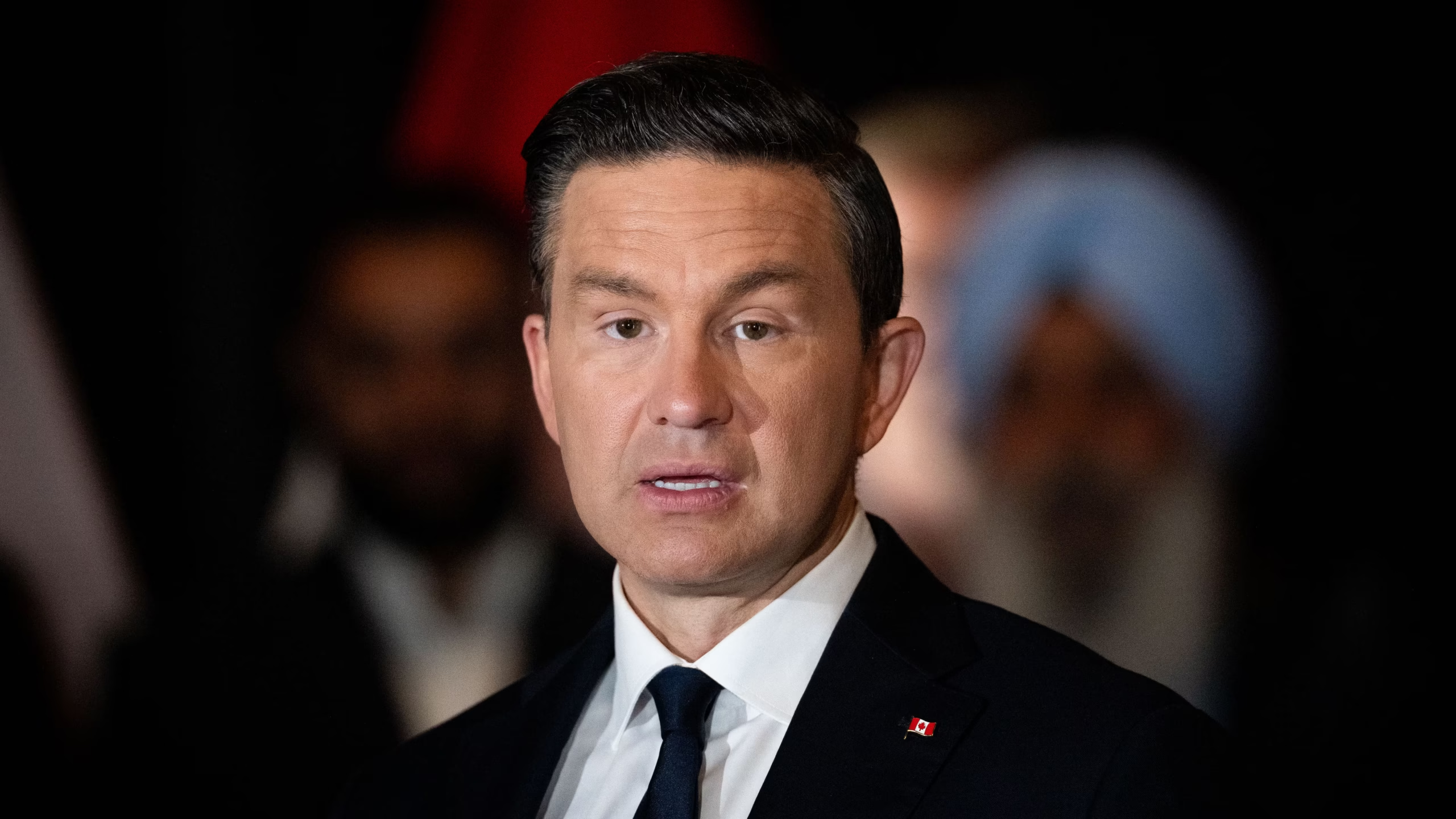




























































Pierre Poilievre, the leader of Canada’s Conservative Party, is poised to make a significant political comeback as he campaigns for a seat in the House of Commons during an upcoming byelection in the rural Alberta constituency of Battle River-Crowfoot. This opportunity arises just four months after Poilievre’s party faced a setback in the federal election held in April, where he lost a riding that he had represented for over two decades.
The byelection, scheduled for Monday, is drawing considerable attention, not only because of Poilievre’s leadership role but also due to the strategic importance of the seat within Alberta. Battle River-Crowfoot is widely regarded as a safe Conservative stronghold, and Poilievre’s candidacy is seen as a chance for him to regain a foothold in federal politics.
Poilievre has been vocal about his aspirations to lead the Conservative Party to success, particularly in light of the party’s performance in the April election, which resulted in a loss to the governing Liberal Party led by Prime Minister Justin Trudeau. The election was marked by a shift in voter sentiment, with many Canadians expressing a desire for change after nearly a decade of Liberal governance. Poilievre’s defeat in his previous riding was a notable blow, given his long tenure and the expectations that came with his leadership.
In the lead-up to the byelection, Poilievre has been actively engaging with constituents, focusing on issues that resonate with rural voters, such as agriculture, economic stability, and local governance. His campaign is expected to highlight the Conservative Party’s commitment to addressing the concerns of residents in Battle River-Crowfoot, which includes a diverse demographic of farmers, small business owners, and families.
The byelection also serves as a crucial test for Poilievre’s leadership and the Conservative Party’s direction. With the party seeking to rejuvenate its image and reconnect with the electorate, Poilievre’s performance in this byelection could provide insights into his ability to galvanise support ahead of the next general election. A victory would not only restore his presence in Parliament but also bolster his position as a leader capable of unifying the party and presenting a compelling alternative to the current government.
As the political landscape in Canada continues to evolve, the Battle River-Crowfoot byelection is emblematic of broader trends affecting the Conservative Party. Voter behaviour has been shifting, with many Canadians increasingly concerned about issues such as climate change, healthcare, and economic inequality. The Conservative Party has been working to adapt its platform to address these emerging priorities, which could influence the outcome of the byelection.
Polling data leading up to the election indicates strong support for Poilievre within the constituency, but the dynamics can change rapidly, especially in a political climate marked by heightened voter engagement and shifting allegiances. The byelection will provide a unique snapshot of public sentiment in Alberta, a province that has traditionally leaned towards conservative candidates but is not immune to the changing tides of Canadian politics.
The results of the byelection will be closely monitored, not only for their implications for Poilievre and the Conservative Party but also for the overarching political landscape in Canada. With the next federal election on the horizon, the outcome could signal whether the Conservatives are poised for a resurgence or if they will need to rethink their strategies to appeal to a broader electorate.