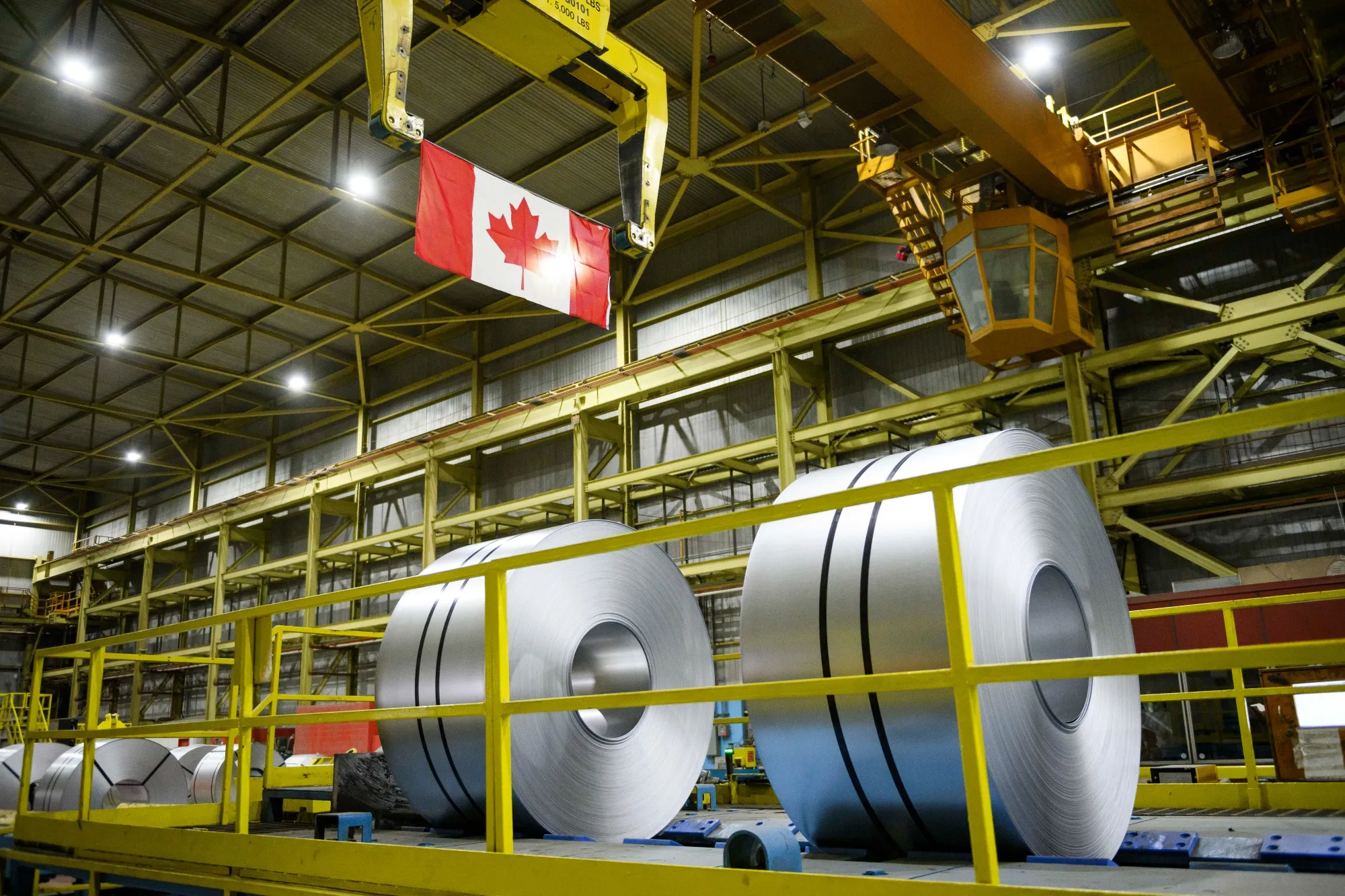




























































Canada is taking decisive steps to protect its domestic steel industry by imposing stricter limits on foreign steel imports. Prime Minister Mark Carney announced the measures during a press conference in Ontario, stating that the country must act to shield its manufacturers from the economic fallout of U.S. tariffs first introduced under President Donald Trump.
The new policy will tighten Canada’s tariff-rate quotas on steel imports from countries that do not have a free trade agreement with Canada. The quotas will be reduced from 100% to 50% of the volume imported in 2024. Any imports exceeding that threshold will face a 50% tariff. The government also plans to apply additional duties to steel products from non-U.S. countries if the steel was melted and poured in China, targeting the growing influence of Chinese materials in global markets.
Carney emphasized the unsustainable level of dependency Canada currently has on foreign steel. According to recent data, nearly two-thirds of all steel consumed in the country is imported, while more than 90% of Canada’s steel exports go to the United States. This high exposure has made the Canadian industry vulnerable to abrupt policy changes across the border. Carney warned that U.S. tariffs may remain in place even if new trade agreements are established, underscoring the importance of reducing economic reliance on the American market.
The changes reflect a broader effort by Canada to recalibrate its trade strategy, placing greater emphasis on domestic production and economic resilience. As part of this shift, Carney announced that the federal government will revise its procurement policies to mandate the use of Canadian steel in major national infrastructure projects. These include housing construction initiatives and upgrades to the country’s defense sector. The prime minister noted that ensuring public funds support domestic industries is a way of strengthening the Canadian economy from within.
Industry leaders have welcomed the move. Catherine Cobden, president and CEO of the Canadian Steel Producers Association, described the policy as a much-needed boost for the sector. She cited a 30% drop in steel production since the U.S. tariffs were introduced, highlighting the urgency of government intervention. Cobden expressed optimism that prioritizing homegrown steel would help the industry recover and thrive.
The move to curb foreign steel imports also aligns with growing global concerns about unfair trade practices, particularly from China. For years, countries around the world have accused China of overproducing steel and dumping it into international markets at below-market rates. This has put pressure on local industries and distorted market conditions. Canada’s decision to impose additional tariffs on Chinese-origin steel reflects a shift toward defending strategic economic sectors.
Carney’s announcement marks a significant policy pivot as Canada seeks to balance its trade portfolio and invest in long-term industrial strength. Although free trade remains a key principle of the Canadian economy, the events of recent years have illustrated the need for safeguards when market openness threatens domestic capacity.
With major infrastructure and housing projects planned in the coming years, the increased demand for steel presents an opportunity for local manufacturers to rebuild. Government policy now aims to ensure that these opportunities directly benefit Canadian workers and businesses. The shift also sends a message to global trading partners that Canada will take action to protect its industries when necessary.
While the future of Canada-U.S. trade relations remains uncertain, these new measures provide a clear path forward for the Canadian steel sector. By reducing reliance on foreign supply, curbing potentially harmful imports, and supporting national production, the country is working to build an economic environment that is both competitive and self-sustaining.
In the words of Prime Minister Carney, this is about giving Canadians more than any foreign policy decision can take away. The focus now is on creating jobs, building infrastructure, and reinforcing national industries—starting with steel.