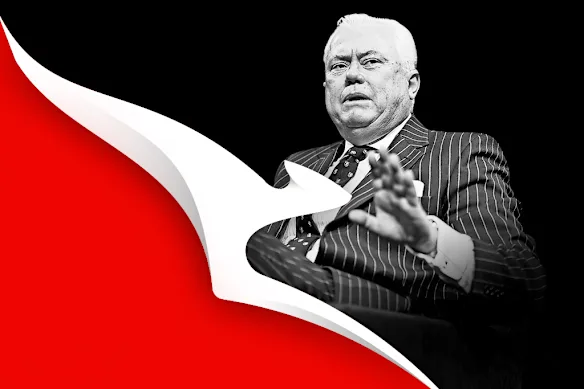




























































In a recent judicial proceeding, Justice Michael Lee showcased his formidable rhetorical skills while delivering a scathing critique of Qantas Airways. His remarks, which oscillated between poetic eloquence and sharp, incisive commentary, have resonated widely, prompting discussions about corporate accountability and the responsibilities of major airlines in Australia.
Justice Lee’s approach to the case was marked by a striking juxtaposition of language that vacillated from the elegantly crafted to the acerbically blunt. At times, his words seemed to flow with the grace of a feathered quill, evoking imagery and emotion that underscored the gravity of the airline’s actions. Yet, in other moments, his statements cut through the air like a sword, delivering pointed criticisms that left little room for misinterpretation.
The case in question highlights significant issues surrounding Qantas, particularly in relation to its treatment of customers and its operational decisions during challenging times. The airline, which has long been a staple of Australian air travel, faced scrutiny over its handling of flight cancellations and customer service complaints, especially during the tumultuous period of the pandemic. This scrutiny has been exacerbated by the broader context of the airline industry’s recovery from the impacts of COVID-19, which has seen many carriers struggling to regain their footing while also addressing the heightened expectations of consumers.
Justice Lee’s comments have sparked a broader conversation about the ethical obligations of airlines, not just to their customers but also to the wider community. As travel resumes and demand for air services increases, the expectation for transparency, accountability, and fairness has never been more critical. Airlines are being called upon not only to ensure safety and reliability but also to foster trust and goodwill among their passengers.
The rhetoric employed by Justice Lee serves as a reminder of the power of language in legal settings, particularly when addressing issues that resonate deeply with the public. His ability to articulate the nuances of the airline’s failures while simultaneously engaging with the emotional weight of the situation reflects a profound understanding of not only the law but also the societal context in which these companies operate.
This case also underscores the challenges faced by the aviation sector as it navigates a post-pandemic landscape. With many airlines grappling with staff shortages, operational disruptions, and customer dissatisfaction, the pressure is mounting to restore faith in air travel. Qantas, as one of the largest carriers in the region, is at the forefront of this challenge, tasked with not only rectifying its immediate issues but also redefining its corporate ethos in a rapidly changing environment.
As the proceedings continue, the implications of Justice Lee’s critique will likely reverberate beyond the courtroom. Stakeholders in the aviation industry, including regulators and consumer advocacy groups, may feel compelled to reassess existing frameworks governing airline operations and customer rights. This case could potentially serve as a catalyst for reform, prompting a reevaluation of how airlines engage with their customers and the standards to which they are held.
In the broader context of global aviation, similar issues have emerged in various regions, highlighting a trend where airlines are increasingly held to account for their practices. The pandemic has acted as a magnifying glass, exposing weaknesses in customer service and operational resilience that were previously overlooked. As competition intensifies and new players enter the market, established airlines like Qantas may find it necessary to adopt more consumer-centric policies to remain viable.
The unfolding situation with Qantas and Justice Lee’s incisive commentary may well mark a pivotal moment in Australian aviation history. As the industry strives for recovery, the lessons gleaned from this case could inform future practices and policies, ultimately shaping a more responsible and responsive airline sector. The dialogue initiated by Justice Lee’s remarks will likely encourage both consumers and regulators to demand higher standards of accountability and service from airlines, ensuring that the interests of passengers are prioritised in an industry that is critical to both the economy and the social fabric of Australia.