




















































A historic climate lawsuit brought by two Indigenous elders from the Torres Strait Islands has been dismissed by the Federal Court of Australia, marking a major legal setback for communities on the frontline of climate change. The case, filed by elders Pabai Pabai and Paul Kabai in 2021, alleged that the federal government had failed in its duty to safeguard their island homes from the worsening impacts of climate change.
The court accepted extensive evidence of rising sea levels, loss of cultural heritage, and environmental degradation across the Torres Strait. However, Justice Michael Wigney ruled that decisions around national climate policy are a matter for Parliament and not something the courts can adjudicate. While he acknowledged that the islands and their inhabitants face significant danger due to climate change, he concluded that current Australian negligence law does not impose a legal duty on the government to protect communities from such harm.
The Torres Strait Islands, located between northern Queensland and Papua New Guinea, are home to about 4,000 people, the vast majority of whom identify as Indigenous. The case focused on the existential threat facing the islands, particularly from rising sea levels, storm surges, and salinity intrusion. The plaintiffs argued that if stronger climate action is not taken, their culture, language, and ancestral connection to land and sea would be irreparably damaged.
The legal team for the elders presented data showing sea levels in the Torres Strait have been increasing at a rate nearly double the global average, rising by roughly six centimeters per decade between 1993 and 2019. They also highlighted the deep spiritual and cultural bond residents have with their land, a connection known as Ailan Kastom, which is central to the identity of Torres Strait Islander people.
Justice Wigney acknowledged the emotional testimony of both elders, who shared stories of lost fishing grounds, seawall breaches, and the erosion of traditional burial sites. Uncle Paul recalled his childhood memories on Saibai Island, describing it as a land once rich with fish and freshwater swamps. But as sea levels rise and saltwater penetrates inland, those ecosystems have collapsed. A king tide in 2020 destroyed homes and crops, despite a seawall built just three years earlier.
Despite sympathizing with their plight, the judge emphasized that claims involving government policy decisions, including emissions targets, fall outside the bounds of judicial enforcement. He further noted that while the previous government had largely ignored climate science in shaping its policy, the current administration under Prime Minister Anthony Albanese had adopted more ambitious climate targets.
Following the verdict, both elders expressed deep disappointment. Uncle Pabai said he felt heartbroken for his community, while Uncle Paul said he was stunned by the outcome, describing the result as a painful blow not just to Torres Strait Islanders but to all communities suffering from climate change.
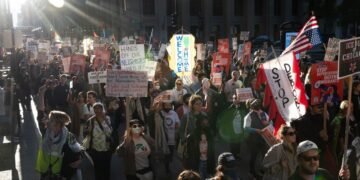
The case drew national and international attention, with many seeing it as a pivotal moment in climate justice. Legal experts noted that although the case was dismissed, it sets the stage for future appeals and broader legal reform. Some pointed to the evolving international legal landscape, including rulings in the Netherlands and findings by the UN Human Rights Committee, which have held governments accountable for climate inaction.
Australian legal scholars and environmental advocates say the decision exposes critical gaps in the country’s legal framework. While the court recognized the science and the reality of cultural loss, it ultimately ruled that current laws are inadequate for providing protection or remedies. Many are now calling for legislative reform to recognize the right to a safe environment and to impose legal obligations on the government to respond to the climate crisis.
Government ministers responded by reaffirming their commitment to addressing climate change. In a joint statement, Australia’s Minister for Climate Change and Energy Chris Bowen and Minister for Indigenous Australians Malarndirri McCarthy acknowledged the vulnerability of the Torres Strait and said that unlike the former government, the Albanese administration is taking meaningful action to reduce emissions and support affected communities.
Academics from the University of New South Wales argued that the ruling should not be seen as the end of the road. They emphasized that Australian law must evolve to meet the growing challenges posed by the climate emergency. While the court ruling was a disappointment for many, it has sparked renewed energy in the climate justice movement, with legal advocates and community leaders preparing to explore other legal avenues and potentially bring the case to international forums.
Though the judgment was not in their favor, the elders have not given up. They have issued an open invitation for Prime Minister Albanese to visit their islands and see the impact of climate change firsthand. Their message is clear: the fight for their home, culture, and future continues.