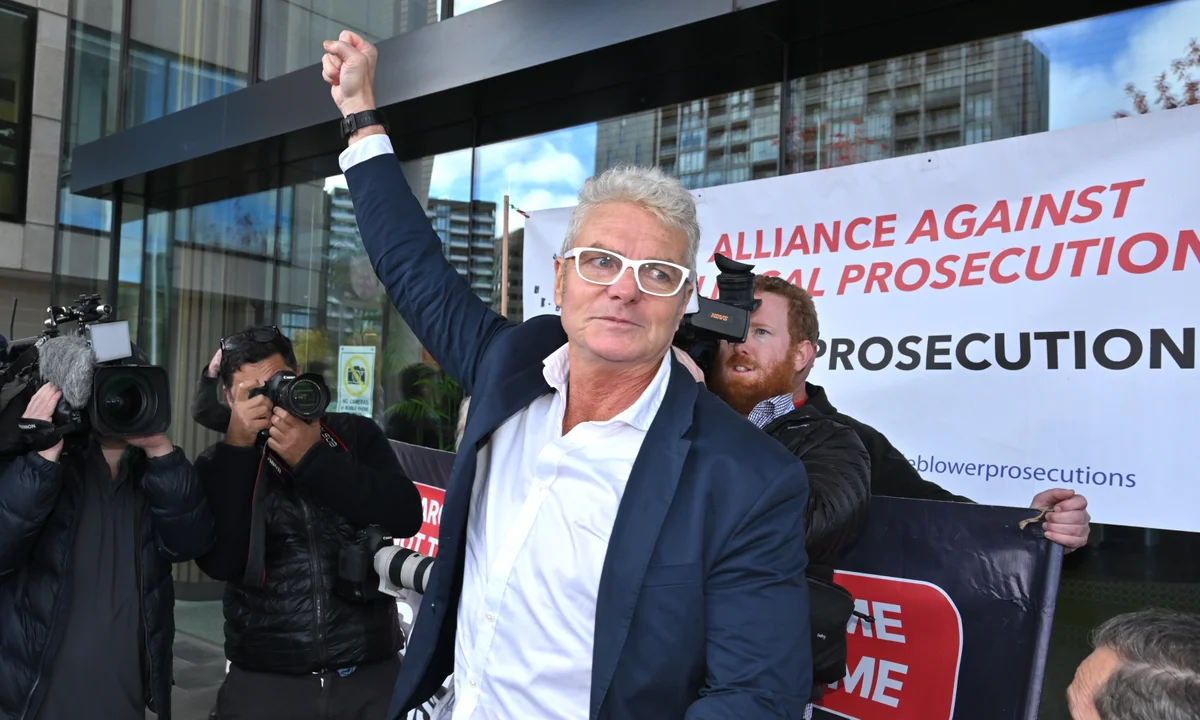







































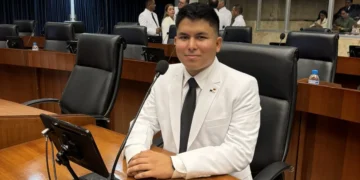










Former Australian military lawyer David McBride has lost his appeal to reduce a prison sentence handed down for leaking classified documents that exposed alleged war crimes committed by Australian forces in Afghanistan. The ruling was delivered unanimously by three judges in the Australian Capital Territory Court of Appeal, who upheld McBride’s five-year and eight-month jail term.
McBride, 61, was sentenced in May 2024 after pleading guilty to charges including theft and unauthorised disclosure of secret defence files. Between 2014 and 2018, he provided hundreds of sensitive documents to three journalists, material that would later become the basis of the ABC’s 2017 investigative report known as The Afghan Files. The series detailed disturbing accounts of potential war crimes, including unlawful killings and other misconduct by Australian special forces during deployments in Afghanistan.
The appeal judges rejected arguments that McBride’s actions were motivated by a duty to the public. In their written ruling, they emphasized that his military oath required him to act according to the law, not his personal judgment of the public interest. McBride had argued that his conscience and commitment to the Australian people justified his decision to leak the material, but the court dismissed this defence.
McBride stated through his lawyers that he was disappointed by the outcome and reaffirmed his belief that he acted honorably. “It is my own conscience and the people of Australia that I answer to,” he said in a statement. “I have kept my oath to the Australian people.”
His legal team has now confirmed plans to take the matter to Australia’s High Court. They argue that the case raises significant public interest and constitutional issues, particularly concerning the treatment of whistleblowers and the balance between national security and public transparency.
McBride’s lawyers have also called for a pardon from Australia’s Attorney-General, Michelle Rowland. Although her office has not commented on the specifics of the case, it confirmed that broader protections for public sector whistleblowers are under review.
The Human Rights Law Centre expressed concern over the court’s decision, calling it a missed opportunity to acknowledge the importance of whistleblowing in a democratic society. Kieran Pender, the centre’s associate legal director, said the case highlighted the ongoing failure of Australia’s legal system to protect those who expose wrongdoing. “That the first person to go to jail in relation to Australian war crimes in Afghanistan is the whistleblower is a national shame,” Pender said in a recent statement.
The documents leaked by McBride contributed to the public pressure that led to the Brereton Inquiry, a comprehensive investigation into alleged misconduct by Australian troops in Afghanistan. The inquiry’s 2020 report found credible evidence of at least 39 unlawful killings and recommended referrals for criminal investigation. However, to date, only one soldier has been charged. McBride remains the only person imprisoned in relation to the disclosures.
McBride will be eligible for parole after serving two years and three months of his sentence, which means he must remain in custody until at least August 2026. His upcoming High Court challenge is expected to reignite national debate on the rights of whistleblowers and the ethical responsibilities of those who serve in government and military institutions.
Legal experts suggest the High Court may now be asked to consider whether Australia’s current legal framework adequately protects whistleblowers who act in the public interest, especially in cases where state secrecy shields potential human rights violations from scrutiny.
The case is increasingly viewed as a pivotal moment in Australian legal and political history—one that will influence future whistleblower protections and the extent to which individuals are empowered or punished for revealing uncomfortable truths.