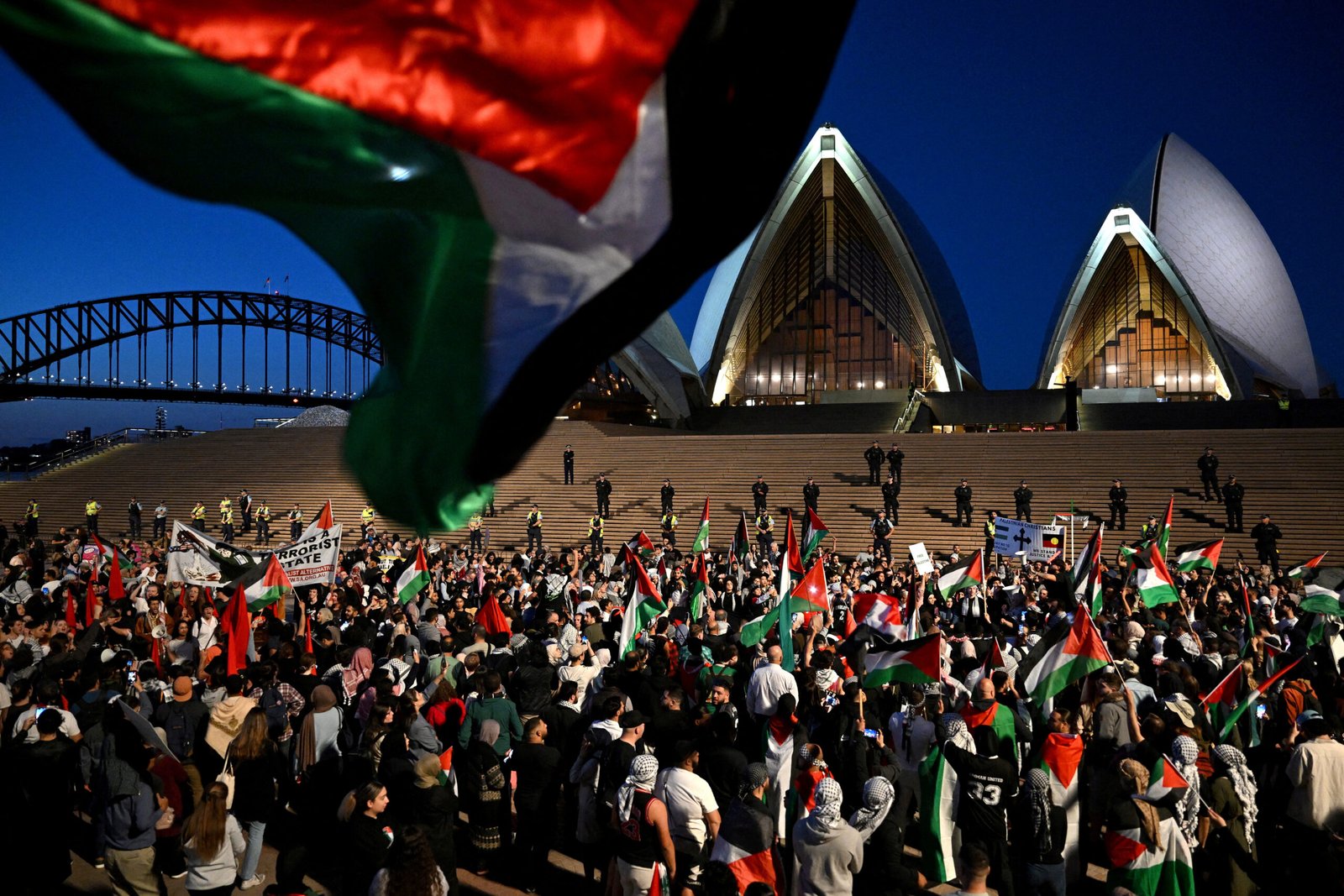




























































In a significant step towards a two-state solution, Australia has announced its intention to formally recognise the state of Palestine next month. The Prime Minister, Albanese, has stated that this move is a part of a ‘coordinated global effort’ to resolve the longstanding Israel-Palestine conflict. Furthermore, there is speculation that the militant Islamist group, Hamas, may not be involved in the state’s formation.
The Israel-Palestine conflict, a deeply rooted dispute with religious, political, and ethnic dimensions, has been a critical issue in international politics for over a century. Originating from competing nationalist movements, the Zionist movement seeking a homeland for the Jewish people, and the Arab nationalism striving for self-determination, the conflict has seen several failed peace initiatives, wars, and innumerable casualties. Central to this dispute is the question of Palestinian statehood, which has been a contentious issue among global powers.
Australia’s move to recognise Palestine’s statehood is a significant development in this context. It signals a shift in Australia’s traditional stance, which has generally been supportive of Israel. This change in policy could potentially influence other countries to reconsider their positions on the issue. Australia’s decision can thus be seen as part of an international effort to advance the two-state solution, which envisages the coexistence of Israel and an independent Palestinian state living side by side in peace and security.
However, the issue of Hamas’s potential role in the new state raises questions. As a group that has been designated a terrorist organisation by several countries, including the United States and the European Union, Hamas’s involvement could complicate matters. Its history of conflict with the Palestinian Authority, the interim self-governing body in the West Bank and Gaza Strip, could pose challenges to the establishment and governance of the new state.
Meanwhile, New Zealand’s Foreign Minister has hinted that his country might also recognise Palestine as a state, stating that it is a ‘matter of when, not if.’ Like Australia, New Zealand has traditionally been supportive of Israel. However, in recent years, there has been growing international pressure for a resolution to the Israel-Palestine conflict, compelling countries to reassess their stances. New Zealand’s potential recognition of a Palestinian state would further bolster the international momentum towards a two-state solution.
Australia’s and New Zealand’s potential recognition of Palestine underlines the changing dynamics of the Israel-Palestine conflict and the growing international push for a resolution. A two-state solution, if successfully implemented, could end one of the world’s longest-running conflicts and bring much-needed stability to the region. However, the road to achieving this solution remains fraught with challenges, not least the question of how to ensure the peaceful coexistence of Israel and Palestine with established and secure borders.
These developments will undoubtedly have significant implications for the region and the broader international community. They will influence not only the course of the Israel-Palestine conflict but also international relations and diplomacy more broadly. As these events unfold, the world will be watching closely to see whether these moves towards recognition will indeed pave the way for a peaceful resolution of the Israel-Palestine conflict.