


























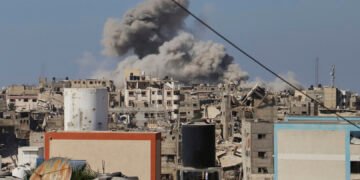



























Australia has joined a chorus of international voices sharply criticizing Israel’s conduct in Gaza, as the civilian death toll climbs and access to humanitarian aid continues to be restricted. In a strongly worded joint statement issued alongside 27 other nations — including the UK, Canada, France, and Japan — but notably excluding the United States and Germany, Australia denounced what it described as Israel’s “inhumane killing of civilians” and “drip feeding of aid” into the war-ravaged territory.
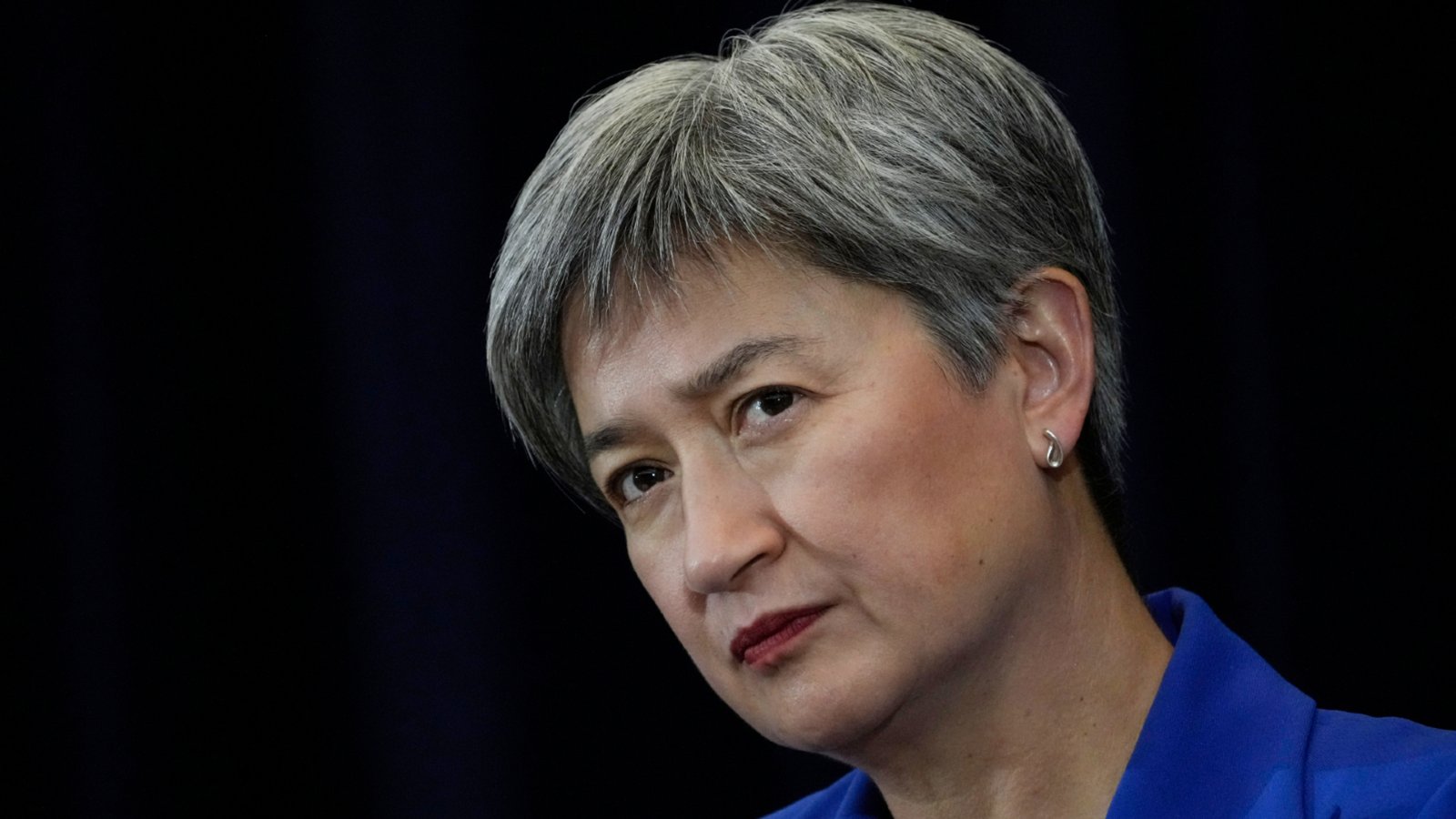
Foreign Minister Penny Wong co-signed the declaration, which comes amid intensifying global scrutiny of Israel’s military campaign. The statement condemned the deaths of more than 800 Palestinians who were reportedly killed while waiting in line for food and water. The conflict, which reignited following the October 7, 2023, Hamas-led attacks on Israeli civilians, has since claimed the lives of tens of thousands of Palestinians, according to the Gaza health ministry.
“It is horrifying that over 800 Palestinians have been killed while seeking aid,” the joint statement read. “The Israeli government’s denial of essential humanitarian assistance to the civilian population is unacceptable. Israel must comply with its obligations under international humanitarian law.”
This coordinated condemnation marks a significant shift in tone from earlier Western responses, which were initially tempered by the global outcry over the October 7 attacks. Many governments expressed solidarity with Israel and a shared recognition of wrongdoing on both sides. However, the prolonged military operations, widespread destruction of civilian infrastructure, and growing reports of deaths at aid distribution sites have increasingly placed Israel’s actions under international fire.
Australia’s Prime Minister Anthony Albanese has also toughened his language, calling Israel’s recent conduct in Gaza “completely indefensible.” Speaking over the weekend, Albanese warned that Israel risked further isolation from the international community if it continued on its current trajectory.
Despite growing condemnation, Israel has remained defiant. Its foreign ministry dismissed the joint statement as “disconnected from reality” and claimed it sent the wrong message to Hamas. The Israeli government blamed the Palestinian militant group for the collapse of ceasefire negotiations and maintained that its actions were in response to ongoing security threats.
In Washington, the U.S. response remained muted. President Donald Trump, who maintains a close relationship with Israeli Prime Minister Benjamin Netanyahu, has shown little willingness to exert pressure on Tel Aviv. His administration has backed Israel’s humanitarian aid coordination with the controversial Gaza Humanitarian Foundation (GHF), which operates through military zones and private contractors, raising concerns over transparency and efficiency.
U.S. Ambassador to Israel Mike Huckabee denounced the joint statement as “disgusting,” signaling continued American support for Israel despite global concern.
However, other Western leaders expressed dismay. UK Foreign Secretary David Lammy criticized the new Israeli-led aid scheme, calling it “a grotesque spectacle.” He demanded accountability for the killing of civilians at aid distribution sites, asking, “What possible military justification can there be for strikes that have killed desperate, starving children?”
Public demonstrations across Australia reflect growing calls for more decisive action. Outside Parliament House in Canberra, humanitarian organizations and Palestinian advocacy groups urged the government to go beyond diplomatic rebukes. They are demanding a complete halt to military cooperation with Israel, a ban on trade with Israeli settlements in the Occupied Territories, and the immediate and unrestricted delivery of humanitarian aid to Gaza.
Critics argue that symbolic condemnation is not enough. They want Australia to push for targeted sanctions through the United Nations Security Council, particularly against Israeli officials accused of war crimes and crimes against humanity. Proponents say such action would reinforce international law and hold Israel accountable in a manner consistent with Australia’s commitments to human rights.
Amid this growing backlash, the humanitarian situation in Gaza continues to deteriorate. The United Nations has warned of widespread starvation, with 90,000 women and children in urgent need of treatment. The World Food Programme (WFP) reported that nearly one in three people in Gaza is going without food for days, with malnutrition rapidly rising.
A spokesperson for Gaza’s Hamas-run health ministry said over 18 people died of starvation in a single 24-hour period, adding to the grim tally. Hospitals, particularly in northern Gaza, remain overwhelmed. At Shifa Hospital in Gaza City, medical staff described a relentless stream of casualties and dwindling supplies.
The Israeli military recently issued evacuation orders for parts of central Gaza, particularly in Deir al-Balah, a densely populated city already hosting thousands of displaced families. Leaflets were dropped from aircraft, instructing residents to move towards al-Mawasi on the Mediterranean coast. The Israeli Defense Forces (IDF) claimed the evacuations were necessary to “eliminate terrorist infrastructure,” but many fear the move signals the onset of a new ground offensive.
Some Israeli sources believe Hamas is holding hostages in Deir al-Balah, which has so far been spared from a major ground assault. At least 20 of the remaining 50 hostages taken during the October attacks are believed to still be alive.
With tensions escalating and the humanitarian crisis worsening, pressure is mounting on Western governments to transition from words to action. The credibility of international law, as Palestinian Prime Minister Mohammad Mustafa recently stated, depends on its universal application — “without exception and without delay.”
As Australia adds its voice to the growing international condemnation, the world watches to see whether governments will take tangible steps to influence Israel’s conduct — or whether expressions of outrage will remain largely symbolic in the face of one of the 21st century’s most devastating conflicts.