


























































New Free Trade Agreement Between Indonesia and Peru Highlights South-South Collaboration
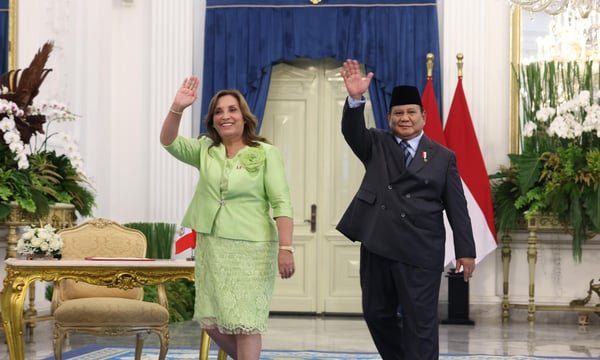
In an increasingly competitive global landscape, particularly marked by the rivalry between the United States and China, a new free trade agreement (FTA) between Indonesia and Peru is emerging as a significant example of South-South cooperation. This agreement, known as the Indonesia-Peru Comprehensive Economic Partnership Agreement (IP-CEPA), aims to enhance economic ties and trade flows between the two nations, showcasing how countries in the Global South can collaboratively navigate their economic futures.
The IP-CEPA is designed to eliminate tariffs on a wide range of goods, thereby facilitating smoother trade and investment between Indonesia and Peru. This initiative reflects a growing trend where developing countries seek to bolster their economic relationships independently of traditional powers, responding to the shifting dynamics of global trade that have been influenced by the policies of larger economies.
Indonesia, as Southeast Asia’s largest economy, and Peru, a key player in South America, share several economic interests that the FTA seeks to capitalise on. Both nations are rich in natural resources, with Indonesia being a significant producer of palm oil, rubber, and minerals, while Peru is known for its copper, gold, and agricultural exports. By reducing trade barriers, the IP-CEPA allows both countries to diversify their markets and enhance their export capabilities.
The agreement is not only about trade in goods; it also encompasses services, investment, and cooperation in various sectors, including technology and innovation. This holistic approach aims to foster a more comprehensive economic partnership that goes beyond mere trade statistics, encouraging deeper collaboration in areas such as education, infrastructure development, and sustainable practices.
The impetus for this bilateral agreement stems from a shared recognition among developing nations of the need to create strong economic partnerships that can withstand external pressures. As global supply chains continue to evolve and the influence of major powers fluctuates, smaller economies like Indonesia and Peru are taking proactive steps to secure their economic interests. This FTA can be viewed as a strategic move to enhance their bargaining power on the international stage.
Moreover, the IP-CEPA is indicative of a broader movement towards regional integration among developing countries. It aligns with various initiatives across the Global South aimed at fostering economic resilience and reducing dependency on traditional markets. For instance, similar agreements have been seen in Africa and Asia, where countries are increasingly looking inwards to strengthen intra-regional trade and investment.
The timing of the IP-CEPA is also significant, as it occurs amid rising protectionist sentiments in various parts of the world. As countries grapple with the economic fallout from the COVID-19 pandemic and the ongoing effects of geopolitical tensions, the need for robust and flexible economic partnerships has never been more pressing. By establishing this agreement, Indonesia and Peru are not only enhancing their economic prospects but also setting a precedent for other developing nations to follow suit.
In terms of implementation, both governments have expressed commitment to ensuring that the benefits of the agreement are realised swiftly. This includes setting up mechanisms for monitoring trade flows and addressing any potential challenges that may arise as the agreement takes effect. Additionally, both parties are expected to engage in regular dialogues to ensure that the agreement remains relevant and responsive to changing economic conditions.
The success of the IP-CEPA could inspire other nations to explore similar partnerships, paving the way for a new era of economic collaboration among developing countries. By taking ownership of their economic destinies, nations in the Global South can pursue strategies that reflect their unique needs and aspirations, rather than solely aligning with the interests of established powers.
As the world continues to grapple with the complexities of globalisation, the Indonesia-Peru FTA stands out as a beacon of potential. It illustrates that through cooperation and mutual support, developing nations can forge pathways that not only enhance their own economies but also contribute to a more balanced and equitable global trade system. The road ahead will require careful management and a commitment to shared goals, but the establishment of the IP-CEPA is a promising step towards achieving sustainable economic growth in both Indonesia and Peru.