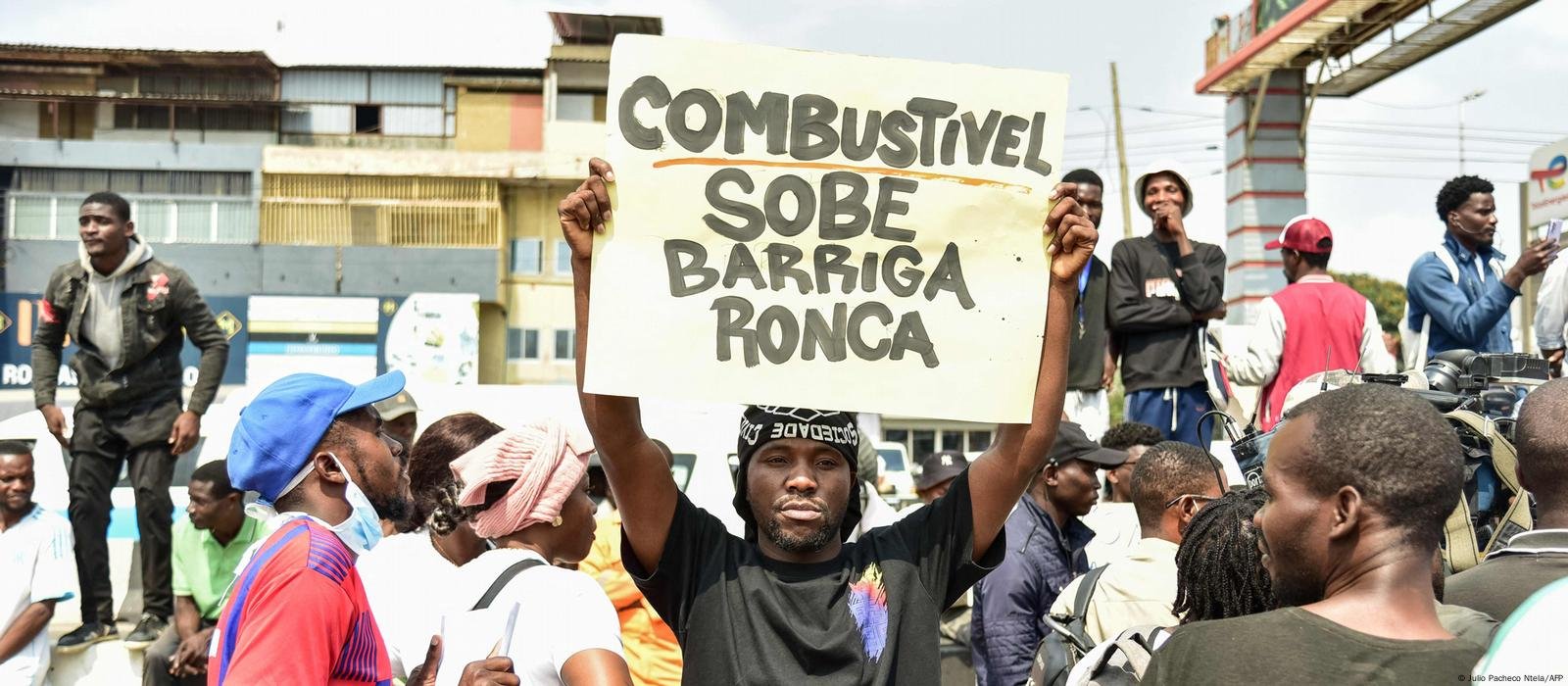
In the wake of a forceful police response to demonstrations in Luanda, Angolan activists are urging citizens to remain indoors in a symbolic strike as they prepare for the next wave of protests against surging fuel and transport costs.
On July 12, protests erupted in the capital’s São Paulo district, where hundreds of demonstrators — including students, taxi drivers, market vendors, civil society members, and opposition supporters — gathered to oppose a recent government decree that raised fuel prices. The rally began peacefully but was quickly disrupted by security forces using rubber bullets and tear gas.
“We’ve seen several injuries, some of them serious enough to require hospital care,” said activist and organizer Adilson Manuel in an interview. He also reported arrests, including one protester still in custody at Luanda’s Nova Vida police station without clear charges.
The demonstrators voiced their frustrations through chants, protest songs, and handmade signs. Slogans like “The country is rich, but the MPLA is failing us” and “We’re tired of surviving on scraps” reflected deep-rooted dissatisfaction with the ruling People’s Movement for the Liberation of Angola (MPLA), which has maintained power since the country gained independence five decades ago.
Angolans Struggle With Soaring Costs
The unrest was triggered by a rapid increase in fuel prices earlier this month — from 300 to 400 kwanzas per liter — followed by hikes in public transport fares. Taxi rides now cost 300 kwanzas (roughly $0.33), while bus fares have climbed to 200 kwanzas. These increases are especially burdensome for working-class Angolans who rely on affordable transit.
Although Angola remains one of Africa’s top oil producers, the government has gradually scaled back fuel subsidies in recent years, partly under pressure from the International Monetary Fund. While gas remains comparatively cheap globally, many locals — especially informal workers and transport operators — say they are being pushed to the brink.
But fuel prices are just one piece of a broader picture of economic frustration. Just weeks ago, a separate youth-led protest movement emerged, calling attention to deteriorating conditions in Angola’s schools. The Movimento dos Estudantes Angolanos (MEA) organized strikes in response to underfunded classrooms, missing furniture, and poor sanitation. Their protests intensified after the government raised university tuition fees, further straining already struggling students.
“Either the government addresses these issues, or it will be removed,” some student leaders warned.
Anti-Government Sentiment Gains Momentum
During the July 12 protests, demonstrators attempted to march toward key government sites near the National Assembly, but police blocked their path at strategic city squares. Chants of hunger and hardship filled the streets.
“We are hungry — the whole country is hungry. But our president is turning a blind eye,” protester Agostinho Kipanda told reporters.
Despite the crackdown, protest organizers say the movement is far from over. Activist Laura Macedo has called for a peaceful nationwide stay-at-home strike as a show of resistance. “Let’s remain indoors. Let’s express our anger in silence while preparing for Saturday’s demonstration,” she said.
While the Angolan government accuses opposition parties of fueling the unrest, demonstrators insist their grievances are rooted in everyday economic hardship, not political manipulation. With general elections not scheduled until 2027 and President João Lourenço constitutionally barred from seeking another term, many believe this moment marks a critical test for the ruling party’s legitimacy.
Activists vow to continue mobilizing until the government rolls back its decision on fuel prices and begins addressing the deeper social and economic challenges affecting millions of Angolans.