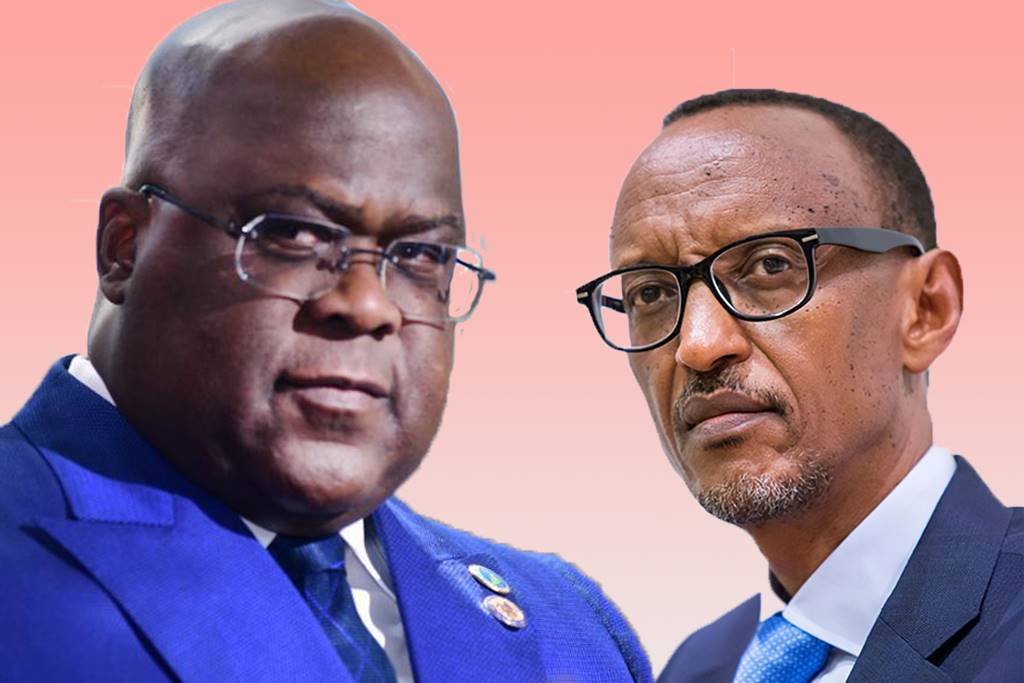







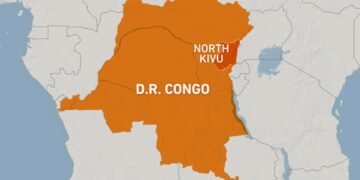







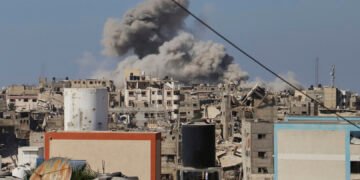

















The government of Rwanda has vehemently rejected allegations by the United Nations implicating it in a massacre of civilians in the Democratic Republic of Congo (DRC). The accusations were put forth by the Office of the High Commissioner for Human Rights (OHCHR), which cited firsthand accounts as evidence of Rwanda’s involvement. The UN body stated that the M23 rebel group, allegedly backed by Rwanda, had perpetrated a series of brutal attacks, resulting in the death of no less than 319 civilians. These atrocities reportedly took place in four villages located in the North Kivu province in July.
The North Kivu province, located in the eastern region of the DRC, close to the Rwandan border, has a long history of conflict and violence. Various armed groups have been battling for control over this mineral-rich area, often leading to severe humanitarian crises. The M23 rebel group, also known as the March 23 Movement, is one such faction that has been active in this region. Named after the date of their foundational peace agreement with the Congolese government on March 23, 2009, the group has since been implicated in numerous human rights abuses and violations.
The UN’s allegations have brought international attention back to the M23 group, which was thought to have been largely dormant following military defeat in 2013. The M23 was previously defeated by a coalition of African forces led by the UN, resulting in a peace agreement where the group agreed to disband. However, these recent allegations suggest a possible resurgence of the group, casting doubt on the effectiveness of the peace agreement and raising fears of escalating violence in the region.
The OHCHR’s report, based on firsthand accounts, paints a grim picture of the atrocities committed. It describes a series of attacks on four villages in the North Kivu province, where at least 319 civilians lost their lives. The report doesn’t explicitly link the Rwandan government to these attacks, but it implies that the M23 rebels, who are believed to have connections to Rwanda, were responsible.
Rwanda’s denial of the allegations comes amid a fraught political climate. The Rwandan government has previously been accused of supporting the M23 rebels, an accusation it has consistently denied. Previous allegations have suggested that Rwanda provides logistical and military support to the M23, with the alleged goal of maintaining influence and control over the mineral-rich North Kivu region.
The Rwandan Government has consistently maintained that its involvement in the DRC is solely focused on ensuring its national security. It cites the presence of the Democratic Forces for the Liberation of Rwanda (FDLR) in the DRC, a group composed largely of Hutu extremists responsible for the 1994 genocide in Rwanda, as a justifiable reason for its involvement.
The allegations, if proven true, would have significant implications, not just for Rwanda but also for the international community. It would challenge the credibility of the peacekeeping missions and prompt a re-evaluation of the strategies used to maintain peace and stability in conflict-prone regions. It would also raise questions about the complicity of nations in neighbouring conflicts, and the role they play in either fuelling or mitigating violence.
However, the veracity of the allegations remains unproven. The Rwandan government has categorically denied the claims, stating that it has no involvement in the alleged atrocities. It has called for a transparent and thorough investigation to establish the facts and clear its name.
In the meantime, the situation in the DRC remains tense. The renewed allegations of violence underscore the fragile state of peace in the region and the continued threat posed by various armed groups. The international community, including the UN, will have to redouble their efforts to address these issues and ensure the protection of civilians in these areas.
As the world waits for a resolution, the victims of the alleged massacres, and the many more who live under the shadow of violence in North Kivu, can only hope that truth will prevail and justice will be served.