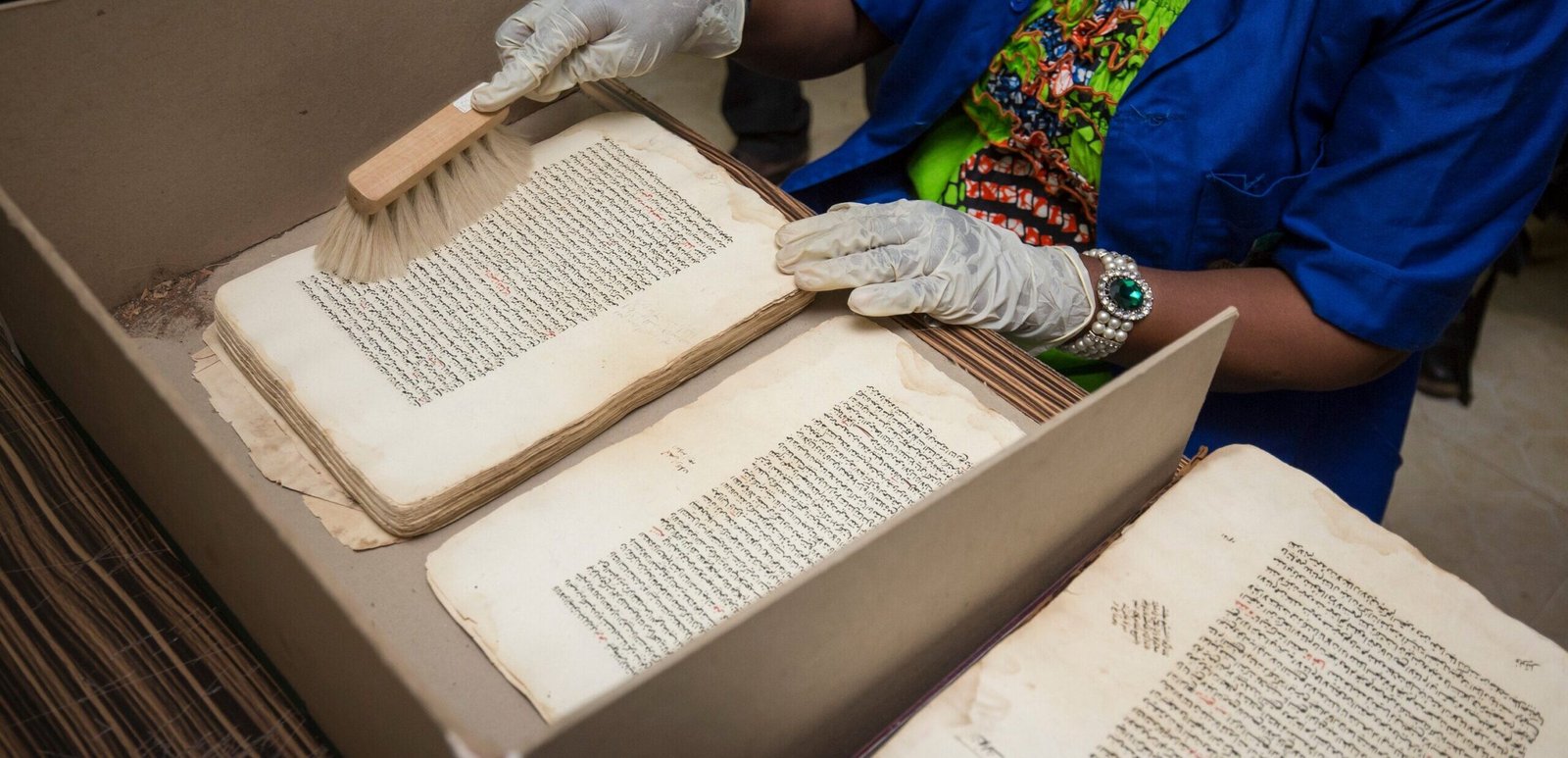



























































After 13 long years spent in the capital of Mali, the renowned manuscripts of Timbuktu have finally begun their journey home. The Malian military government initiated the move on Monday, marking the end of a tumultuous period for these historical documents that had been illicitly whisked away from their original site in the celebrated northern city.
The manuscripts were originally relocated due to the occupation of Timbuktu by militants linked to al-Qaida over a decade ago. This was a dark period in the city’s history, as the militants wreaked havoc on the city’s cultural heritage, leading to the secret removal of these manuscripts to ensure their preservation.
To fully appreciate the significance of these manuscripts’ return, one must understand the rich cultural and historical context from which they originated. Timbuktu, often referred to as the ‘city of 333 saints,’ had been a thriving centre of Islamic learning and trade during the 15th and 16th centuries. It was regarded as a beacon of African civilisation, a city where scholars from across the continent and beyond gathered to exchange ideas and knowledge.
The manuscripts themselves are a testament to this golden age. They cover a wide range of disciplines, from religion and philosophy to astronomy and medicine, reflecting the vast intellectual curiosity and scholarly tradition of the time. Written in Arabic and African languages, they showcase the linguistic diversity and cultural richness of Africa.
Their value, however, is not only historical or academic; the manuscripts are also a source of immense national pride. They bear witness to the intellectual prowess of their ancestors, and their survival through centuries of political instability and natural disasters is a testament to the resilience of the African spirit.
The forced removal of the manuscripts from Timbuktu to Bamako, Mali’s capital, was a desperate measure taken in response to the impending threat posed by the al-Qaida-linked militants. This was a period of great uncertainty and fear for the city and its inhabitants. The manuscripts were not only an integral part of the city’s identity, but they also represented a significant portion of the cultural heritage of Africa, making their protection of paramount importance.
For over a decade, these manuscripts have been safeguarded in Bamako, far from their original home. Their absence was deeply felt in Timbuktu, where their presence had been a source of inspiration and a symbol of the city’s rich historical legacy.
Monday’s commencement of the return journey represents a significant moment in Timbuktu’s recent history. The city, which has been working diligently to restore and preserve its cultural heritage sites after the destructive occupation, can now look forward to the reintegration of these treasured documents.
The Malian military government’s decision to repatriate the manuscripts is not just a pivotal step towards restoring the city’s cultural heritage, but it also represents a significant stride in the broader efforts to preserve African history and identity. This move sends a clear message of resilience and defiance against those who sought to erase this part of the world’s history.
The return of the Timbuktu manuscripts is not just a homecoming; it is also a triumphant assertion of the city’s, and indeed the continent’s, rich cultural and intellectual heritage. It serves as a powerful reminder of the enduring value of preserving historical artefacts, and the central role that heritage plays in shaping our understanding of the past and informing our vision of the future.
As the people of Timbuktu, and indeed all of Mali, eagerly anticipate the return of these manuscripts, the world watches on, reminded of the power of perseverance in the face of adversity, and the enduring importance of protecting our shared cultural heritage.