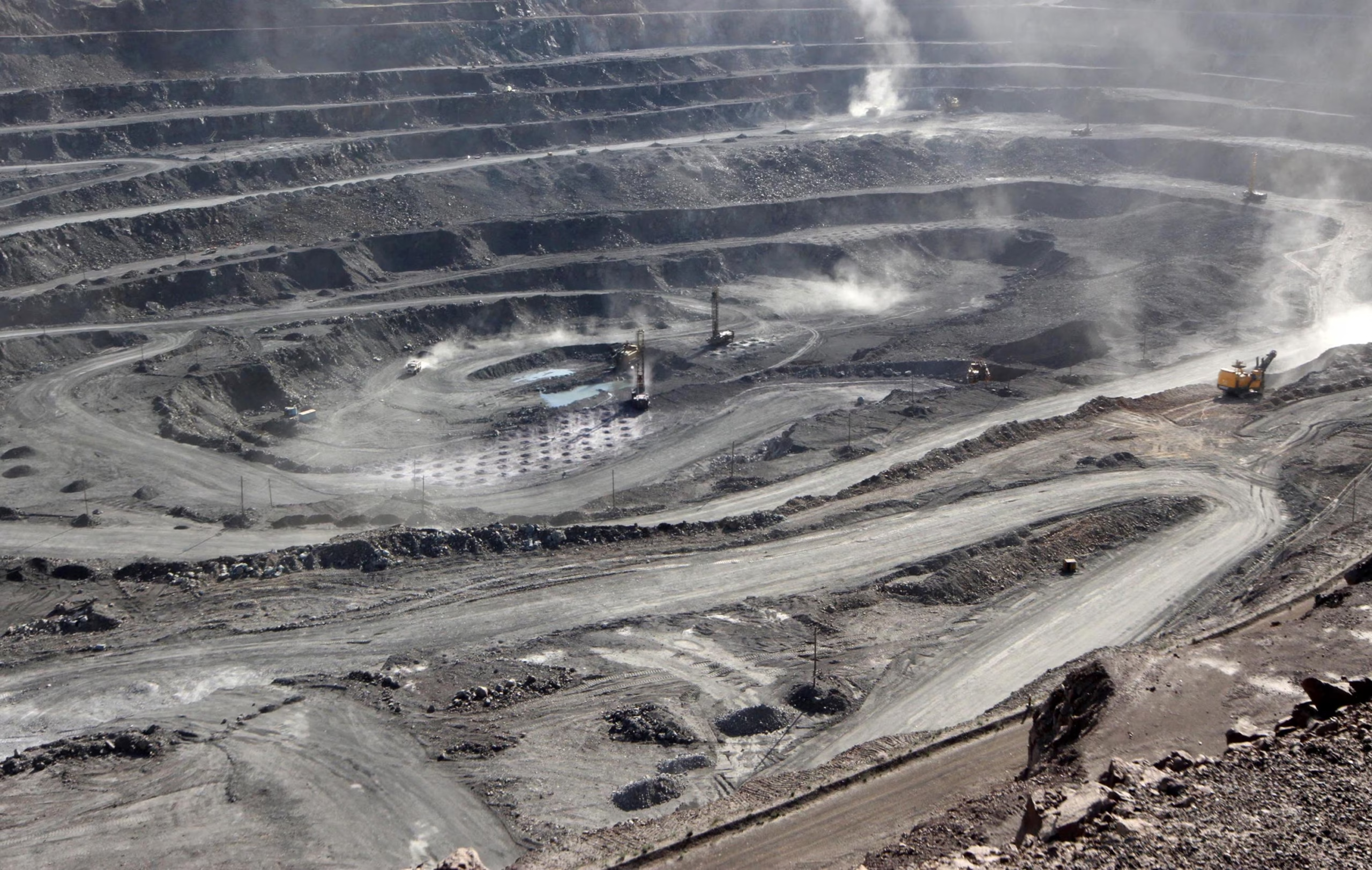
In a significant development for global rare earth research and strategic resource management, Chinese geologists have identified a previously unknown rare earth mineral within the Bayan Obo deposit in Inner Mongolia, which is widely recognized as the world’s largest and most productive rare earth mine.
The newly discovered mineral, officially named Huanghoite-(Nd) by the International Mineralogical Association, is a neodymium-rich carbonate mineral. Neodymium, often referred to as the “magnet metal,” is a critical element used in the production of high-performance permanent magnets, which are vital to the functioning of electric vehicle motors, offshore wind turbines, and many advanced electronic devices.
This marks the third new rare earth mineral discovery at the Bayan Obo deposit in recent years, highlighting the site’s remarkable geological diversity and complexity. The discovery was made by a joint research team from the China University of Geosciences in Wuhan and the Inner Mongolia Geological Survey Institute. According to Zhao Laishi, the project leader and a researcher at the State Key Laboratory of Geological Processes and Mineral Resources, Huanghoite-(Nd) belongs to the rare earth carbonate mineral family and contains an especially high concentration of neodymium.
Global demand for neodymium has surged as countries invest heavily in renewable energy and electric mobility. The metal is essential for powering green technologies, making it a cornerstone of the clean energy transition. As competition intensifies to secure critical minerals for economic and national security purposes, discoveries like this reaffirm China’s leading role in the global rare earth supply chain.
The Bayan Obo deposit has long been a focal point for mineralogical studies. More than 210 distinct minerals have been documented at the site, with the number of newly discovered minerals steadily increasing year by year. The identification of Huanghoite-(Nd) adds another layer to the scientific and strategic value of this vast resource.
Zhao explained that the team’s discovery resulted from a series of systematic geological investigations. These included field mapping, geochemical analysis, and detailed study of mineral zoning patterns within the ore body. By developing a new metallogenic model—an analytical framework for understanding the formation and distribution of minerals—the researchers were able to pinpoint the conditions under which Huanghoite-(Nd) formed. The mineral was ultimately confirmed through micro-area mineral analysis based on this model.
Beyond scientific insight, this research has practical implications for resource exploration and extraction. Understanding how and where rare earth minerals concentrate can help optimize mining strategies and unlock new zones within existing deposits. This is particularly important as demand for these critical resources continues to outpace supply.
In addition to its academic importance, the discovery strengthens China’s position in the global rare earth industry. The country currently accounts for more than 60 percent of global rare earth production and over 85 percent of processing capacity, making it the dominant player in this essential sector. With the addition of each newly identified mineral, China not only enhances its geological database but also secures greater control over a supply chain crucial to the global economy.
The Belt and Road Initiative, energy transition policies, and new technological advancements are all driving higher consumption of rare earth elements. As such, the ability to identify and model new mineral formations like Huanghoite-(Nd) positions China to continue meeting both domestic demand and international export requirements.
Zhao also mentioned that his team previously discovered two other new rare earth minerals within the Bayan Obo deposit. This continued string of discoveries suggests that the site may hold even more untapped scientific and economic potential. The findings also reinforce the value of sustained investment in geological research and advanced analytical technologies.
As countries across the globe intensify their search for secure, diversified sources of critical minerals, breakthroughs like this offer insight into how nations can better understand and manage their strategic resources. With each new discovery, China’s influence in the mineral exploration and rare earth sectors only deepens, setting the stage for future developments that may shape the world’s clean energy and technology landscapes for decades to come.