
























































Fiji’s government is turning its attention to organic waste as a potential game-changer in its renewable energy push, with plans underway to pilot biogas and biofuel projects that could transform waste into a valuable source of clean power.
Speaking at the Fiji Business Mission forum in Lami, Deputy Prime Minister and Minister for Trade Manoa Kamikamica said the country is ready to launch waste-to-energy initiatives, especially modular systems designed for tourism resorts and rural towns. He emphasised that organic waste remains a largely untapped resource, and converting it into energy could help Fiji meet both its waste management and clean energy goals.
Tourism operators and local councils have been seeking more sustainable ways to handle growing waste volumes, and the government is responding with open arms to partnerships. Kamikamica highlighted that Fiji is actively inviting investment from international clean-tech companies, particularly those from New Zealand, to join in developing small-scale, locally adapted energy systems.
Fiji’s transition to renewable energy is already in motion. Currently, between 50 to 60 percent of the nation’s electricity is generated from renewable sources, primarily hydropower. The government has set an ambitious target of achieving 100 percent renewable energy by between 2034 and 2036.
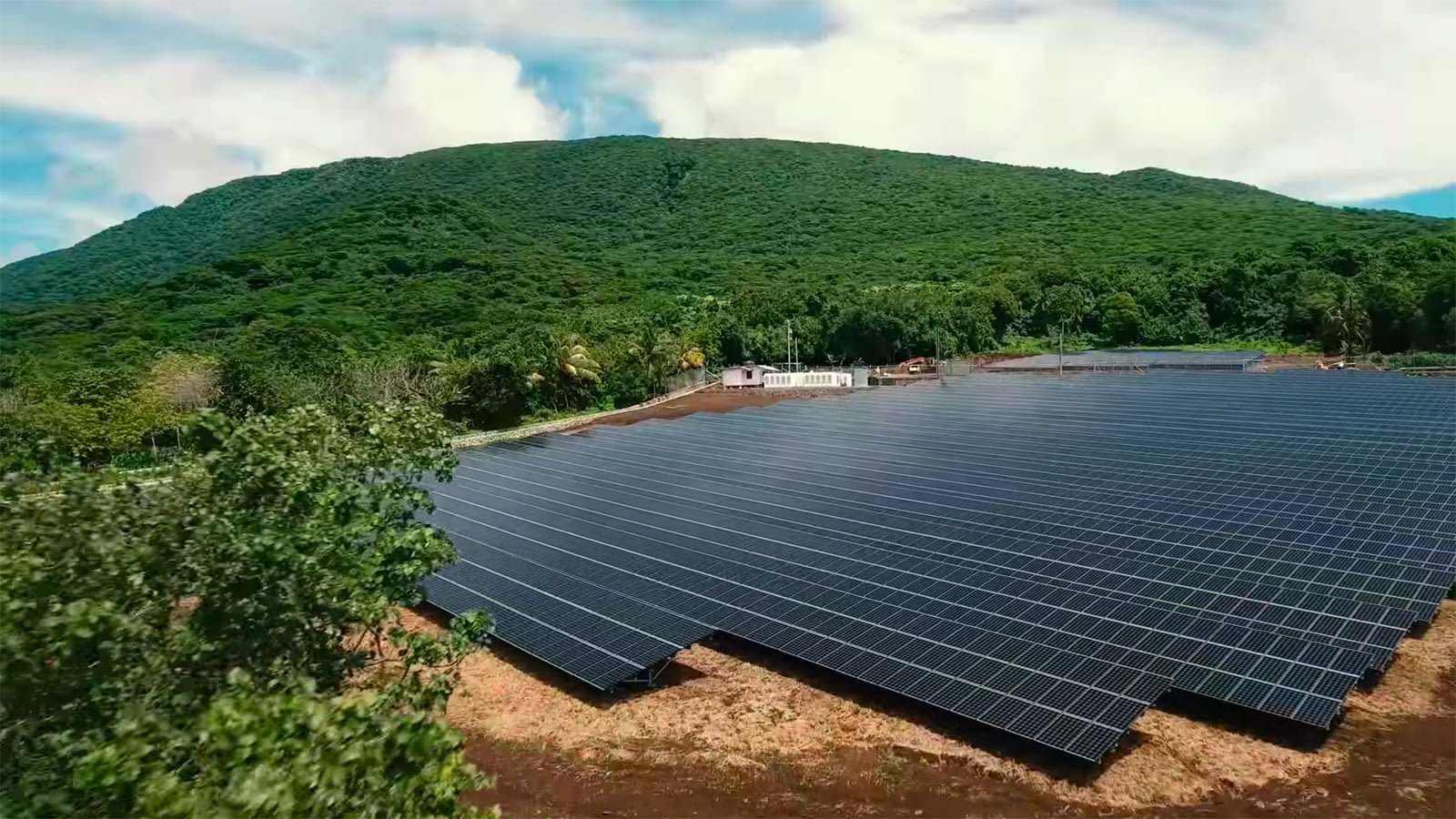
A key success story is the Mua Solar Farm on Taveuni Island, commissioned in early 2025. The hybrid solar-hydro system now supplies approximately 65 percent of the island’s electricity needs, powering nearly 9,000 residents and significantly reducing the community’s reliance on diesel fuel. Kamikamica cited this as a model for future projects, combining clean energy, community impact, and international cooperation.
While Fiji has previously experimented with biofuel from coconut oil and small-scale biogas digesters, the full potential of organic waste remains largely unrealised. Government planners and energy experts believe that biogas systems using food scraps, livestock waste, and agricultural residues could be scaled across the country if barriers such as high transportation costs and limited infrastructure are addressed.
The government is focusing on developing community-scale waste-to-energy units, particularly for isolated communities and tourism hubs where waste generation is high but energy access can be inconsistent. In these areas, small biogas plants can simultaneously manage organic waste and generate electricity or cooking gas, with the added benefit of producing nutrient-rich by-products that can be used as fertiliser.
Officials say that beyond energy generation, such projects also support Fiji’s broader environmental and economic goals. Reducing landfill volume, cutting emissions from diesel generators, and supporting circular agriculture systems are all critical to Fiji’s low-emission development strategy.
Kamikamica made it clear that the time is ripe for collaboration. He said the government is prepared to co-develop pilot projects with international partners and scale up proven models. The focus now is on turning what has long been seen as waste into a renewable asset that fuels local development.
As Fiji works toward a future powered entirely by clean energy, organic waste may prove to be one of the country’s most underutilised and promising resources.