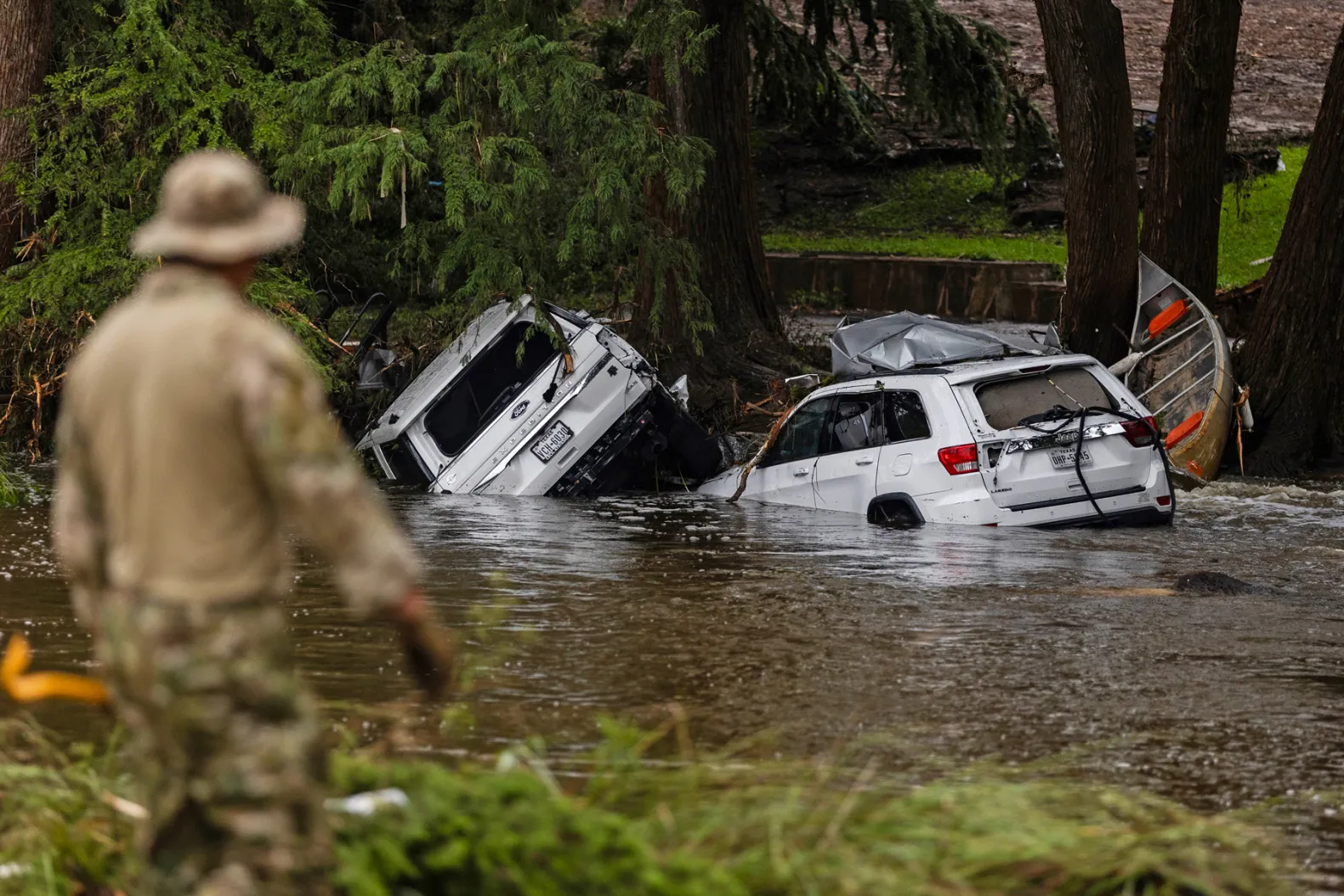




























































Nearly a week after catastrophic flooding along the Guadalupe River swept away more than 120 lives in Central Texas, officials in Kerr County are facing growing pressure to explain their actions during the critical early hours of the disaster. While search and recovery operations continue, families and residents are demanding answers about whether lives could have been saved had warnings been issued or evacuation plans implemented sooner.
So far, those in charge have offered little clarity. When asked on Tuesday about the timeline of events, Kerr County Sheriff Larry Leitha said authorities are still piecing it together, adding that his focus remains on victim recovery, identification, and family notifications. Pressed again during a briefing on Wednesday, officials shifted attention to their efforts later in the day on July 4 rather than addressing what happened overnight, when the river surged. Sgt. Jonathan Lamb of the Kerrville Police Department said the outcome could have been even more devastating, praising the emergency response later that morning.
The National Weather Service issued a flash flood warning for parts of Kerr County at 1:14 a.m. on July 4, and residents in the area received Wireless Emergency Alerts soon after. In other counties, local emergency agencies began monitoring forecasts and organizing precautionary plans. But it remains unclear whether Kerr County officials acted as quickly—despite the area suffering the highest number of fatalities.
Sheriff Leitha admitted he wasn’t informed of the flooding until around 4 or 5 a.m., only after emergency calls began pouring in. By that time, the Guadalupe River had already surged by 15 feet according to a water gauge in the community of Hunt, where Camp Mystic is located. At 4:22 a.m., a local firefighter reportedly requested a CodeRED alert—a non-government mass communication system used for public warnings. However, some residents reported receiving that alert nearly six hours later, according to emergency dispatch audio obtained by local news outlet KSAT.
When asked about the delay between the request and public notification, Sheriff Leitha declined to provide specifics, stating that those questions would be addressed at a later time.
Further complicating the picture is uncertainty over who was leading Kerr County’s emergency operations that night. While the role of an emergency manager is to coordinate response and mitigation during such crises, no county official has confirmed who was in charge at the time. W.B. “Dub” Thomas, the county’s emergency management coordinator, declined to speak on the county’s response, ending a scheduled interview with reporters by stating, “I don’t have time for an interview, so I’m going to cancel this call.”
Officials at the state level had issued warnings the day before. According to Lt. Gov. Dan Patrick, a conference call was held to brief local leaders about weather risks. However, Kerrville Mayor Joe Herring Jr. said he never received an invitation to that briefing, though he could not speak for the county judge.
Flood-prone counties like Harris (home to Houston) and Dallas have detailed emergency response and evacuation protocols due to Texas’ longstanding vulnerability to flash flooding. Whether Kerr County had such plans—and how or whether they were enacted—remains unclear. Sheriff Leitha suggested that in rural terrain like the Hill Country, a one-size-fits-all approach doesn’t always work, and that in some cases, sheltering in place may be safer. Still, experts say early alerts and established evacuation criteria are essential for saving lives.
Further questions have emerged about whether gaps in the National Weather Service’s staffing may have hindered communication. The Austin-San Antonio office of the NWS, which serves Kerr County, currently lacks a warning coordination meteorologist—an essential liaison between forecasters and emergency personnel. According to a NOAA source, this vacancy resulted from federal downsizing measures during the Trump administration. However, it’s unclear if that staffing shortfall had a direct impact on flood-related alerts.
Camp Mystic, one of at least 18 summer camps located along the flood-prone Guadalupe River, experienced significant damage. The floodwaters tore down a building wall and left mud and debris inside cabins. Despite known flood risks in the area, the camp—along with others—continues to operate in locations identified as vulnerable. Just days before the storm, a health inspector confirmed Camp Mystic had an emergency plan in place, as required by state law. But the effectiveness of that plan remains under scrutiny, especially in light of the 27 confirmed deaths connected to the camp’s flooding. It is also not known whether any reforms were enacted following a deadly 1987 flood in which ten campers drowned in the same river.
In the broader discussion of emergency response, experts emphasize the importance of adapting policies based on lessons learned after disasters. But whether Kerr County will make those adjustments is still uncertain.
Tensions flared during a press briefing Tuesday when officials declined to answer direct questions from reporters. Texas Game Warden Ben Baker acknowledged the concerns, saying, “We understand you have many questions,” but emphasized that the current focus remains on ongoing rescue and recovery efforts. When a reporter pressed further, Baker replied, “We will get answers,” but took no additional questions.
With more than 150 people still missing, the grieving community is left not only mourning but also seeking accountability. Whether the coming weeks will bring transparency—or continued silence—remains to be seen.