





















































A tranquil holiday in the picturesque valley of Pahalgam turned into a nightmare as militants launched a brutal attack on a group of tourists, leaving 26 people dead in one of the deadliest assaults in Kashmir in nearly two decades.
The gunmen, reportedly three in number and dressed in traditional attire, struck as tourists gathered at the scenic Baisaran meadow, a lush mountaintop clearing near Pahalgam. Without warning, the attackers opened fire, triggering chaos and panic. Survivors described a harrowing scene—gunshots tearing through the air, children screaming, and people fleeing for cover in all directions.
Eyewitnesses recounted that the assailants singled out male tourists, demanding that they recite Islamic verses. Those unable to do so were shot at close range. The victims came from various parts of India and included foreign nationals from Nepal and the United Arab Emirates. The calculated nature of the attack has raised fears that victims may have been targeted based on religion.
Among those killed was Lieutenant Vinay Narwal, a 26-year-old Indian Navy officer who had just married and was on his honeymoon. His wife, Himanshi, survived the attack and later shared that one of the militants asked her husband if he was Muslim. When he said no, he was executed on the spot. Their wedding had taken place just a week earlier.
Another victim, Santosh Jagdale, was on a family trip from Maharashtra. His daughter recounted that her father was asked to recite an Islamic prayer. When he failed, the attackers shot him three times, killing him instantly and also murdering her uncle, who stood nearby.
A local man, Syed Hussain Shah, who made a living offering horse rides to tourists, was also killed while reportedly trying to shield others. His death has plunged his family into mourning, with his mother, inconsolable with grief, describing him as the family’s only breadwinner.
Families across India are now grappling with immense loss. In Maharashtra, one family lost three members—cousins who were among a group of nine visiting Kashmir. Their deaths have shocked their community, leaving relatives struggling to come to terms with the tragedy.
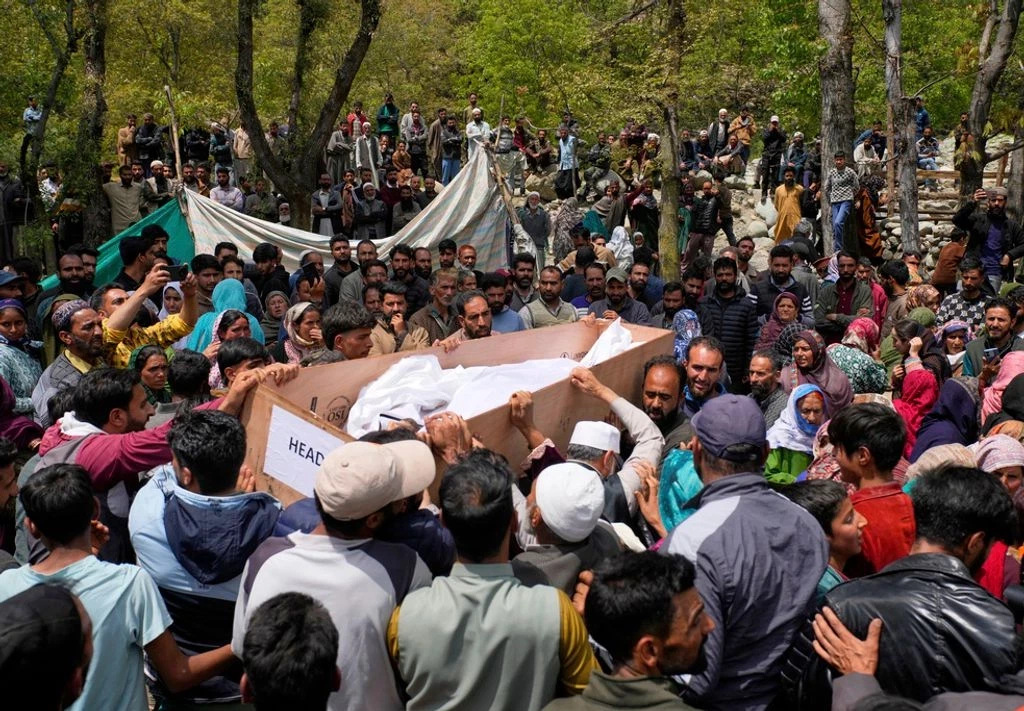
As news of the attack spread, widespread protests and mourning followed. Shops, businesses, and schools across Kashmir shut down in solidarity. Locals expressed fear that the incident could deter tourism, a lifeline for the region’s economy.
The attack has drawn international condemnation, with world leaders expressing solidarity with India. Prime Minister Narendra Modi, who was abroad at the time, cut short his trip and returned to Delhi for emergency security meetings. Defence officials promised a swift and forceful response, vowing to hold not only the attackers but also those who orchestrated the act from behind the scenes accountable.
While no official statement has confirmed who is responsible, early indications suggest involvement by a militant group seeking to intimidate non-Muslim visitors and discourage the growing influx of tourists into the region. The Indian government has so far refrained from naming any organization, but past precedent raises fears of retaliatory strikes and potential escalation with neighboring Pakistan.
Back in the grieving village of Lieutenant Narwal, his grandfather expressed both sorrow and fury. “Today I lost my grandson. Tomorrow, if this continues, someone else will lose theirs,” he said, calling for justice and an end to such senseless violence.
As a manhunt continues for the attackers, Kashmir remains gripped by sorrow and fear, its people once again caught in the crossfire of a long-standing conflict that has now taken an especially tragic toll.