















































Defence ministers from across Europe say planning for a multinational force to support Ukraine post-conflict is moving ahead, though key questions around troop numbers, timelines, and operational details remain unresolved.
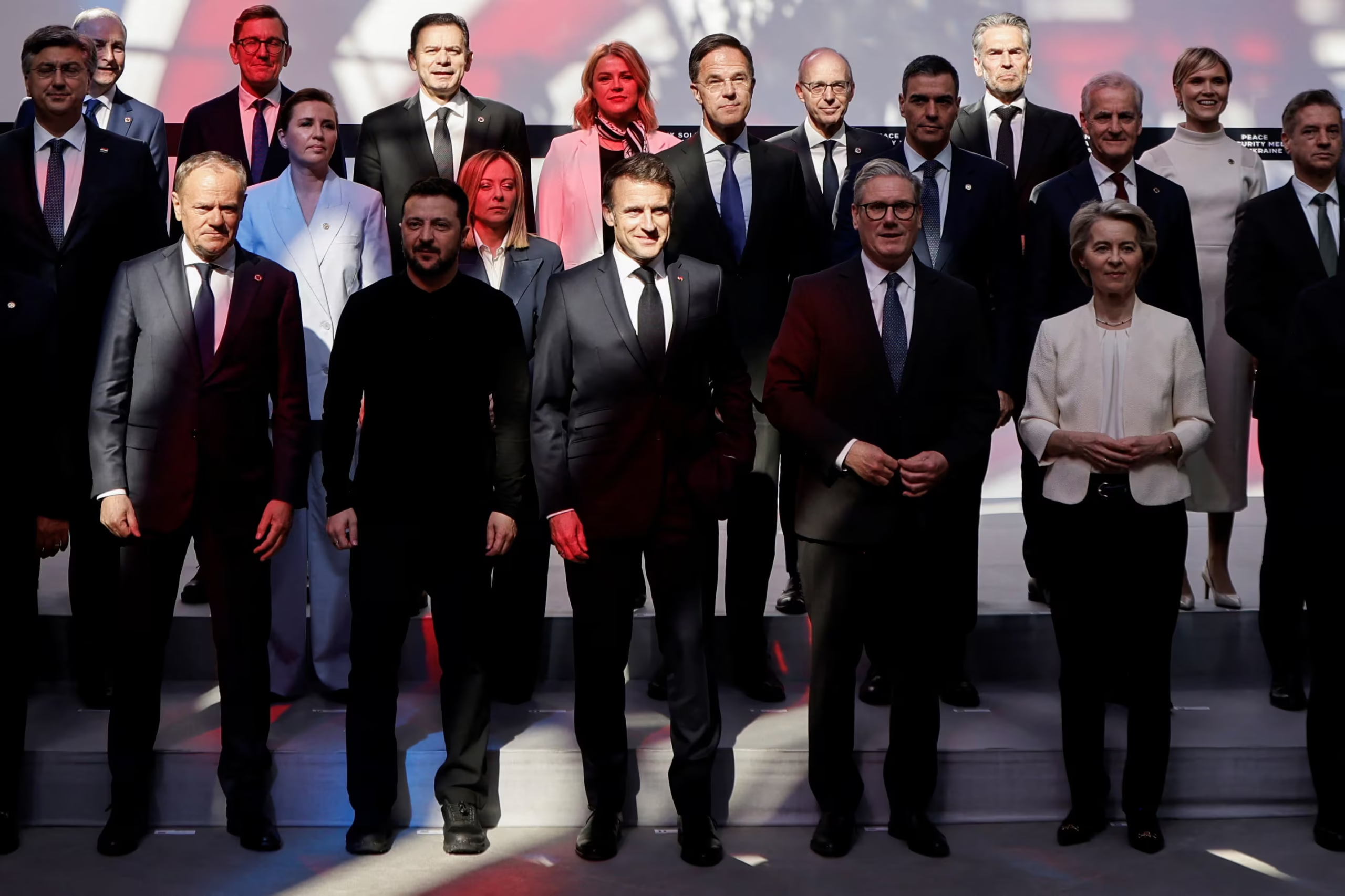
During a high-level meeting of the so-called “Coalition of the Willing” held at NATO headquarters on Thursday, ministers from 30 countries met to continue discussions on forming a reassurance force that could serve as a stabilising presence in Ukraine once a peace agreement is in place. The group, spearheaded by France and the United Kingdom, is working to develop operational frameworks that would deter future Russian aggression.
UK Defence Secretary John Healey described the current planning as “real and substantial,” noting that while progress has been made, much more is needed to ensure readiness. “We are developing a clear and coordinated response, with shared goals for Ukraine’s long-term security,” he said.
Healey also underscored the urgency of preparing now for a post-conflict scenario, warning that any peace deal must not come at the cost of long-term security for Ukraine or Europe. “We cannot jeopardize peace by forgetting that the war is still ongoing, and Ukrainians are living that reality every day,” he added.
The Brussels meeting followed a recent visit to Kyiv by French and British military officials, who met with Ukrainian President Volodymyr Zelenskyy and top defence leaders. Discussions focused on where the proposed multinational force could be deployed and what form its support should take—whether through troops on the ground, logistics, intelligence operations, or other capacities.
French President Emmanuel Macron, who hosted an earlier summit on the issue, has proposed positioning the force in key Ukrainian towns. However, he acknowledged that not all of the 33 countries present at that earlier meeting have agreed to participate, and that contributions could range from logistical support to intelligence-sharing, rather than just military deployment.
Some EU countries, including Poland and Greece, have said they cannot send troops due to their own regional security challenges—Poland faces pressure from Belarus, while Greece continues to monitor tensions with Turkey.
Defence ministers declined to provide specifics on troop numbers or deployment timelines. Latvian Defence Minister Andris Sprūds said planning was advancing, but final decisions would depend on the terms of any eventual peace deal. He noted that while Latvia remains open to contributing personnel, its own defence readiness near the Russian border must be preserved.
A broader challenge lies in defining the mission’s core objective. As EU foreign policy chief Kaja Kalals pointed out, countries must agree on whether the force’s role will focus on deterrence, monitoring, or peacekeeping before moving forward with implementation.
The presence—or absence—of the United States remains a central concern for many coalition members. Several nations, including Finland and the Netherlands, emphasized that a robust U.S. role is vital to the mission’s success, particularly in providing air defence and intelligence support.
Dutch Defence Minister Ruben Brekelmans said Washington’s involvement would depend on the mission’s structure, but stressed, “It would be ideal to have the U.S. openly and explicitly backing the coalition’s efforts.”
So far, however, the United States has not agreed to join the initiative. President Donald Trump has been kept informed by European leaders, including Macron and UK Prime Minister Keir Starmer, but no formal commitment has been made.
The U.S. has also taken a step back from the Ukraine Defence Contact Group (UDCG), which it previously chaired under the Biden administration. U.S. Defence Secretary Pete Hegseth is not expected to attend the group’s upcoming meeting, which includes representatives from around 50 countries.
While enthusiasm for a reassurance force is growing among European allies, the absence of a U.S. backstop is causing hesitation. With planning underway but several critical elements still undecided, coalition members are under pressure to clarify their positions in the coming weeks.