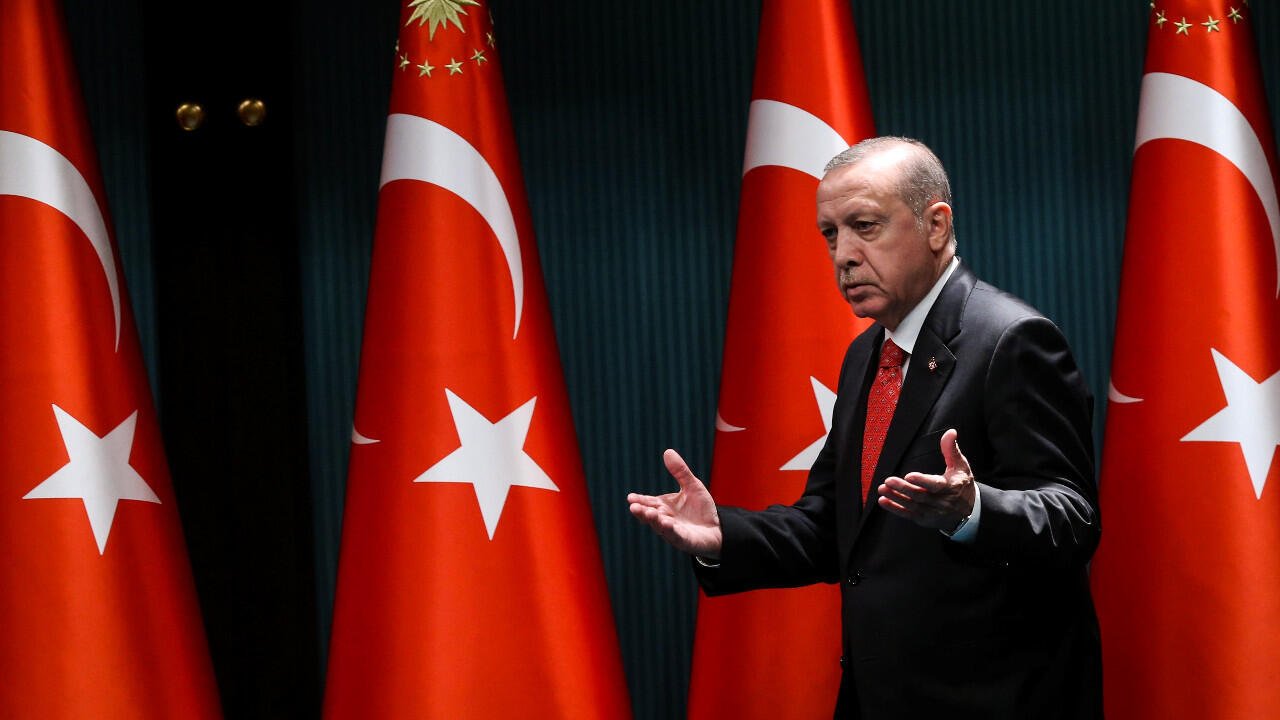

































Turkish President Recep Tayyip Erdoğan has positioned Turkey as a crucial pillar of stability for European security, asserting that the continent’s defense landscape is incomplete without his country’s involvement.
Speaking at the Antalya Diplomacy Forum, Erdoğan emphasized that Turkey is uniquely placed to bridge geopolitical divides—particularly those surrounding conflicts in Ukraine and Syria, as well as recent global trade tensions sparked by U.S. tariffs.
“It has become clear once again that European security is unthinkable without Turkey,” Erdoğan told an international audience of leaders and diplomats. “Turkey is ready to take responsibility for the future of Europe’s security.”
His remarks follow warnings from the White House suggesting that European nations must assume greater responsibility for their own defense, especially in light of the ongoing war in Ukraine. Amid cooling trans-Atlantic relations under the Trump administration, Erdoğan is advocating for Turkey to play a more prominent strategic role, leveraging its NATO membership, its sizeable military, and its growing defense industry.
Erdoğan highlighted Turkey’s ability to maintain communication with both Ukraine and Russia, reinforcing Ankara’s role as a key intermediary in the Black Sea region. “We are in a state of understanding and close dialogue with influential actors in the region, especially Trump and Putin, in preserving the territorial integrity of Syria,” he said.
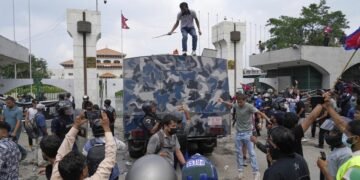
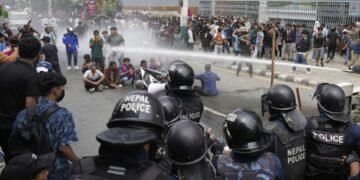
Domestically, Erdoğan is facing mounting unrest over the jailing of Istanbul Mayor Ekrem İmamoğlu, a leading opposition figure. Protests have erupted across the country, challenging the president’s leadership ahead of the next national elections.
Despite tensions with Western allies, Erdoğan expressed optimism about relations with Washington. “I believe that our relations with the United States will flourish in every field during President Trump’s second term, also with the contribution of our close friendship with him,” he said, referring to the U.S. president.
Addressing the impact of escalating trade disputes, Erdoğan acknowledged the strain of U.S.-led tariffs but suggested that Turkey could ultimately benefit. “We are doing our best to prevent the heated commercial competition over customs tariffs from becoming destructive,” he said. “Turkey will be one of the winners of this process.”
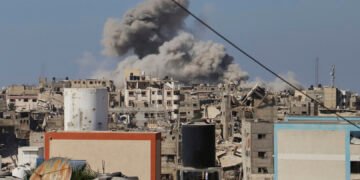
Turkey has also exerted considerable influence in Syria, backing rebel groups during the civil war and shaping post-conflict governance. However, Erdoğan’s growing assertiveness in the region has strained ties with Israel. The Turkish president has been a vocal critic of Israeli military actions in Gaza, and at the forum he condemned the killing of civilians in the enclave.
“Even if it is at war, does a legitimate state act like this?” he asked. “Isn’t this called state terrorism? That’s why Israel is a terrorist state.”
Sitting only two seats away from Erdoğan was Syria’s new president, Ahmed al-Sharaa, signaling a possible recalibration of regional diplomacy.
In a firm closing statement, Erdoğan warned against interpreting Turkey’s cooperative tone as weakness. “No one should misunderstand our cool-headedness and our stance of resolving issues through dialogue,” he said.
As Turkey positions itself as an indispensable player on the European and regional stage, Erdoğan’s words signal a broader ambition: to reshape the geopolitical balance by placing Ankara at its center.