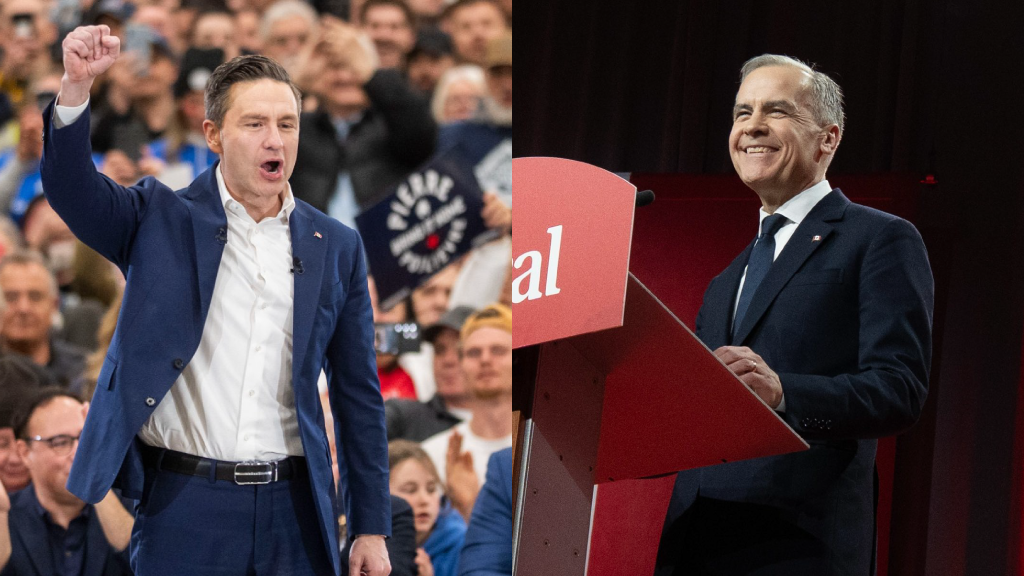























































Two of Canada’s top political leaders are putting forward competing energy strategies aimed at building national energy corridors to strengthen the country’s infrastructure and reduce its dependence on the United States. Both Liberal Leader Mark Carney and Conservative Leader Pierre Poilievre are promoting fast-tracked regulatory processes for major energy and transportation projects, though their approaches differ in significant ways.
Carney has emphasized a broad, long-term plan to turn Canada into a leading energy power by investing in projects that span the transport, critical minerals, and digital connectivity sectors. His proposal includes reducing approval timelines for major resource developments, expanding clean electricity access through a nationwide grid, and increasing funding for Indigenous-led infrastructure. Carney also plans to expand Indigenous loan programs and focus on both clean energy and traditional fossil fuel industries.
Meanwhile, Poilievre is advocating for the creation of a “Canada First” National Energy Corridor. His plan focuses on designating a pre-approved route for infrastructure like pipelines, transmission lines, and railways, with commitments from all levels of government to greenlight projects quickly. Poilievre also vows to roll back certain federal environmental laws and eliminate the carbon tax to encourage private sector investment.
While both leaders present their ideas as necessary to secure Canada’s energy future and reduce American influence, experts caution that implementation won’t be simple. One major hurdle is defining exactly what an energy corridor entails—whether it’s just a designated route or a fully approved infrastructure plan—and how it aligns with existing land use, environmental policies, and Indigenous rights.
Critics of Poilievre’s plan argue that the concept of a “pre-approved” corridor risks bypassing meaningful consultation with Indigenous communities, especially if final project details are unknown. There are also concerns about whether the corridor would apply uniformly to various types of infrastructure and whether communities would support all types of developments along the route.
Carney’s proposal, while viewed as more inclusive, still raises questions about how his government would balance regulatory oversight with promises of fast-tracking projects. There are also lingering doubts about whether his environmental policy commitments, such as capping oil and gas emissions, can coexist with ambitions to boost energy development.
Despite their different political affiliations, both leaders are signaling that Canada must act quickly to seize global energy opportunities. Yet their visions leave key questions unanswered about implementation, community engagement, and long-term environmental impacts.
As the next election draws near, these energy corridor proposals are shaping up to be a major point of debate—one that could define the future of Canada’s energy strategy for decades to come.