










































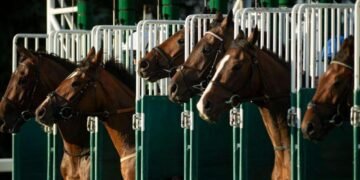






In a troubling incident at Windsor Racecourse, five jockeys have been handed 10-day suspensions after failing to halt their mounts during a chaotic flat race. The event took a dramatic turn when a blindfolded horse, which had broken free from its handler, collided with a plastic running rail, raising serious concerns about safety protocols in horse racing.
The race, which took place recently, was marred by confusion as the loose horse entered the track amidst the ongoing competition. Despite the potentially dangerous situation, the jockeys continued to race instead of pulling up, leading to their subsequent bans. The British Horseracing Authority (BHA) has since launched an investigation into the incident, seeking to understand the circumstances that allowed the race to unfold in such a hazardous manner.
The blindfolded horse, which had escaped from the paddock, posed a significant risk not only to the jockeys and their horses but also to the integrity of the race itself. The collision with the plastic rail was alarming, but fortunately, no serious injuries were reported. However, the incident has raised questions about the measures in place to ensure the safety of both competitors and animals during races.
In the wake of this event, the BHA is expected to review existing safety protocols to prevent similar occurrences in the future. The governing body has a responsibility to ensure that the sport is conducted safely, and this incident underscores the need for stringent measures to protect all participants.
This incident is not isolated; it reflects broader safety concerns within the horse racing industry. Previous incidents involving loose horses and jockeys failing to react appropriately have prompted calls for improvements in training and awareness among riders regarding emergency situations on the track.
The racing community has expressed a mix of shock and concern over this latest occurrence. Many within the sport are advocating for enhanced training programmes for jockeys that focus on emergency response and the importance of maintaining safety standards during races. The BHA has indicated that it will be reviewing its training guidelines as part of its ongoing commitment to safety.
As horse racing continues to attract significant public interest, incidents such as this can impact the sport’s reputation. Maintaining the integrity and safety of racing is crucial to its future, and the responses from both the BHA and the racing community will be closely monitored in the coming weeks.
The 10-day bans imposed on the jockeys serve as a reminder of the serious consequences that can arise from lapses in judgement during races. With the BHA’s investigation underway, the outcomes may lead to further repercussions for those involved and potentially influence future regulations in the sport.
In addition to the immediate safety concerns, this incident highlights the complex relationship between human and animal participants in horse racing. The welfare of the horses is paramount, and ensuring their safety during races is essential for the sport’s integrity. The BHA has long been an advocate for animal welfare, and this incident may prompt renewed discussions about how best to safeguard the wellbeing of all competitors.
As the racing calendar continues, stakeholders will be eager to see how the BHA addresses the issues raised by this incident. The aim will be to restore confidence in the sport while ensuring that the safety of jockeys and horses remains at the forefront of racing operations.