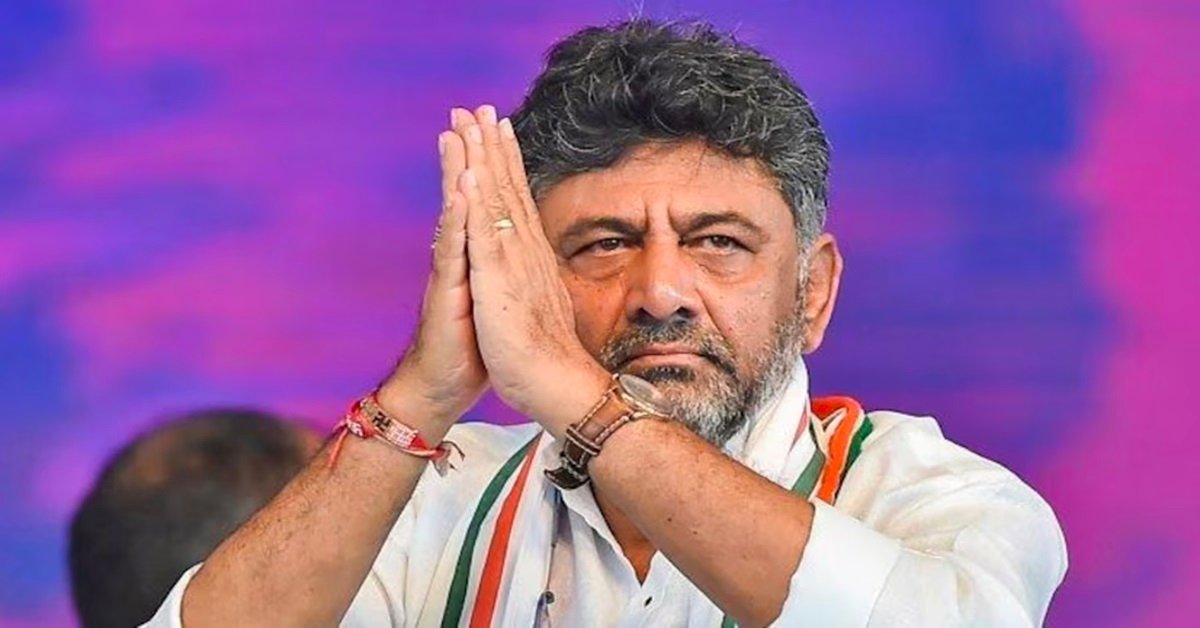





























Karnataka Deputy Chief Minister DK Shivakumar on Sunday emphasized that the state government will not make any hurried decisions regarding the contentious Socio-Economic and Education Survey, commonly referred to as the caste census. His comments come in the wake of the report being tabled before the state cabinet for consideration.
Speaking to the media in Doddaballapur, near Bengaluru, Shivakumar said he had not yet reviewed the report as he was traveling through Belagavi and Mangaluru. He reiterated that the matter will be taken up in a detailed discussion within the cabinet and, as indicated by Chief Minister Siddaramaiah, may also be brought to the floor of the legislative assembly. Stressing caution and inclusivity, Shivakumar assured, “There will be no hasty decision. We will ensure justice for all.”
As head of the Congress party’s Karnataka unit, Shivakumar also addressed the political reactions that have emerged following the report’s presentation. “Some individuals may make politically motivated statements, but our focus will be on understanding the facts and making decisions that are fair to everyone,” he said.
At the national level, Congress president Mallikarjun Kharge, who also hails from Karnataka, refrained from commenting on the report, stating that he had not yet seen its contents. “I have no knowledge of what’s in the report or what will be discussed in the cabinet. Once I get a copy of the report, I can speak on it,” Kharge remarked.
The long-awaited caste census report, prepared by the Karnataka State Commission for Backward Classes, was officially submitted to the cabinet on Friday. A special cabinet meeting is scheduled for April 17 to deliberate further. The report, originally commissioned in 2015 under Siddaramaiah’s first term as Chief Minister, was the result of a state-wide survey aimed at mapping the socio-economic conditions of various communities. While the data collection phase concluded in 2018, the final report was submitted in 2023 by commission chairperson K Jayaprakash Hegde.
Government sources have revealed that the survey covered 5.98 crore residents across Karnataka, of whom roughly 70 percent—or approximately 4.16 crore individuals—fall under various categories of Other Backward Classes (OBCs). The commission has recommended raising the OBC reservation quota from the current 32 percent to 51 percent.
If implemented, this recommendation would raise the total reservation in Karnataka to 75 percent—well above the 50 percent cap traditionally upheld by the Supreme Court. Currently, Scheduled Castes (SC) and Scheduled Tribes (ST) are allotted 17 percent and 7 percent of reservations, respectively.
According to the report, SC and ST communities together form the largest social group in the state, totaling around 1.52 crore people. While a full caste-wise breakdown among OBCs has not yet been disclosed, it is known that Muslims, who fall under the Category-2B of the OBC list, number approximately 75.25 lakh. The general category is reported to consist of around 29.74 lakh people.
Despite the report’s extensive data, the survey has not been without controversy. Two of Karnataka’s most politically influential communities—the Vokkaligas and Lingayats—have questioned the survey’s credibility, labeling it “unscientific” and demanding a new, more accurate count.
The survey, originally commissioned during the Congress-led government of 2013–2018, aimed to provide an updated picture of Karnataka’s caste composition to guide welfare policies and resource distribution. The task was first overseen by H Kantharaju, then-chairperson of the Backward Classes Commission, and later finalized under the leadership of K Jayaprakash Hegde.
As the state gears up for what could be a significant political and social shift depending on the outcome of the cabinet discussions, leaders across party lines are approaching the issue with caution, knowing that the implications of the caste census could reshape Karnataka’s political landscape for years to come.