


























































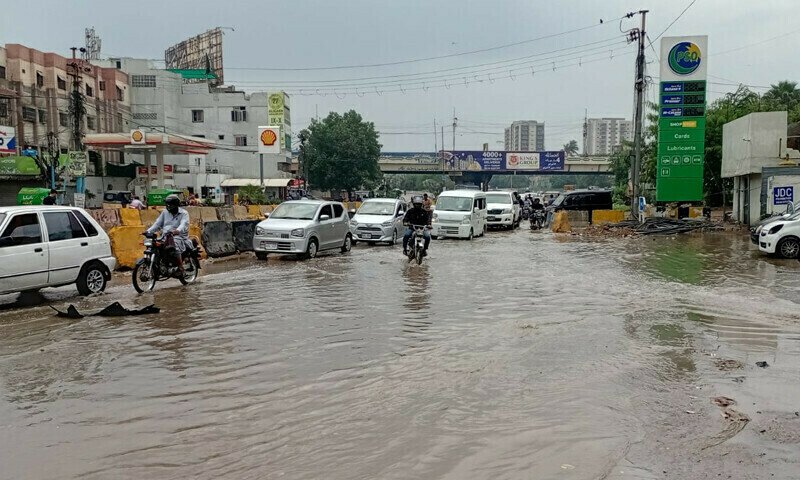
Karachi, Pakistan’s largest city, awoke to much-anticipated rainfall on Thursday morning, providing a reprieve from the sweltering heat that has plagued residents in recent weeks. However, the downpour also triggered significant challenges, including power outages in various neighbourhoods and traffic disruptions across the metropolis.
The rain, which began in the early hours, brought much-needed relief to the city’s residents, many of whom had been enduring soaring temperatures. Meteorological experts had predicted this rainfall as part of the seasonal monsoon pattern, which typically brings both alleviation from heat and its associated complications.
As the rain fell, several roads across Karachi quickly became inundated, leading to hazardous driving conditions. Traffic slowed considerably at numerous points, with some areas experiencing complete gridlock. Commuters were faced with lengthy delays as vehicles struggled to navigate through waterlogged streets. The situation was compounded by the fact that many drivers had not anticipated the sudden downpour, resulting in a chaotic morning commute.
In light of the adverse weather conditions, local authorities have urged citizens to exercise caution while travelling and to remain vigilant about the potential for further flooding. The Karachi Water and Sewerage Board has been mobilising teams to address drainage issues, but the sheer volume of rain has overwhelmed some areas, leading to concerns about infrastructure inadequacies.
Power outages have also been reported in several districts, compounding the difficulties faced by residents. The electricity supply disruption is particularly concerning as it affects not only lighting but also essential services and cooling systems, which are vital during the humid conditions that often follow rain in Karachi. The city’s power distribution companies are working to restore electricity, but many areas remain without power as technicians assess and repair damage caused by the rain.
Despite the disruptions, many residents have welcomed the rain, viewing it as a blessing after enduring weeks of scorching temperatures. The monsoon season is crucial for agriculture across Pakistan, with the rainfall playing a vital role in supporting crops and replenishing water supplies. However, the erratic nature of the monsoon, often characterised by sudden heavy downpours, can lead to flooding and other challenges, particularly in urban areas like Karachi where drainage systems are often inadequate.
As the day progresses, weather forecasts indicate that the rain may continue, with further showers expected in the coming days. Residents are encouraged to stay updated on weather advisories and to take necessary precautions to ensure their safety during this period of unpredictable weather.
In the broader context, Karachi’s infrastructure has been under increasing pressure due to rapid urbanisation and population growth. The city’s drainage systems, originally designed to handle much lower volumes of rainwater, frequently struggle to cope with the demands placed upon them during monsoon season. Urban planners and local government officials face the ongoing challenge of improving the city’s resilience to flooding, a task that requires significant investment and long-term strategic planning.