





























































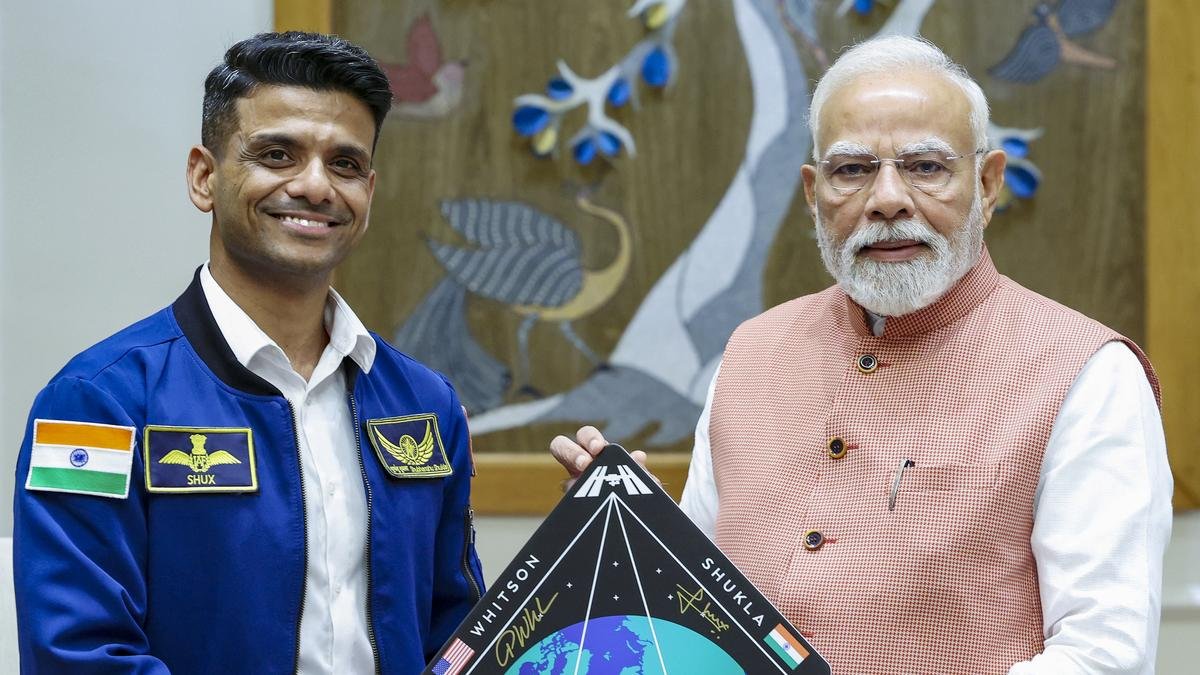
During a recent meeting with Prime Minister Narendra Modi, Indian astronaut Shubhanshu Shukla expressed the growing international interest in India’s ambitious Gaganyaan mission. This initiative, which aims to send Indian astronauts into space, has garnered attention from various global stakeholders, reflecting India’s rising status in the field of space exploration.
The Gaganyaan programme is a significant milestone for India, marking the country’s first attempt to send humans into orbit. The mission is part of a broader strategy to enhance India’s capabilities in space technology, which has rapidly evolved over the past few decades. India has established itself as a formidable player in the global aerospace sector, with successful missions including the Mars Orbiter Mission and the Chandrayaan lunar missions.
Shukhla’s conversation with Modi underscored the potential of Gaganyaan not only to advance India’s technological prowess but also to inspire future generations. The astronaut highlighted how the mission could serve as a catalyst for international collaboration in space research. As nations increasingly recognise the importance of space exploration for scientific discovery, environmental monitoring, and even economic growth, India’s participation in this arena is seen as pivotal.
The global space race has intensified in recent years, with various countries and private entities investing heavily in their space programmes. The United States, China, and Russia have long been dominant forces in space exploration. However, India’s achievements have prompted a reevaluation of the global hierarchy in space capabilities. With its low-cost launch services and innovative technologies, India is positioning itself as a preferred partner for various countries looking to expand their space initiatives.
The Gaganyaan mission is slated for launch in the near future, and it represents a culmination of years of planning and development by the Indian Space Research Organisation (ISRO). The mission aims to send a crew of Indian astronauts, or “Gagannauts,” into low Earth orbit for a duration of approximately seven days. The spacecraft will be equipped with advanced life support systems, and the astronauts will undergo rigorous training to prepare for the challenges of space travel.
As the mission progresses, it is anticipated that it will not only demonstrate India’s capabilities in sending humans to space but also contribute to scientific research and technological advancements. The data and experience gained from Gaganyaan could have far-reaching implications for future missions, including potential collaborations with other space-faring nations.
Moreover, the Gaganyaan initiative is part of a larger vision for India’s space ambitions, which include plans for missions to the Moon and Mars. The country’s successes in these areas could lead to enhanced international partnerships and collaborative projects, reinforcing the notion that space is a frontier that transcends national boundaries.
Shukhla’s remarks reflect a growing sentiment that India’s space programme is not just about national pride but also about contributing to global knowledge and cooperation. As countries face challenges such as climate change and resource scarcity, the collaborative potential of space exploration could offer solutions that benefit humanity as a whole.