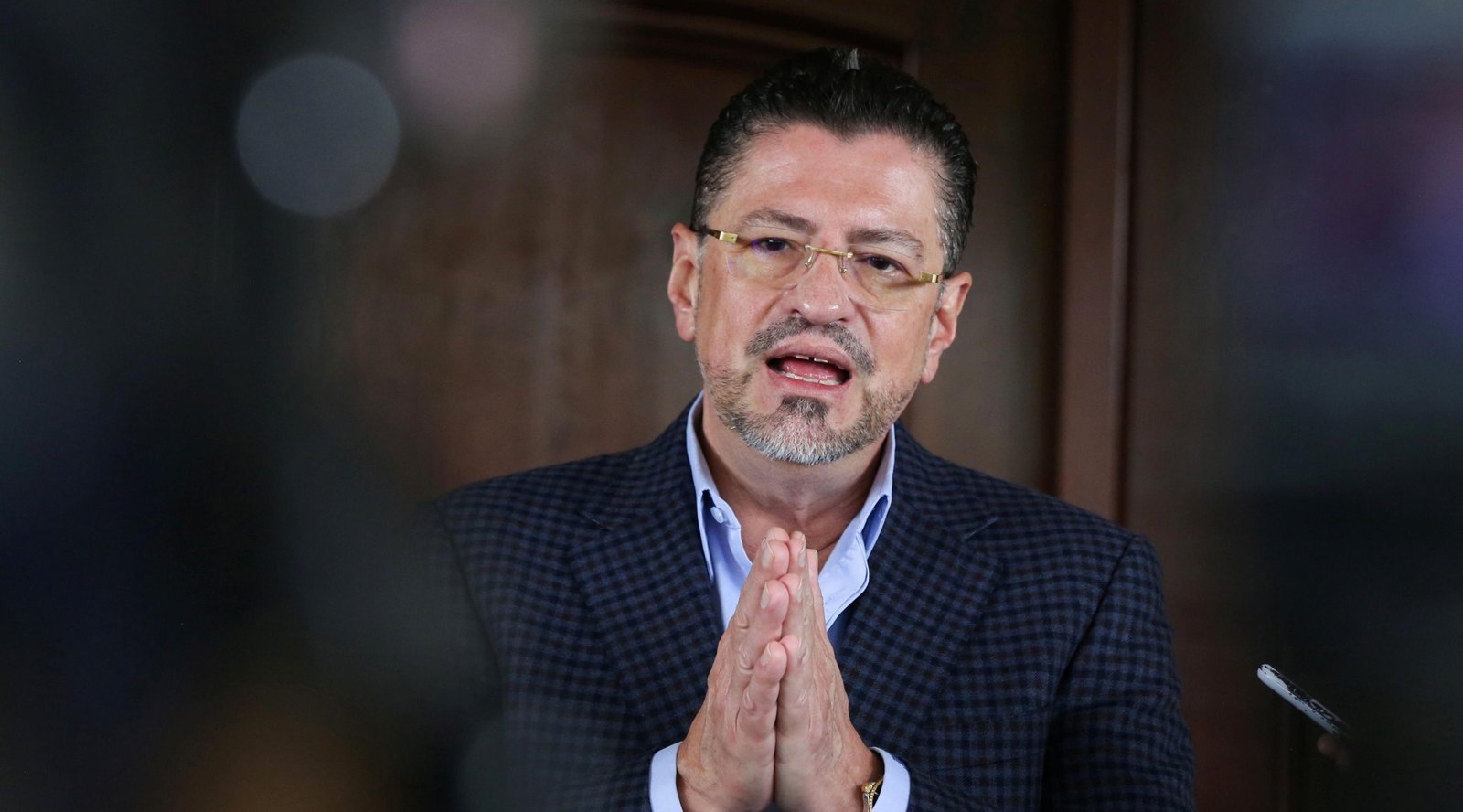




















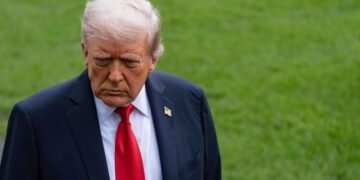












Costa Rican President Rodrigo Chaves is at the center of a mounting legal and political crisis following a formal corruption accusation filed by the nation’s attorney general. The move has reignited tensions between the executive branch and the judiciary, as Chaves nears the final year of his term with the possibility of losing his presidential immunity looming large.
The controversy centers on allegations that Chaves and his Minister of Communication, Jorge Rodríguez, were involved in the misappropriation of $32,000 from a $400,000 fund provided in 2022 by the Central American Bank for Economic Integration (CABEI). Prosecutors allege the money was funneled to a close presidential advisor, Federico Cruz, as part of a broader “criminal plan.” The funds were originally intended to support government communications services, but investigators now believe they were misused for personal gain.
The attorney general, Carlo Díaz, formally initiated criminal proceedings against Chaves on charges of “concussion,” a corruption-related offense under Costa Rican law. The accusation marks a major escalation in an ongoing standoff between the president and the judiciary—a conflict that Chaves has publicly fueled with incendiary rhetoric.
Reacting to the charges, Chaves launched a verbal assault on Díaz and the broader judicial system. “Carlo Díaz, so vile and cowardly, is just a puppet of the political mafia embedded in the Legislative Assembly and the Judiciary,” the president declared in a recent speech. He accused the judiciary of operating under the control of opposition parties determined to silence him, likening his political enemies to 19th-century invaders and provocateurs. “They want to gag me, intimidate me, imprison me,” he added. “They screwed up!”
Public reaction has been divided. While Chaves retains a solid base of support—54% approval according to a March poll by the University of Costa Rica—his aggressive tone has raised alarm among legal experts and political observers. The decision to strip Chaves of immunity now lies with the Criminal Chamber of the Supreme Court, which would need to refer the matter to the Legislative Assembly, where opposition parties hold the majority required to lift his protections.
The president, however, has remained defiant. When asked if he would voluntarily relinquish immunity to face trial, Chaves responded dismissively: “Why should I tell you whether I’ll give it up or not? Let them make their move.”
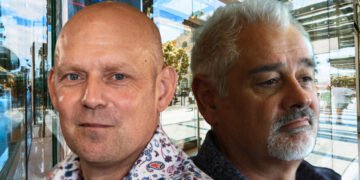
The scandal also implicates former Minister of Communication Patricia Navarro and political consultant Christian Bulgarelli, whose company originally received the CABEI funds. Audio recordings and text messages provided to investigators suggest direct involvement from Chaves’s inner circle in coordinating the disputed contract. In one message, Navarro allegedly told Bulgarelli: “We need the contract terms urgently. The president asked for them.”
Bulgarelli has since become a key witness for the prosecution, though Chaves has labeled him, along with Navarro, a “traitor.” A video surfaced this week showing Chaves confronting Bulgarelli at a San José restaurant in March, reportedly calling him a “rat” before security intervened. The confrontation has added another layer of drama to an already volatile case.
In response to the scandal, CABEI recently canceled its $1 million annual discretionary funding program for founding member states—a move seen as a direct consequence of the misuse of funds in Costa Rica. The funding had been a critical resource for government projects, including the now-disputed communications contract.
The political stakes are high. Costa Rica is less than a year away from national elections to choose Chaves’s successor and a new Legislative Assembly. With re-election barred by law, Chaves’s influence in shaping the future government may depend heavily on how this case unfolds and whether his political movement can consolidate behind a candidate.
The main opposition party, the National Liberation Party (PLN), has begun mobilizing for the upcoming vote. It recently selected economist Álvaro Ramos as its presidential candidate, following a low-key primary process. In his acceptance speech, Ramos called for “the defense of democracy” in a country long regarded as one of Latin America’s most stable democracies.
As legal proceedings inch forward, Costa Rica finds itself in unfamiliar territory—a sitting president under formal investigation for corruption, facing off against the country’s judiciary and legislative powers in a conflict that could reshape the nation’s political future.