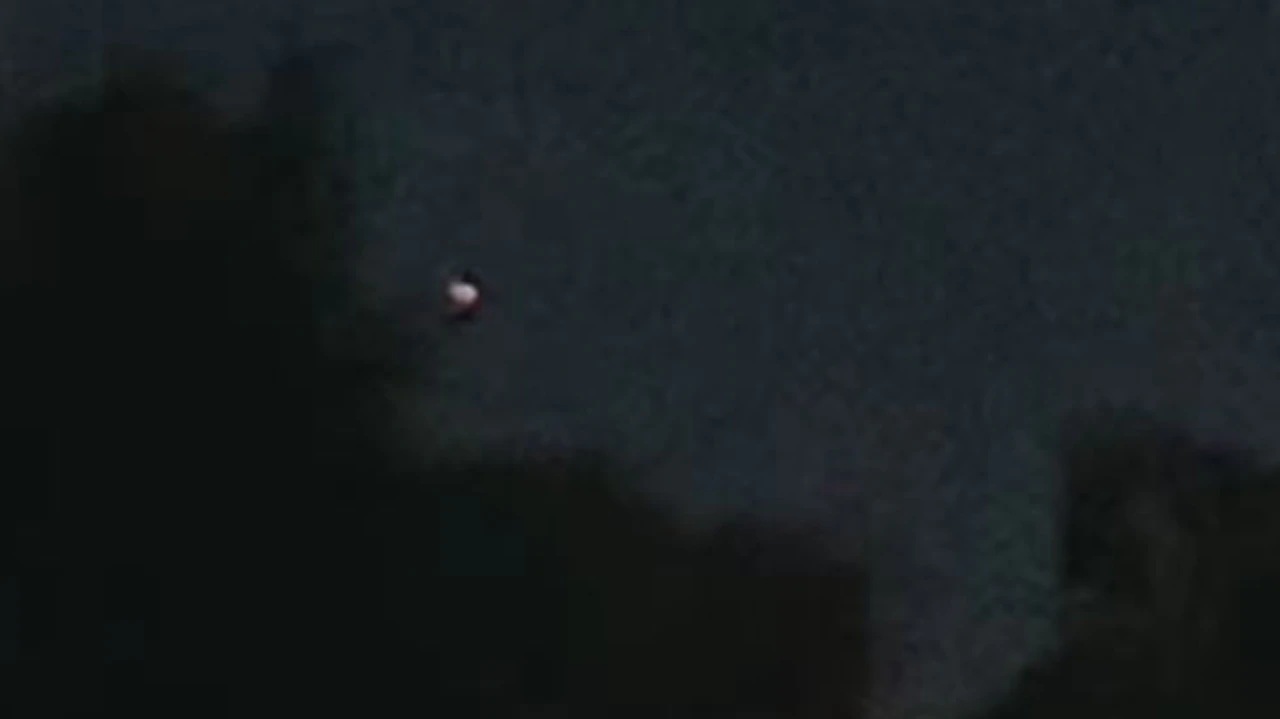




























































Late on July 30, 2025, residents across Queensland and northern New South Wales looked to the sky and saw something strange—three bright, pulsating white orbs hovering above the eastern coastline. The glowing shapes sparked a flood of social media posts, video clips, and speculative theories. Was it a UFO? A meteor? A visitor from another world?
One resident on the Gold Coast shared that the light was so intense it woke their brother up. Others were convinced they were witnessing something extraordinary. “Maybe three UFOs or a big star ship,” one viewer said. Another confidently declared, “It’s a UFO. It has to be.”
But while the scene resembled something out of a sci-fi movie, the explanation was far more grounded.
According to Dr Brad Tucker, an astrophysicist from the Australian National University, the light show wasn’t the result of alien activity—it was the exhaust plume from a Chinese rocket launch. Specifically, the spectacle was linked to the Long March 8A rocket launched from China’s Hainan commercial spaceport at 5:49 pm AEST. The rocket was carrying the latest batch of low-Earth orbit internet satellites.
The launch path sent the rocket southeast over the ocean off the coast of Queensland. As it climbed, the rocket’s various stages separated, releasing bursts of gas that created the glowing effect seen from the ground. The gas illuminated in the upper atmosphere, reflecting light and forming a shape often nicknamed a “space jellyfish” due to its soft glow and tentacle-like trails.
Though the lights seemed close, they were actually hundreds of kilometres away and high in the atmosphere. The reason they appeared to hover in place was due to the exhaust remaining suspended, drifting slowly and eventually fading. Tucker likened it to the way dust hangs in the air after a car peels out on a dry road.
Adding to the confusion was an unrelated event earlier that day—Australia’s first-ever domestically built rocket, the Eris-1, launched from Queensland but failed just 14 seconds after takeoff. While the Australian rocket didn’t cause the orbs, the timing of both launches on the same day likely contributed to the uncertainty and excitement.
This isn’t the first time a rocket launch has led to mistaken UFO sightings. These “space jellyfish” formations have been observed in other countries too, especially during twilight when sunlight reflects off high-altitude particles. They’re a visual side effect of growing global space activity and a reminder that not every strange light in the sky is unexplainable.
The event highlights the importance of public awareness and scientific communication. As more nations launch rockets into space, these displays may become more frequent—and knowing the science behind them can turn panic into fascination.
If you spot something unusual in the sky, it might be worth checking global launch schedules before jumping to conclusions. Sometimes, the truth is even more interesting than the speculation.