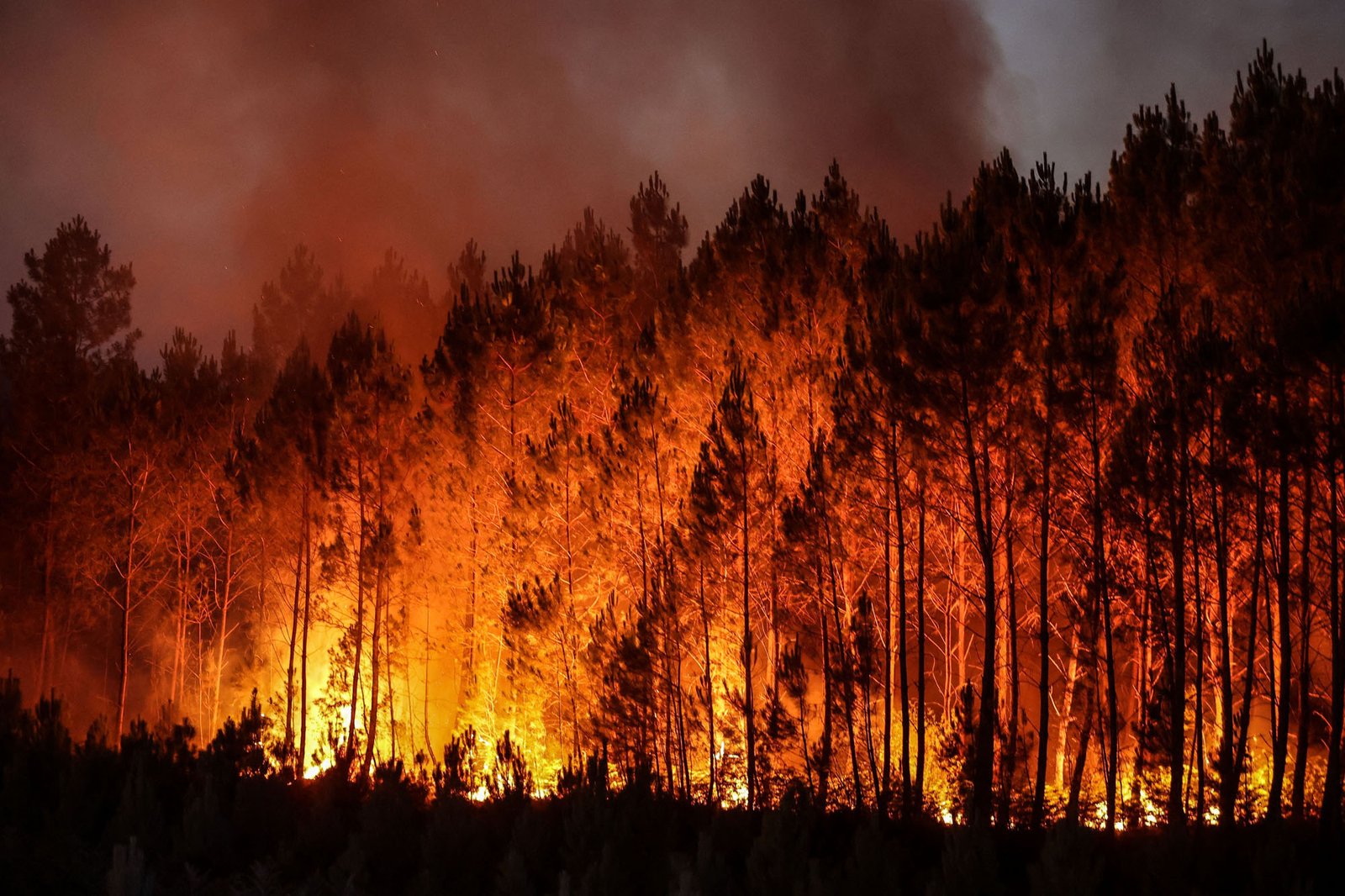

























































A blistering heatwave sweeping across southern Europe has ignited wildfires in several countries, prompting emergency responses and raising alarm over the growing impacts of climate change. Greece and Turkey are currently among the hardest-hit nations, with temperatures soaring to dangerous levels and emergency services working around the clock to contain the flames.
In central Greece, temperatures surged to a sweltering 42.4°C on Sunday, exacerbating already dry and volatile conditions that have fueled fast-moving wildfires. Authorities have issued high-risk fire warnings in several regions, including around Athens and central Thessaly, as smoke-choked skies and evacuation orders disrupt daily life.
Neighbouring Turkey recorded its highest temperature ever on Sunday, reaching a staggering 50.5°C in the southeastern city of Silopi, according to the country’s environment ministry. This unprecedented heat has intensified fire risk in the already arid southeast and beyond, with Turkish firefighters scrambling to bring multiple wildfires under control.
The extreme weather is not confined to these two countries. Video footage circulating online shows firefighters battling blazes in other parts of southern Europe, including Bulgaria, Albania, and Italy. In parts of southern Italy, particularly Sicily and Calabria, dry conditions and gusty winds have fanned the flames, forcing evacuations and damaging property and agricultural land.
In Bulgaria and Albania, fire crews were dispatched over the weekend to suppress outbreaks in forested and mountainous regions where access is limited. Firefighters and volunteers have struggled to reach remote fire zones, with some communities relying on aerial water drops due to impassable roads and steep terrain.
The European Union’s emergency response coordination center is monitoring the situation closely and has warned of sustained extreme heat in the coming days. Meteorologists attribute the prolonged heatwave to a high-pressure system stalled over the Mediterranean, creating hot and dry conditions that are expected to persist throughout the week.
Health officials across affected regions have issued heat alerts and urged residents to stay indoors, avoid strenuous activity, and hydrate regularly. Vulnerable populations such as the elderly, children, and those with chronic conditions are at heightened risk of heat-related illnesses.
Southern Europe has become increasingly vulnerable to extreme heat events, which scientists link to the accelerating impacts of global climate change. The frequency and intensity of wildfires have risen sharply in recent years, devastating natural ecosystems, displacing thousands, and placing enormous pressure on emergency services.
As temperatures continue to climb, authorities fear that the worst may still be ahead. Emergency services across the region remain on high alert, and international assistance may be required if conditions worsen.