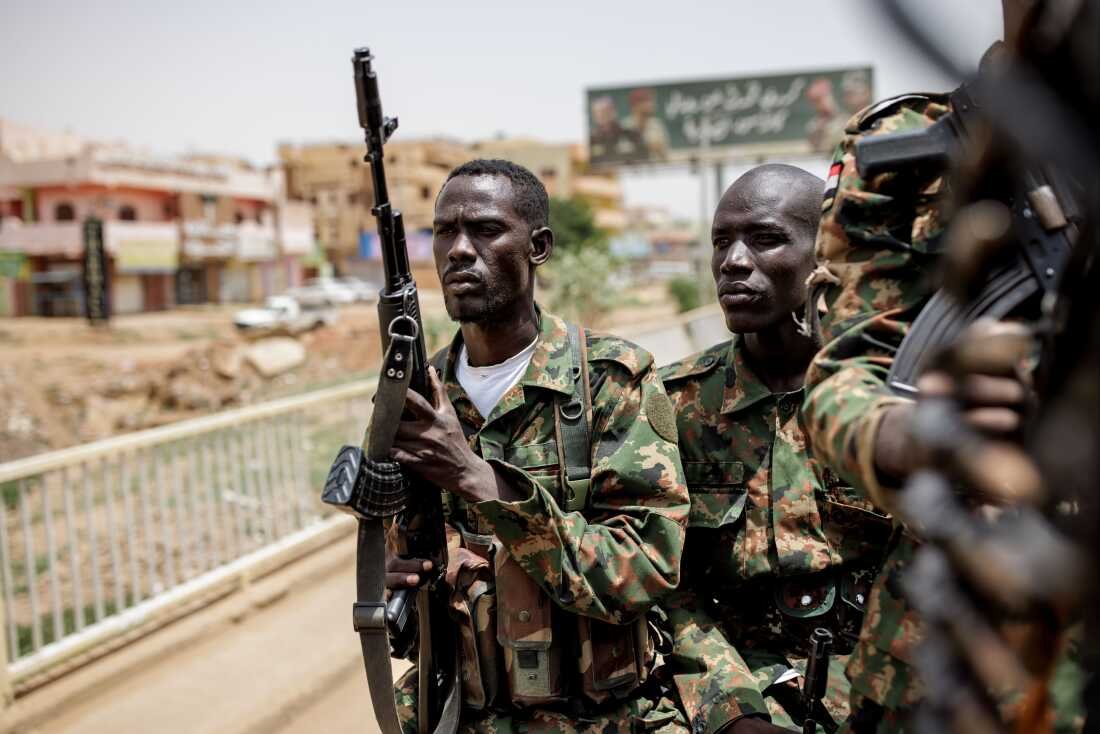
After 27 months of civil war, a coalition led by Sudan’s paramilitary Rapid Support Forces (RSF) has declared the formation of a parallel government, intensifying concerns that the move could deepen and prolong the country’s devastating conflict.
The announcement was made on Saturday, nearly five months after the coalition first declared its intention to establish an alternative administration. It marks a significant escalation in the power struggle between the RSF and the Sudanese military, each of which now claims to represent Sudan’s legitimate authority.
General Mohamed Hamdan Dagalo, commonly known as Hemedti and leader of the RSF, was named head of the newly established 15-member Presidential Council. Abdel Aziz al-Hilu, the leader of the Sudan People’s Liberation Movement-North (SPLM-N), was appointed as vice president. Al-Hilu commands one of Sudan’s most powerful rebel factions and has long called for a secular and inclusive Sudanese state.
The position of prime minister was assigned to Mohamed Hassan Al-Ta’ayshi, a civilian politician who served on Sudan’s Transitional Sovereign Council between 2019 and 2021, before the military coup that derailed the country’s fragile democratic transition.
According to statements from the coalition, the new government aims to challenge the legitimacy of the internationally recognised administration, which remains aligned with the Sudanese Armed Forces under General Abdel Fattah al-Burhan. The RSF-led bloc insists that its parallel authority is more inclusive of civilian and rebel voices and more representative of Sudan’s marginalized regions.
In response, the military government condemned the creation of the rival administration, labeling it illegitimate and vowing to continue its military campaign until it regains full control over Sudan. General Burhan’s forces currently hold key regions in the north, east, and center of the country, including the capital Khartoum, which they recently recaptured after months of fierce urban combat.
Meanwhile, the RSF maintains control over large swaths of western Darfur and parts of Kordofan in the south-central region. Local human rights organizations report that recent RSF operations in these areas have resulted in hundreds of civilian deaths, exacerbating the already dire humanitarian situation.
The war between the RSF and the military, which began in April 2023, has triggered one of the world’s worst humanitarian crises. The United Nations estimates that about half of Sudan’s population is now facing acute food insecurity, with famine looming in several conflict-affected zones. The violence has also killed tens of thousands of people and displaced nearly 13 million others, both internally and across borders.
Observers warn that the RSF’s move to establish a parallel government could severely undermine any future peace talks and push Sudan further toward partition or permanent state collapse. Analysts also fear that the entrenchment of competing governments could solidify a Libya-style scenario, in which rival factions maintain control over divided territories with no central authority.
The international community has yet to officially respond to the RSF’s announcement. However, humanitarian organizations have expressed concern that the political fragmentation will make it even more difficult to deliver aid and secure safe corridors for civilians caught in the crossfire.
With no ceasefire in sight and both sides doubling down on military and political control, Sudan’s civil war appears set to enter an even more dangerous and prolonged phase. For millions of civilians trapped in the conflict zones, the creation of competing governments signals not relief, but a new chapter of uncertainty and suffering.