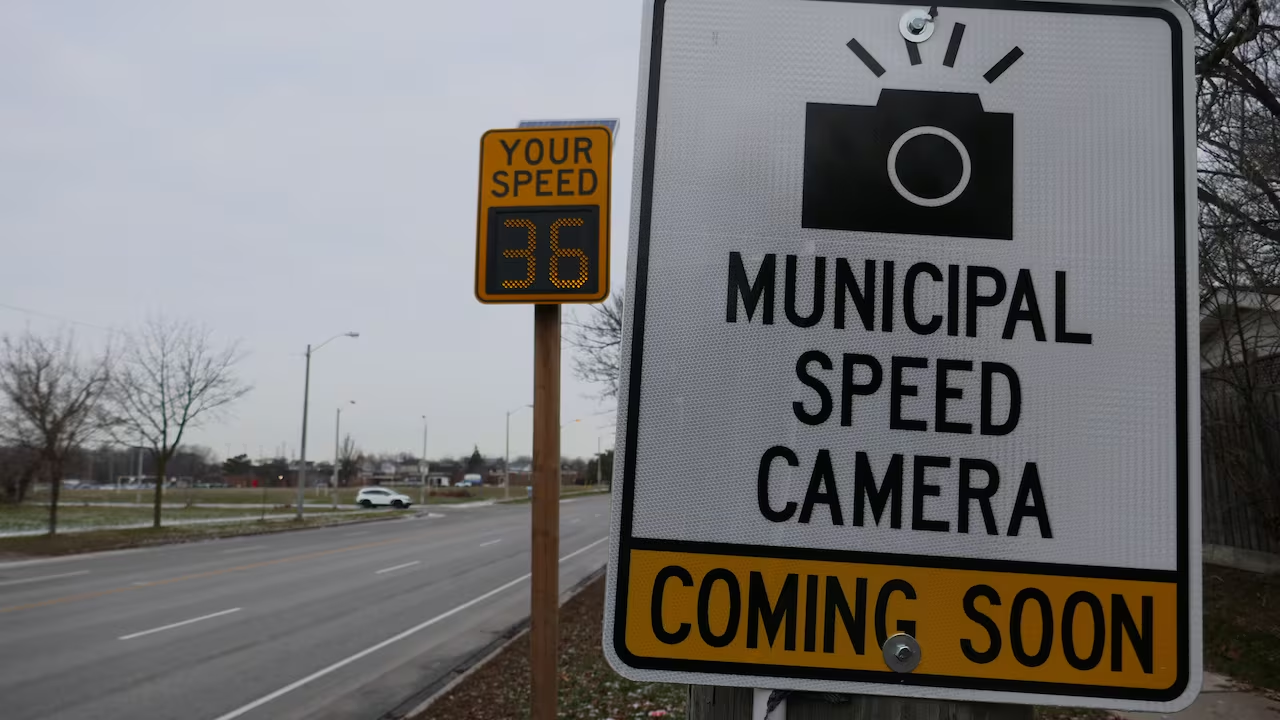





























































Automated speed cameras have significantly reduced speeding in school zones across Toronto, according to a new peer-reviewed study led by The Hospital for Sick Children (SickKids) and Toronto Metropolitan University. The research, published in the journal Injury Prevention, tracked vehicle speeds in 250 school zones across the city from July 2020 to December 2022, revealing that speeding dropped by nearly 45 percent following the installation of cameras.
The study’s lead author, Dr. Andrew Howard, who also serves as the head of orthopedic surgery at SickKids, expressed surprise at the scale of the results. He noted that the most dramatic reductions were observed among the worst speed offenders. The number of drivers going 10 kilometers per hour over the limit fell by 74 percent, while those exceeding the speed limit by 15 kilometers per hour dropped by 84 percent. Drivers going 20 kilometers per hour or more over the limit decreased by 88 percent. The study used pneumatic road tubes to gather pre- and post-installation speed data, offering a reliable before-and-after snapshot of driver behavior.
Dr. Howard emphasized the life-saving potential of these reductions, explaining that even small decreases in speed can drastically cut the kinetic energy involved in a collision. In urban settings, where school zones are often crowded with pedestrians, particularly children, every kilometer per hour makes a critical difference.
Though the study occurred during the first two years of the COVID-19 pandemic—a period marked by lockdowns, school closures, and irregular traffic volumes—the researchers found that automated speed enforcement (ASE) remained the dominant factor in slowing down traffic. The data showed that when ASE cameras were removed, speeding levels quickly returned to their previous rates, further validating the cameras’ impact.
One of the goals behind the implementation of ASE in school zones is to make the streets safer and more walkable for children, thereby encouraging physical activity. Dr. Howard added that creating an environment where children feel safe enough to walk to school could have long-term health benefits, as regular physical activity in youth is strongly linked to lower health risks in adulthood.
Toronto’s deployment of speed cameras is part of the city’s Vision Zero initiative, a road safety strategy launched in 2016 aimed at eliminating traffic-related deaths and serious injuries. The recent findings lend strong support to this approach, highlighting ASE as a practical and measurable tool for reducing dangerous driving behaviors.
Despite the promising results, the expansion of speed camera use in Toronto has not come without controversy. In 2025, the city doubled its number of speed cameras from 75 to 150. However, according to city officials, there have been at least 25 incidents of vandalism involving speed cameras between January and late July 2025. Eleven cameras were targeted in just the first week of July. One camera located on Parkside Drive has reportedly been cut down six times in eight months.
Public opinion remains largely in favor of ASE. A recent survey conducted by the Canadian Automobile Association (CAA) found that 73 percent of Ontario residents support the use of automated speed enforcement, and 76 percent believe the cameras are effective in deterring drivers from speeding.
Nevertheless, some Toronto city councillors have raised concerns about the fairness of the program. Councillor Anthony Perruzza recently advocated for larger and clearer signage around ASE cameras and proposed a limit on how many tickets a driver can accumulate from a single camera before being officially notified. A city committee is expected to consider these recommendations later this year.
In the broader context of road safety, Toronto’s experience with speed cameras mirrors international findings. Studies in other countries have consistently shown that automated speed enforcement reduces not only speeding but also traffic collisions and injuries. A global review of 35 studies, including research from Australia, the UK, and the US, found that speed cameras reduced crash rates by up to 50 percent in some locations.
The SickKids-TMU study is one of the first in Canada to examine speed trends before, during, and after the installation of speed cameras in school zones. Its findings not only provide clear evidence of the effectiveness of ASE but also strengthen the case for expanding such programs in other parts of the country.
As Toronto continues its efforts to make roads safer for its most vulnerable users, this study demonstrates that technology-driven enforcement can produce real, measurable change—one that could mean the difference between life and death.