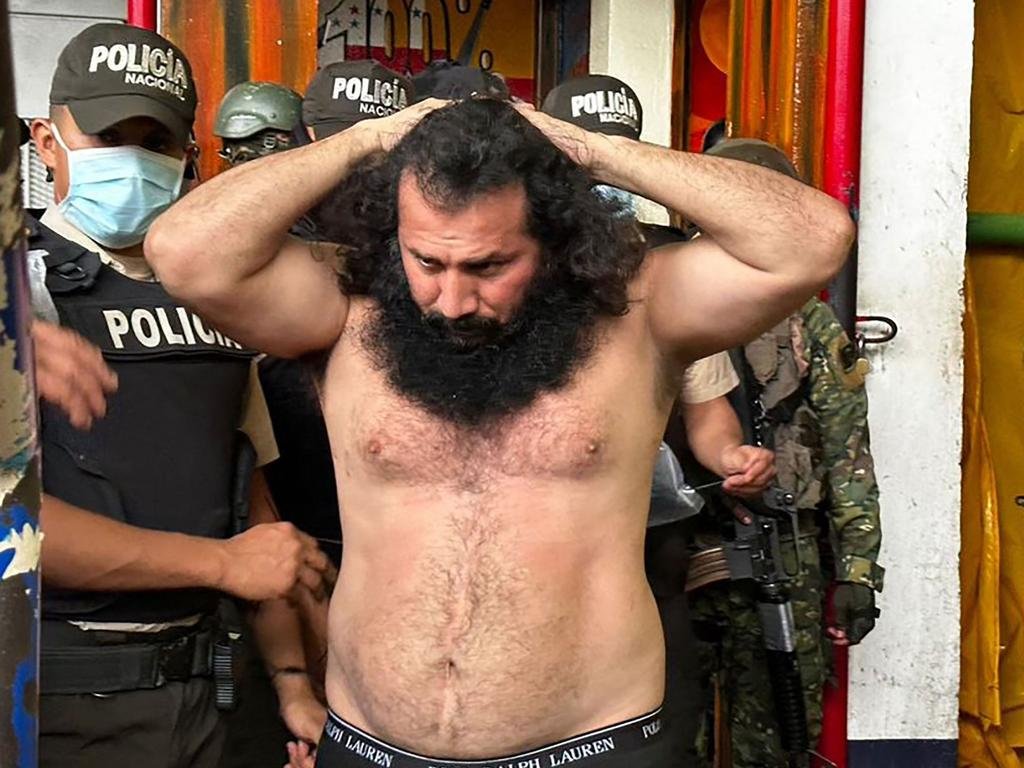




























































Jose Adolfo Macias Villamar, also known as “Fito,” has been extradited from Ecuador to the United States following one of the most notorious prison escapes in recent Latin American history. Macias, the powerful leader of Ecuador’s feared criminal gang Los Choneros, was handed over to U.S. authorities on July 20, 2025, in the coastal city of Guayaquil. The extradition comes after a nearly 18-month manhunt that ended with his dramatic capture in late June.
Federal prosecutors in Brooklyn, New York, had filed a seven-count indictment against the 44-year-old in April 2025. Charges include cocaine trafficking, international conspiracy, weapons smuggling, and firearms violations. Upon arrival in the U.S., Macias was taken into custody and arraigned in a federal court, where he entered a plea of not guilty. Prosecutors are seeking his detention without bail, arguing he poses a flight risk and remains a high-level threat to public safety.
This extradition is significant for Ecuador. Macias is the first Ecuadorian to be extradited to the United States since the country passed a 2024 constitutional reform allowing the process. The move is a cornerstone of President Daniel Noboa’s broader security campaign aimed at dismantling organized crime networks that have fueled a surge in violence across the country. The referendum that enabled the change was overwhelmingly approved by voters, underscoring the public’s desperation for a safer Ecuador.
Before he became the country’s most feared crime boss, Macias worked as a taxi driver. He rose through the ranks of the underworld to lead Los Choneros, a gang with deep connections to Mexico’s Sinaloa Cartel, Colombia’s Clan del Golfo, and various Balkan mafias. Authorities say the gang has grown into one of the most violent and far-reaching criminal organizations in the region. According to Ecuador’s Organized Crime Observatory, Los Choneros are believed to be responsible for hundreds of homicides, extortion operations, drug trafficking rings, and arms shipments.
Macias was originally serving a 34-year sentence for charges including drug trafficking, organized crime, and murder. However, on January 7, 2024, he disappeared from La Regional prison in Guayaquil just before he was due to be transferred to a more secure facility. Authorities arrived to move him, only to find his cell empty. Despite the deployment of military forces, no one could immediately explain how one of the most closely watched inmates in the country managed to flee. Allegations of internal collusion and systemic corruption soon followed.
His escape triggered a wave of chaos across Ecuador. Gang violence erupted in multiple cities, prisons descended into riots, and four police officers were taken hostage inside a detention facility. A live television broadcast was hijacked by armed assailants wearing masks, who stormed the studio, held journalists at gunpoint, and opened fire inside the newsroom. The unprecedented attack shocked the nation and drew international headlines. One of the journalists could be heard begging for help in real-time, describing the men as “here to kill us.”
President Noboa quickly declared a 60-day state of emergency and authorized military operations against what he called a terrorist threat. Tanks and soldiers were deployed in cities like Quito and Guayaquil as the government scrambled to restore order. The violence ultimately claimed the lives of at least 20 people and deepened Ecuador’s already fragile security landscape.
The search for Macias continued for over a year until June 25, 2025, when intelligence led law enforcement to a luxury villa in the coastal port city of Manta—a stronghold for Los Choneros. During a 10-hour operation involving police and the military, authorities used excavators to probe the property after noticing an irregular crop field nearby. The digging reportedly panicked Macias, who was hiding in a reinforced bunker under the tiled floor. Fearing collapse, he voluntarily opened the hatch and surrendered to military forces already stationed nearby.
Following his capture, President Noboa reaffirmed his commitment to extradite Macias “as soon as possible,” a promise he fulfilled within a month. The president described the handover as a critical step toward justice and thanked international partners for their support. The U.S. Embassy in Quito praised the operation, stating that Washington supports Ecuador in its efforts to dismantle transnational crime.
Macias’s criminal reach had long extended beyond Ecuador’s borders. Under his leadership, Los Choneros evolved into a multinational operation moving large quantities of cocaine through Ecuadorian ports to North America and Europe. According to government figures, over 70 percent of the world’s cocaine shipments now pass through Ecuador. In 2024 alone, the country seized a record 294 metric tons of narcotics, mostly cocaine, indicating the vast scale of trafficking networks that operate within and beyond Ecuadorian territory.
The extradition of Macias marks a significant milestone in Ecuador’s battle against organized crime. But experts warn that deep-seated issues remain. Ecuador’s penitentiary system is still plagued by gang control and corruption. Several prisons function as command centers for criminal operations, with many inmates possessing weapons, cellphones, and direct links to cartel operatives on the outside. Human rights groups have also raised concerns about abuses during recent crackdowns and mass detentions.
As Macias now faces trial in the U.S., many in Ecuador remain cautiously optimistic. His removal may weaken the operational capacity of Los Choneros in the short term, but it also leaves a power vacuum that rival gangs are eager to fill. In a country caught between the world’s top cocaine producers—Colombia and Peru—Ecuador’s battle against the cartels is far from over.
What remains to be seen is whether Macias’s prosecution abroad will serve as a turning point or just another chapter in Ecuador’s long and violent struggle with organized crime.