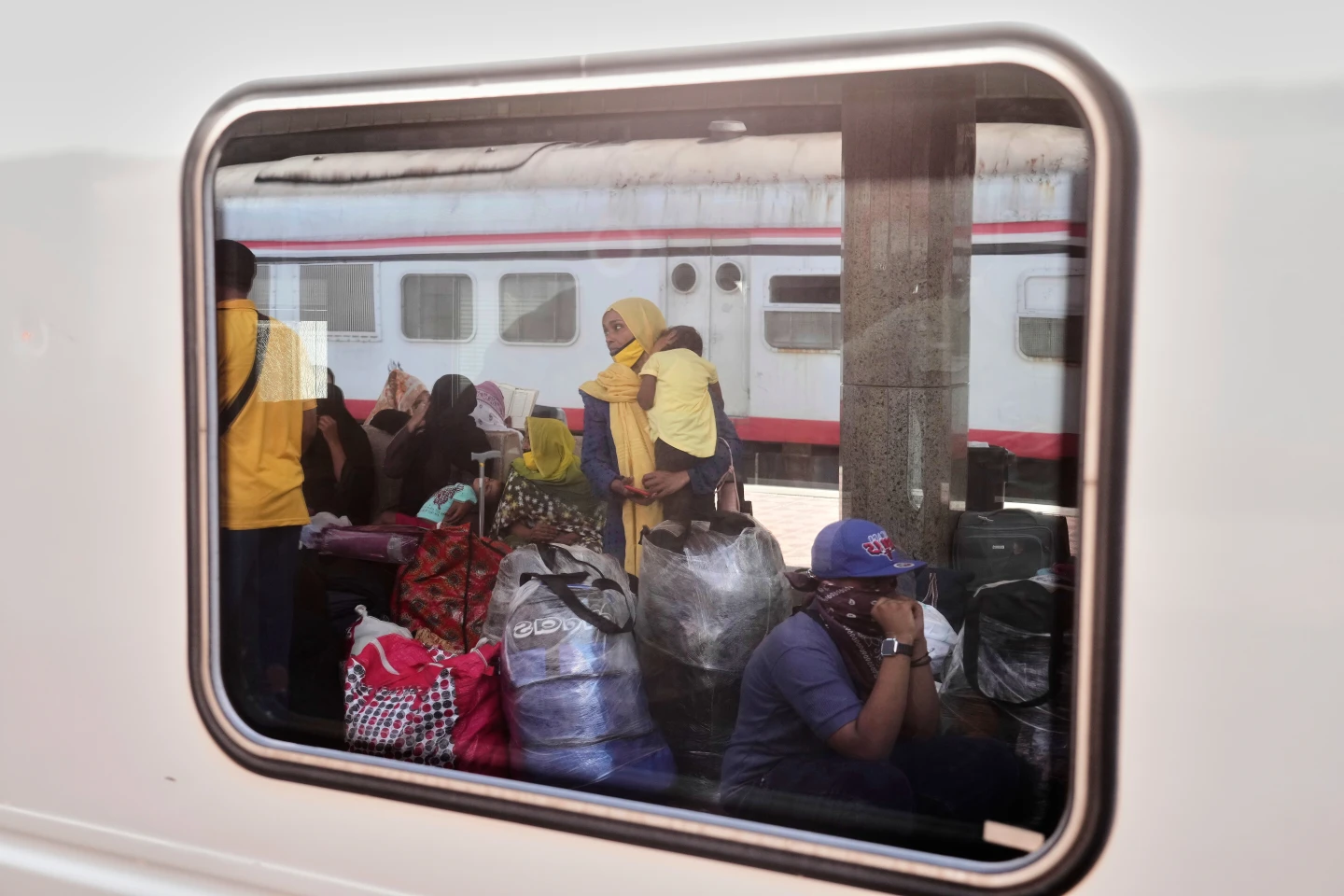
















































Cairo, Egypt — In a powerful gesture of solidarity and humanitarian support, the Egyptian government has launched a free transportation initiative to assist Sudanese refugees returning home after more than a year of brutal civil war. On Monday, hundreds of Sudanese families gathered at Cairo’s main train station, boarding the first leg of a long journey back to Khartoum, Sudan’s war-damaged capital.
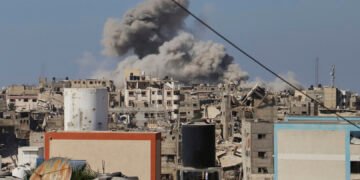
The initiative follows the Sudanese Armed Forces (SAF) reclaiming control of Khartoum from the Rapid Support Forces (RSF) after intense urban combat that left much of the capital in ruins. With the frontline now shifting westward into other regions such as Kordofan and Darfur, some displaced Sudanese are choosing to return home — despite the risks.
“I am happy because I am finally going back to my family and my children,” said Awatef al Hassan, a refugee from Omdurman, Sudan, travelling with her daughter. “But I’m also anxious. We don’t know what we’re going back to.”
The route back to Sudan spans more than 2,080 kilometers (1,292 miles) and is not a simple return. Refugees first travel by train from Cairo to Aswan in Egypt’s far south — a journey of roughly 12 hours — before switching to ferries and buses that will carry them across the border and deeper into Sudan.
For many, the decision to leave Egypt — a place of temporary refuge — is deeply emotional. Sudanese journalist Asem al-Taieb, who joined the train journey, described scenes of tearful goodbyes and families packed into rail cars with small suitcases and bundles, carrying all that remains of their lives.
“It was a moment of overwhelming emotions,” he said. “There was both sadness and joy — joy at the thought of seeing loved ones again, and sadness over what we’ve endured.”
Sudan’s civil war, which erupted in April 2023, has displaced over 8 million people — including more than 1.5 million who have sought refuge in Egypt, making it the largest host country for Sudanese refugees. Inside Sudan, another 7 million remain internally displaced, according to the United Nations.
The conflict between the SAF and the RSF has led to one of the world’s largest displacement crises and a death toll of over 40,000. The fighting initially saw Khartoum fall to RSF forces before it was retaken by the army on 20th May 2025.
Though Khartoum’s infrastructure remains devastated — including major landmarks like the presidential palace and international airport — signs of a slow recovery are emerging. Markets are reopening, residents are returning, and government forces are trying to restore electricity and water services, although large portions of the city still lack basic amenities.
Egypt has walked a delicate line during Sudan’s crisis, offering humanitarian assistance without directly taking sides in the conflict. Cairo’s free train initiative reflects its role as a regional stakeholder and humanitarian corridor, especially for refugees seeking to reconnect with families or rebuild in newly secured areas of Sudan.
Egyptian officials have not disclosed how many total refugees will be assisted through the return program, but hundreds are expected to make the journey in phases over the coming weeks.
Despite hopes of stability in Khartoum, widespread insecurity continues in other parts of Sudan. The Kordofan region has seen escalating violence, while RSF paramilitaries remain entrenched in areas along Sudan’s borders with Libya and Chad. Humanitarian organizations have warned that returning refugees face hunger, limited healthcare access, and ongoing military risks.
Still, for many Sudanese like Awatef, the desire to return home — to reconnect with family and reclaim a sense of normalcy — outweighs the uncertainty.
“We left everything behind when the war began. Now we want to rebuild — even if it’s hard.”