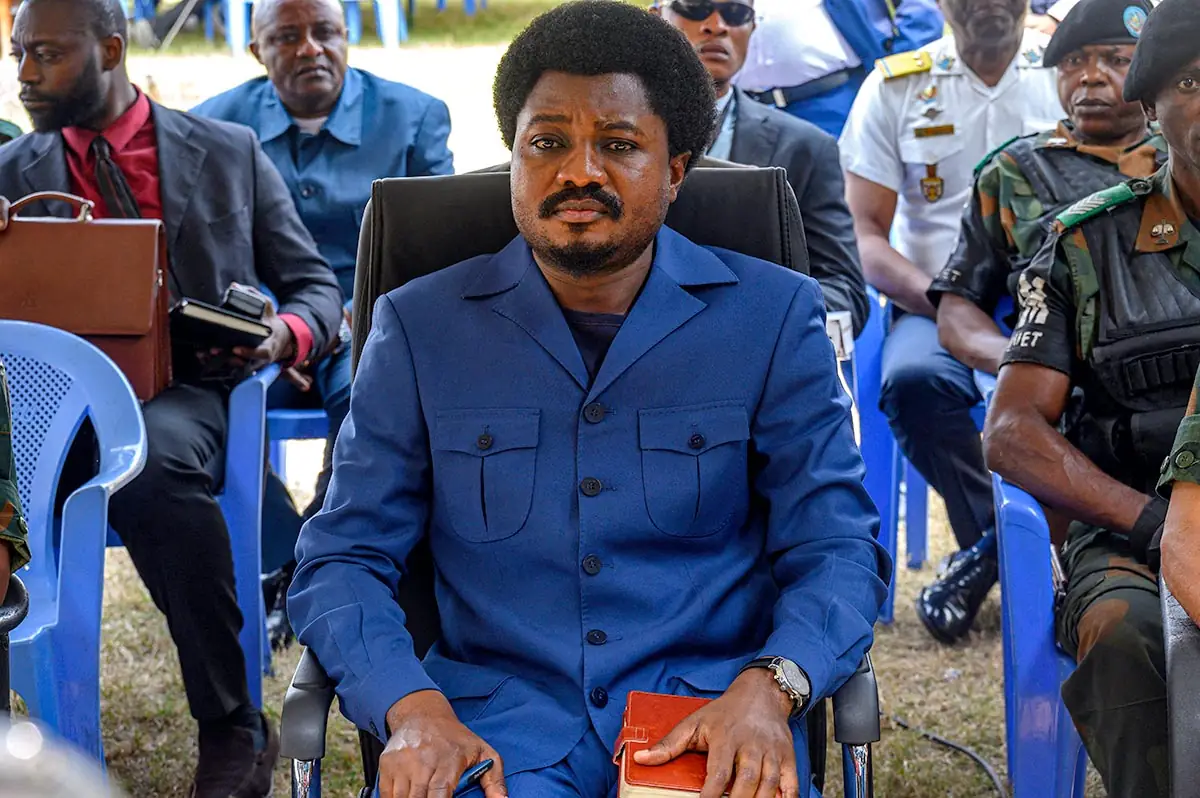



















































The high-profile corruption trial of Constant Mutamba, former Justice Minister of the Democratic Republic of the Congo (DRC), resumed on 23rd of July before the nation’s Court of Cassation in Kinshasa. The case, centred on allegations of embezzlement tied to a $19 million prison construction project in Kisangani, has drawn national attention for both its legal and political implications.
Mutamba, who once served as a key figure in the Congolese government, faces accusations of misappropriating funds meant for the development of a new penitentiary facility. At the heart of the case is a contested bank transfer involving the Zion Company, a firm awarded the project through direct negotiation—a process that the defence insists was legal and formally approved by the Prime Minister.
The hearing on July 23 opened with the defence raising two procedural objections. However, the Court dismissed both and proceeded with the interrogation. What followed was an intensive four-hour questioning session, during which Mutamba repeatedly insisted on his innocence and called for a fair opportunity to explain his role.
“I am playing for my future—please give me time to express myself,” Mutamba pleaded from the stand.
Addressing the central accusations, Mutamba denied any personal enrichment from the project.
“I have never taken a single dollar—not even one recorded by the clerk,” he asserted firmly.
He also defended the $19 million transfer as a routine financial procedure carried out with full transparency. According to Mutamba, the decision to change the Zion Company’s banking institution to match that of the Ministry of Justice was made to avoid $300,000 in transaction fees.
Regarding the contract’s procurement method, Mutamba emphasised that the direct award of the contract was approved by the Prime Minister, a detail he presented as a safeguard against allegations of illegality or favouritism.
Though framed as a legal battle, the trial has gradually taken on political overtones. As the proceedings continued, Mutamba’s tone shifted from defence to declaration. He spoke passionately about his commitment to the Congolese people and the future of the African continent.
“I did not flee, nor did I seek exile,” he said. “I am here, willing to pay the price of struggle. I am ready to go all the way—for a generation, for a people, for a continent.”
His remarks were interpreted by observers as an appeal not only to the court but also to public opinion and potential political allies.
A Trial of Symbolic Importance
Legal experts and political analysts have called the trial one of the most symbolically charged anti-corruption cases in the DRC in recent years. Mutamba’s legal team, led by Master Joël Kitenge, has described the proceedings as nothing less than “the trial of his life.”
Should Mutamba be found guilty, it would represent a major moment in the DRC’s broader efforts—albeit uneven—to combat institutional corruption. However, if acquitted, it could fuel speculation that the charges were politically motivated or reflect internal power struggles.
The trial is expected to continue in the coming weeks, with the prosecution likely to bring forward detailed financial records and testimony from public officials involved in the prison contract.
Observers within the country and across the continent are watching closely. Whether this case becomes a watershed moment for accountability or a politically charged spectacle will depend on how the evidence is weighed—and how the judiciary responds.