










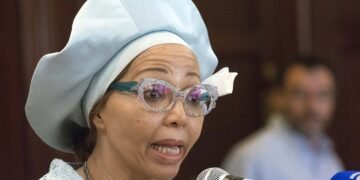














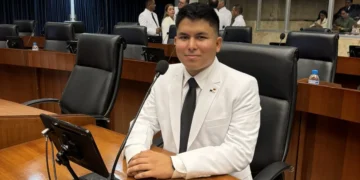

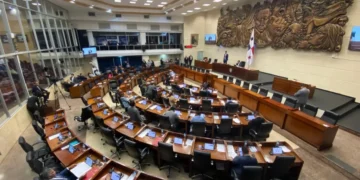









Panamanian Congresswoman Janine Prado, a member of the Vamos coalition, has announced a draft bill aimed at closing legal loopholes in the country’s constitutional framework regarding the declaration of a state of emergency. The proposal comes in the wake of increasing concerns over the misuse and vague interpretation of emergency powers by the executive branch, particularly during the COVID-19 pandemic.
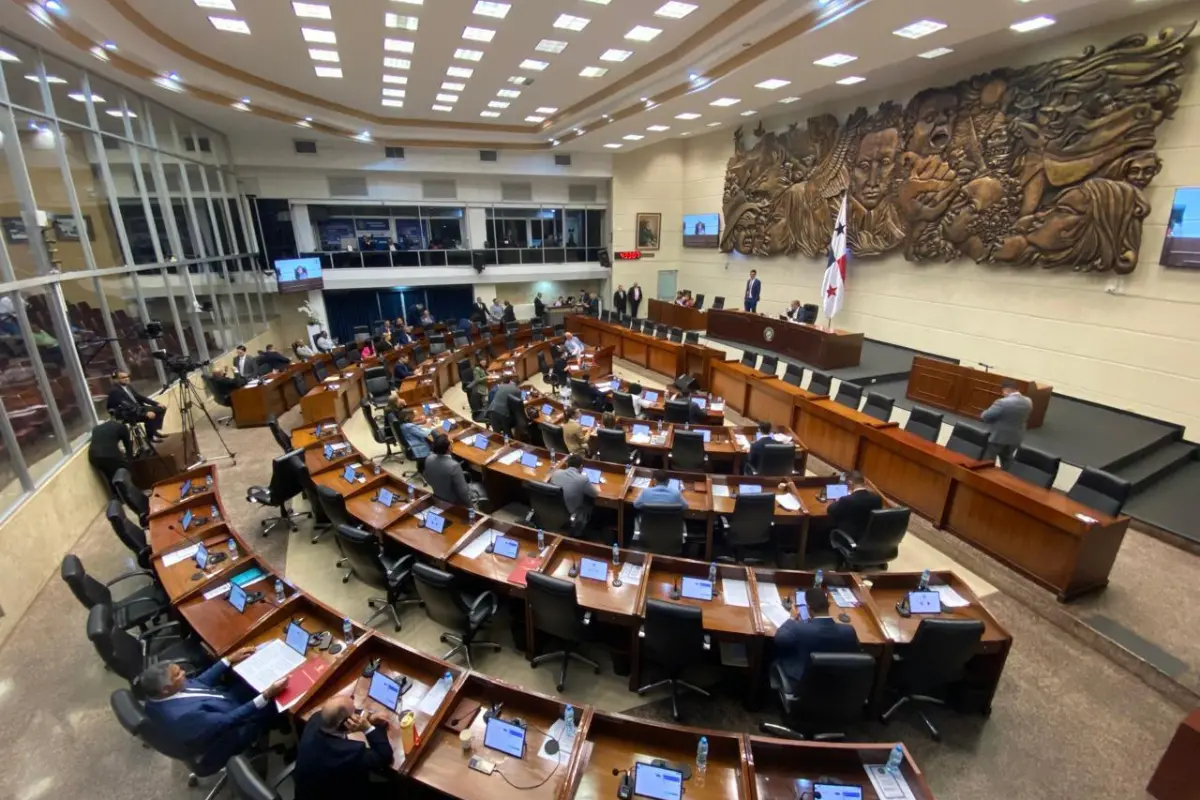
Prado’s legislative push coincides with growing unrest in the National Assembly, including recent criticism from fellow lawmaker Congresswoman Hernández over an alleged incident of aggression by Salazar against Richards, sparking renewed calls for civility and order within the chamber. “Violence cannot continue to be normalized in the Assembly,” Hernández said, in response to what she described as unacceptable conduct. The incident has highlighted the need for legislative reform not just in policy, but in behavior.
Prado’s proposed legislation seeks to provide a clearer, more robust legal framework for invoking Article 55 of the Panamanian Constitution, which governs the suspension of fundamental rights under a state of emergency. “We’ve been operating under declarations of emergency without a defined legal roadmap,” Prado told La Estrella de Panamá. “During the pandemic, the government suspended fundamental guarantees without a clear law developing Article 55. We believe it’s time to codify what that process should look like.”
Article 55 permits the government to temporarily suspend constitutional rights such as freedom of assembly, movement, the sanctity of private property and homes, freedom of communication, freedom of expression, and the right to habeas corpus — but the process for doing so has remained ambiguous. During the height of the COVID-19 crisis, the government instead relied on Article 27 of the Constitution, which Prado argues is inadequate and misapplied. “Article 27 allows restriction of movement only for individuals with a medical condition, not for the entire population,” she emphasized.
The bill aims to ensure that such emergency powers are no longer subject to broad interpretation or executive discretion. Instead, it would establish a legal framework for defining, initiating, and reviewing emergency declarations, ensuring democratic oversight and accountability. “This is not about limiting the government’s ability to respond to emergencies,” Prado clarified. “It’s about ensuring that the response is legal, proportionate, and transparent.”
Despite the urgency of the matter, progress on the bill is currently stalled. The National Assembly has yet to finalize the composition of its legislative committees, which Prado says is delaying over 60 bills, including her own. “It’s been three weeks since the legislative period began, and we still haven’t organized the committees,” she lamented. “Political parties are placing their internal interests above the needs of the Panamanian people.”
Prado warned that essential legislative action — including initiatives addressing unemployment, healthcare, and education — is being held hostage by partisan politics. “We are delaying solutions to the daily pain points of Panamanians. These are not theoretical issues; these are real, lived struggles.”
Her draft bill on emergency powers, once the committees are formed, is expected to be submitted to the Government Commission for further review and debate. The measure will likely prompt discussion over Panama’s broader approach to constitutional law and the balance of power between the executive and legislative branches during times of crisis.
The recent turmoil in the Assembly, including allegations of aggression between deputies, has only reinforced calls for procedural reform and legislative integrity. “We need rules — not just for emergencies, but for ourselves,” said one political analyst familiar with the situation. “The credibility of the National Assembly is at stake.”
As Panama continues to recover from the socio-political strains of the pandemic and prepares for future crises, Prado’s bill may serve as a pivotal step toward more structured, lawful governance — provided it can survive the gridlock currently stalling legislative action.