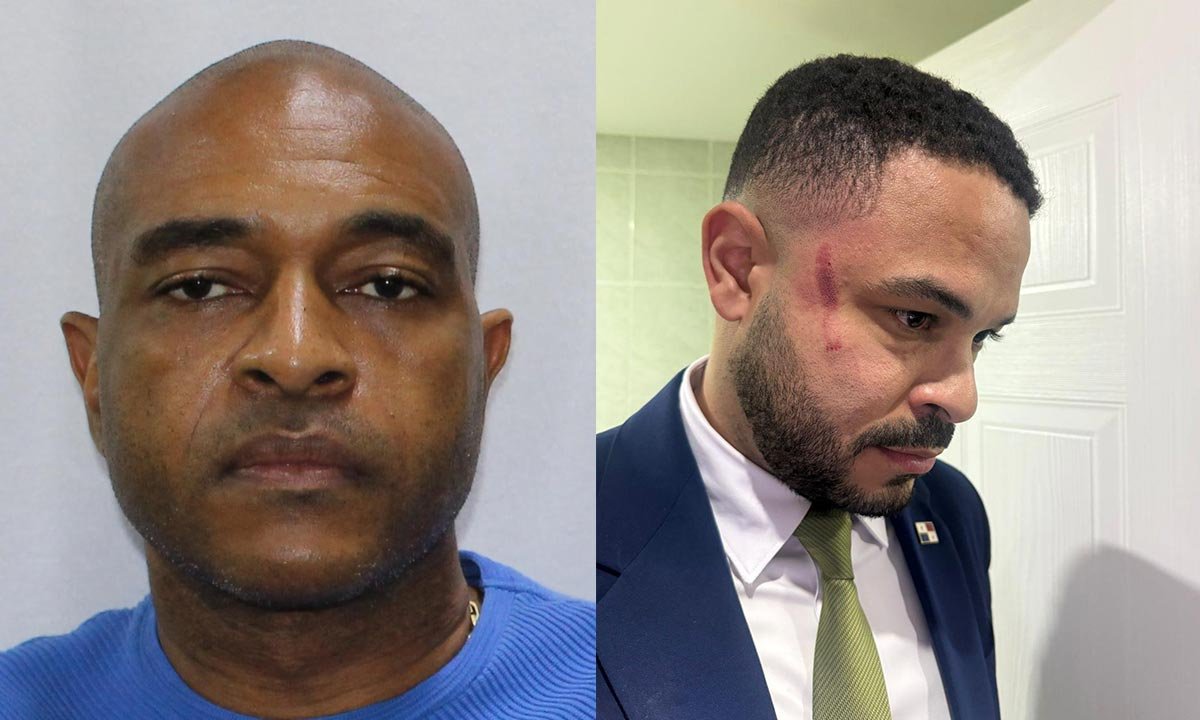






































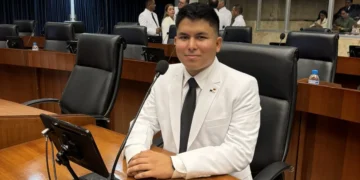










Panama’s political arena was rocked this week by a physical altercation between two members of the National Assembly, drawing widespread condemnation and triggering legal action. Deputy Jairo “Bolota” Salazar, a senior member of the Democratic Revolutionary Party (PRD), has publicly apologized to the nation following a heated argument that turned violent on Monday, July 21. However, in his statement, Salazar notably refused to apologize directly to fellow deputy Betserai Richards, who was the target of the altercation.
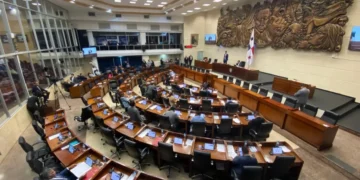
The incident unfolded inside the Telma King room of the National Assembly — a private space designated for lawmakers — and has since escalated into a full-blown legal and ethical scandal. Richards, an independent lawmaker affiliated with the “Seguimos” parliamentary group, formally filed a complaint with Panama’s Public Ministry (Ministerio Público) on Tuesday morning, alleging physical aggression and intimidation by Salazar.
“We ask for the full force of the law to be applied. The aggression I suffered as a deputy is absolutely unacceptable,” Richards told the press after submitting the complaint. He noted that the process would now move through the Public Ministry, followed by a referral to the Supreme Court of Justice — the institution legally empowered to investigate sitting members of the Assembly.
Richards further claimed that Salazar had verbally threatened him prior to the physical confrontation, and warned that other lawmakers within his group — including deputies Ernesto Cedeño, José Pérez Barboni, and Grace Hernández from the Movimiento Otro Camino party — also feared similar reprisals. The incident has cast a shadow over internal Assembly dynamics, raising concerns about workplace safety for elected officials.
When asked whether he had provoked the incident by speaking about Salazar’s personal matters, Richards denied making any personal attacks. Instead, he emphasized that his criticism was focused on alleged corruption within the municipal council of Barrio Norte in Colón Province — an area where Salazar serves as a local representative. “I will continue demanding accountability and that those who stole public funds in Colón be held responsible to the fullest extent,” he declared.
In response, Deputy Salazar took to social media, issuing his first public remarks since the altercation. Speaking on Instagram, he denied making death threats toward Richards or his family and dismissed the controversy as political theater. “They love their little games with the TV stations — I’m not here for that,” Salazar said.
The PRD lawmaker accused Richards of routinely insulting colleagues and inciting division. “That gentleman has crossed the line,” Salazar said. “Several deputies have told me about the things he’s said to them.” He went on to accuse Richards of playing the victim: “They throw the stone and hide their hand. They’re used to offending and then portraying themselves as the injured party.”
While Salazar did offer an apology — “I apologize to the country” — he clarified that he had no intention of directing that apology toward Richards. The confrontation, he insisted, was the culmination of ongoing tensions and verbal provocations.
In a twist, reports indicate that Salazar also filed a counter-complaint with the Public Ministry against Richards, though the details of his grievance remain unclear.
The fallout has prompted swift condemnation from political leaders and institutions. Deputy and PRD Secretary General Crispiano Adames expressed concern, and Assembly President Jaime Vargas Herrera announced plans to convene the Ethics Committee to determine possible disciplinary action. “This behavior is incompatible with the dignity of the Assembly,” Herrera said in a brief statement.
Under Panamanian law, members of the National Assembly are granted parliamentary immunity for their opinions and votes while performing their duties. However, this does not shield them from legal prosecution if a complaint is filed. In such cases, it falls to the Supreme Court to determine whether charges should proceed, and the court has the authority to impose precautionary measures such as mandatory check-ins or even preventive detention.
Notably, there have been several instances of deputies being investigated by the Court in the past. However, convictions remain rare. One exception is former Bocas del Toro deputy Mario Miller, who was found guilty of embezzlement.
Internally, the Assembly’s standing rules mandate that the Credentials Committee is responsible for conducting internal investigations into the conduct of lawmakers. Yet this key body has not been formally established in the current legislative session due to political gridlock, raising questions about the institution’s ability to self-regulate.
The lack of an operational Credentials Committee means that the Ethics Committee’s findings may be the only internal mechanism available to address the incident. Legal experts and political analysts argue that both the Public Ministry and Supreme Court must now step in to uphold the integrity of Panama’s democratic institutions.
As the legal process unfolds and public pressure mounts, the altercation has become a flashpoint in ongoing debates about political accountability, transparency, and the ethical behavior of elected officials in Panama.