













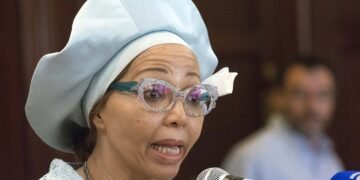




































In a direct appeal to national leaders, Karim Qubain, President of the Cortés Chamber of Commerce and Industries (CCIC), emphasized the urgent need for transparent electoral processes and institutional integrity as Honduras prepares for its upcoming elections. His remarks came during a high-level discussion with Luis Redondo, President of the National Congress, highlighting the business community’s growing concern over political instability and its effect on economic development.
“We want democracy,” Qubain stated emphatically. “The private sector supports democratic governance because it’s the foundation for continued investment and job creation across the country.”
The CCIC president warned that without credible institutions and trustworthy electoral mechanisms, investor confidence—both domestic and international—would waver. He noted that entrepreneurs require stability and clarity to commit resources, generate employment, and support the long-term growth of the Honduran economy.
Qubain’s comments come at a pivotal time for Honduras, as the political landscape is marked by debate and division over the appointment of key officials and reforms to the electoral system. He urged lawmakers to ensure that the selection of a new councilor to the National Electoral Council (CNE) is conducted through a transparent and inclusive process. “This is an opportunity for Congress to show its commitment to democracy and the rule of law,” he said.
The appointment of a new CNE councilor has become a focal point in the country’s ongoing political discourse. Critics have voiced concerns that political interests could override democratic principles if consensus is not achieved. Qubain echoed those concerns, warning that electoral outcomes must not be dictated by partisan agendas.
“We must establish mechanisms that inspire public confidence and reflect the true will of the people,” Qubain said. “This requires cooperation, accountability, and a shared vision that prioritizes the nation over individual power.”
Luis Redondo, who has been actively engaging with civic and business leaders to build support for electoral reforms, listened attentively during their meeting. While he did not issue an official statement following the conversation, Redondo’s public appearances—including attending national events to promote unity—suggest that he is aware of the growing pressure for institutional credibility.
Qubain’s remarks underscore a broader anxiety within Honduras’ private sector. With high unemployment, ongoing migration pressures, and regional economic uncertainty, business leaders argue that stability and good governance are now more vital than ever.
“The credibility of our democracy is not just a political issue—it’s an economic imperative,” Qubain stressed. “Without confidence in the electoral process and our governing institutions, we risk deterring investment and undermining the progress that so many Hondurans are striving for.”
The CCIC president concluded by reaffirming the business community’s willingness to work with government institutions to support democratic processes, but emphasized that the responsibility for transparency lies with political leaders.
As Honduras looks ahead to the next electoral cycle, all eyes will be on the National Congress and how it handles the current selection process for the CNE, a move that could shape public trust and economic stability in the years to come.