










































A Syrian government investigative committee has confirmed that more than 1,400 civilians, primarily members of the Alawite minority, were killed in a violent outbreak of sectarian bloodshed earlier this year in the country’s coastal regions. The findings, announced in Damascus on Tuesday, point to a brutal episode in March that has reignited fears about Syria’s post-Assad stability and the government’s ability to manage deep-rooted sectarian divisions.
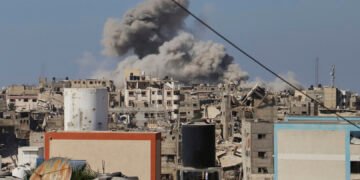
The report identified 1,426 confirmed deaths, including 90 women, during a three-day period of violence from March 7 to 9 in the provinces of Tartous, Latakia, and Hama. The majority of the victims were non-combatant Alawite civilians. This carnage unfolded just months after longtime president Bashar al-Assad was ousted in December, creating a dangerous power vacuum and exacerbating sectarian hostilities across the war-torn nation.
The committee, formed to investigate the massacre, said it documented evidence of widespread atrocities, including murders, home burnings, looting, torture, and verbal abuse laced with sectarian insults. Despite the scale of the bloodshed, the panel stated it found no indication that the country’s top military brass had ordered or sanctioned the attacks.
In total, 298 individuals were identified as suspected perpetrators. Authorities have so far arrested 37 of them. However, the government did not disclose whether any of those arrested belonged to the military or security agencies. The committee also confirmed that 238 members of the Syrian army and state security forces were killed during the violence, many of whom were reportedly targeted by pro-Assad gunmen believed to have broken ranks or acted independently.
Roughly 200,000 government troops were deployed to the affected coastal areas in response to the violence. However, the rapid escalation and ferocity of the attacks have left many civilians skeptical about whether this was truly a rogue operation or a more coordinated campaign that authorities are reluctant to fully expose.
Many Syrians who lost loved ones in the attacks have voiced disappointment and disbelief over the committee’s findings. Survivors say the scale of the violence, including mass graves and testimonies from eyewitnesses, suggest a targeted massacre that has yet to be fully acknowledged. A 24-year-old student from Baniyas, Jana Mustafa, whose father was killed in the violence, said she didn’t expect much from the investigation because the truth was already clear. She expressed frustration that the committee’s language seemed to offer “justifications” for what occurred, rather than accountability.
Other survivors echoed similar sentiments. Rama Hussein, a 22-year-old woman from the Jableh region, lost multiple family members, including three sisters, two cousins, and her grandfather. She said the committee never interviewed her or visited their neighborhood. She called for real justice and compensation, not just press statements.
Human rights observers and international organizations have raised serious alarms about the violence. Reports emerged of gunmen entering homes and interrogating residents about their religious identity before executing or sparing them. Several families, including children and the elderly, were reportedly wiped out in what rights groups are calling deliberate sectarian executions.
The committee said it conducted over 30 site visits and interviewed hundreds of witnesses, survivors, and local officials. Suspects were identified from video footage circulated on social media at the time of the killings. Two lists of names have been handed to Syria’s judiciary for further legal action, but questions remain about how seriously the cases will be pursued.
While the investigation focuses primarily on the March killings in Alawite-majority areas, its release coincides with another outbreak of sectarian violence—this time in the Druze-dominated province of Suwayda. Clashes between Sunni Bedouin tribes and Druze militias, followed by government intervention, have resulted in hundreds of deaths and over 128,000 displaced, according to the United Nations. Although a ceasefire has taken hold, tensions remain high, and fears of a broader sectarian collapse are growing.
Committee chairman Jumaa al-Anzi acknowledged the severity of the Suwayda clashes but stated they fall outside his committee’s jurisdiction. He said time would reveal the full truth of those incidents, but critics argue that continued government silence on these matters only deepens mistrust among minority communities.
Syria’s new president, Ahmed al-Sharaa, a Sunni technocrat installed after Assad’s fall, is under mounting pressure to unify the fractured country. His office received the investigation’s findings on July 13, the same day violence erupted in Suwayda. The timing has prompted many to speculate whether the administration is being overwhelmed by competing crises.
Despite the release of this government-backed investigation, many Syrians feel that justice is still elusive. With few arrests, no high-ranking officials held accountable, and communities reeling from trauma, the demand for truth, justice, and national healing has never been more urgent. Without serious institutional reforms and transparent judicial processes, Syria risks sliding deeper into sectarian fragmentation at a time when stability is desperately needed.