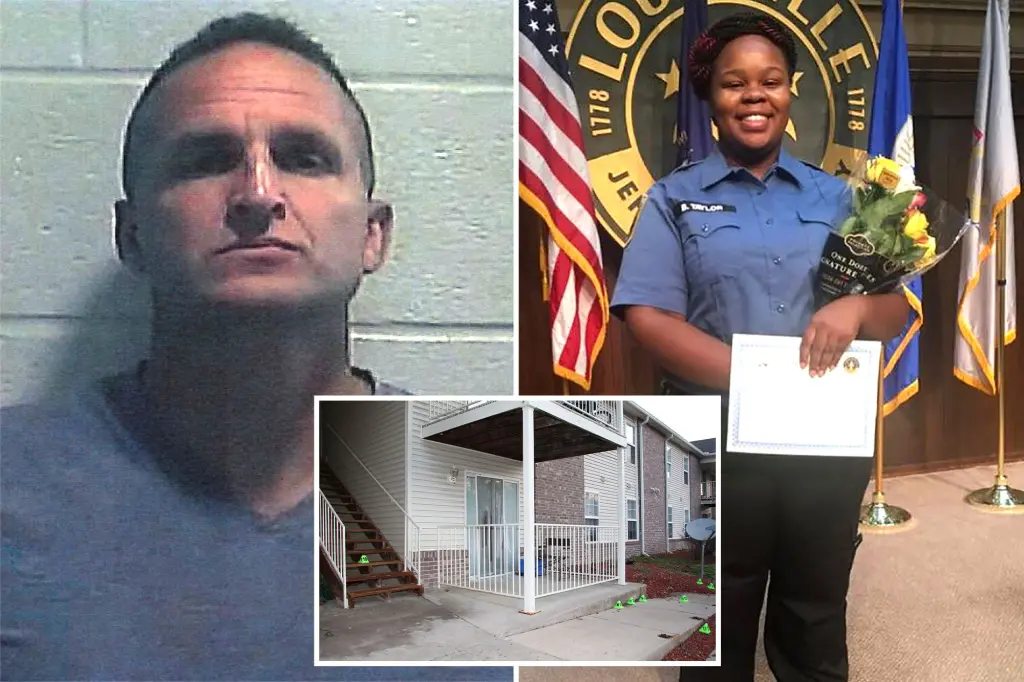










































Former Kentucky police officer Brett Hankison has been sentenced to 33 months in federal prison for his actions during the 2020 botched police raid that led to the death of Breonna Taylor, a Black medical worker whose name became a rallying cry for the global Black Lives Matter movement. The sentencing, which includes an additional three years of supervised release, is the first and only prison term issued in direct connection with the deadly incident.
Hankison, who was convicted in late 2024 on a federal charge of violating Taylor’s civil rights by using excessive force, faced a maximum penalty of life in prison. However, the final sentence fell far short of expectations, particularly in light of the Trump administration’s recent controversial recommendation for Hankison to serve just one day in prison — a position that starkly diverged from the more aggressive approach under President Biden’s Department of Justice (DOJ).
Taylor’s family and supporters have expressed mixed reactions to the outcome. Tamika Palmer, Taylor’s mother, said she believed the judge “did the best she could with what she had to work with,” but she criticized federal prosecutors for seeking a lenient punishment. Kenneth Walker, Taylor’s boyfriend who was with her during the raid, said he was “grateful for the small piece of justice that we got.”
The March 2020 raid on Taylor’s Louisville apartment, executed under a no-knock warrant, sparked international outrage. Officers believed Taylor’s former boyfriend was using her home to hide drugs. When police burst in during the early morning hours, Walker, believing the intruders were criminals, fired a single shot that struck an officer in the leg. Police returned fire with 32 bullets — six of which hit and killed Taylor.
Although Hankison’s bullets did not hit Taylor, prosecutors argued that he endangered lives by firing 10 shots blindly into her apartment and into a neighboring unit, where a pregnant woman, a child, and another man were sleeping. None of the other officers involved have faced federal prison time. Another officer, Kelly Goodlett, pleaded guilty to falsifying the search warrant used in the raid and is scheduled to be sentenced next year.
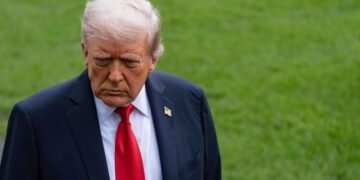
The political atmosphere surrounding Hankison’s sentencing has been as controversial as the case itself. Following President Trump’s re-election in November 2024, the Justice Department under new leadership took a markedly different stance. Harmeet Dhillon, a Trump appointee now overseeing the DOJ’s Civil Rights Division, signed the recommendation for Hankison to serve just one day in prison, citing that he did not directly cause Taylor’s death and arguing that a longer sentence would be “unjust under these circumstances.”
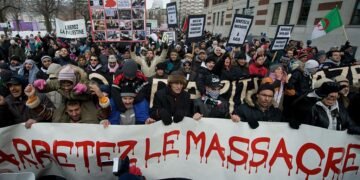
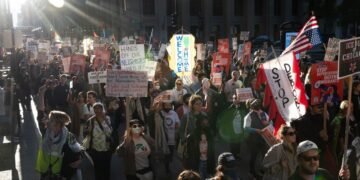
This move sparked widespread backlash. The family’s attorneys accused the administration of sending a clear message that white officers can “violate the civil rights of Black Americans with near-total impunity.” Outside the courthouse, protests erupted, with several demonstrators — including Taylor’s aunt, Bianca Austin — arrested during clashes with police.
Hankison’s conviction and sentencing are part of a broader national conversation on police accountability, which intensified following the 2020 killings of Taylor and George Floyd. Under the Biden administration, the DOJ had launched civil rights investigations into police departments in cities including Louisville and Minneapolis. Reports from these probes cited systemic misconduct and called for oversight reforms.
However, since Trump returned to office in 2025, many of these efforts have been rolled back. In May, his Justice Department began dismissing lawsuits against several police departments and ended multiple federal investigations into unconstitutional policing practices. Officials criticized the Biden-era reforms as “sweeping oversight agreements” that imposed “years of micromanagement” by federal courts.
The shift in policy has led to significant internal disruption. Reports suggest that approximately 70% of attorneys in the DOJ’s Civil Rights Division have departed since Trump’s inauguration, reflecting deep discontent with the new direction.
Breonna Taylor’s death remains one of the most haunting examples of excessive force in modern American policing, and the limited accountability following her killing continues to spark demands for reform. Though Hankison’s sentencing marks a rare conviction of a police officer in a civil rights case, many critics argue it falls far short of delivering true justice.
For now, the battle over police reform — and how justice is defined and delivered — remains one of the most polarizing and unresolved debates in America.