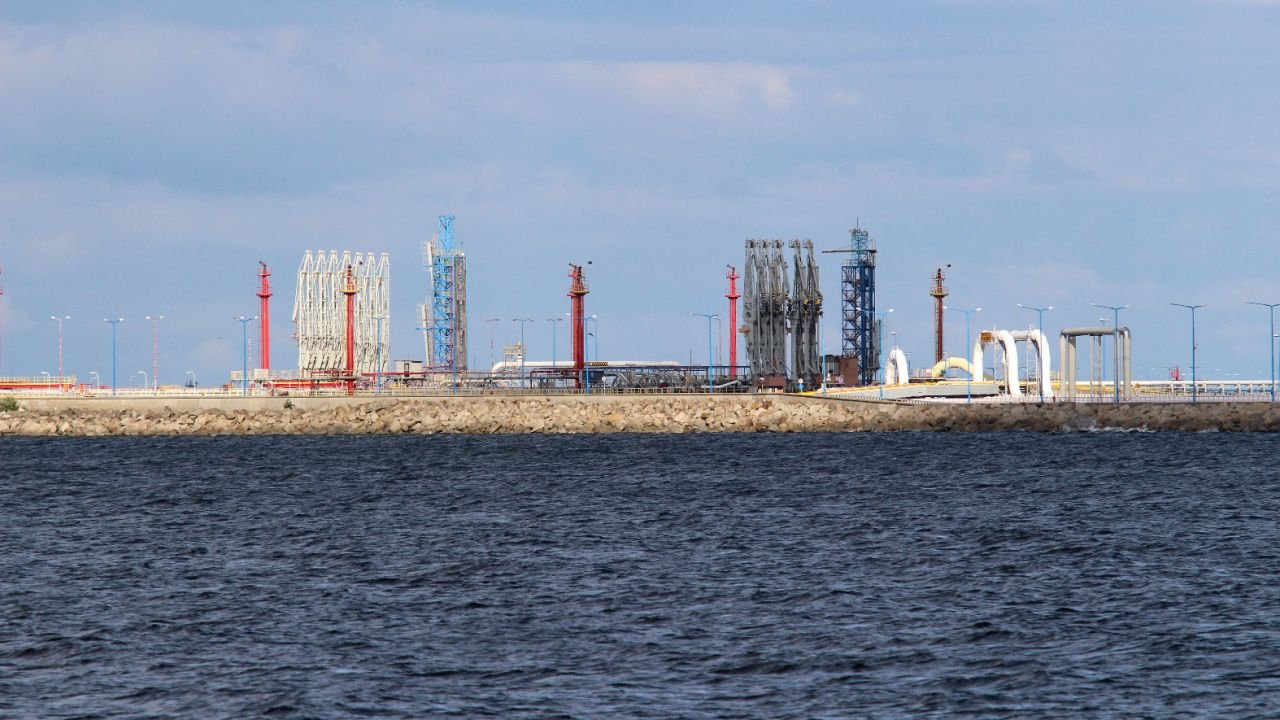








































Poland has announced a potentially transformative energy breakthrough with the discovery of what may be one of Europe’s largest conventional oil and gas deposits in a decade. Central European Petroleum (CEP) confirmed the find at its Wolin East 1 (WE1) well, situated off the northwest coast of Poland near the port city of Świnoujście on the Baltic Sea.
According to preliminary estimates, the WE1 site alone contains approximately 22 million tonnes of recoverable crude oil and condensate, along with 5 billion cubic metres of commercially viable natural gas. Further assessments of the broader concession area—covering 593 square kilometres—suggest the potential for over 33 million tonnes of oil and condensate and 27 billion cubic metres of gas.
This discovery is poised to more than double Poland’s current proven oil reserves, which were reported at 20.2 million tonnes as of 2023, marking a monumental leap in the country’s domestic energy capacity.
The drilling operation, executed using a jack-up rig in relatively shallow waters of 9.5 metres, reached a vertical depth of 2,715 metres. The Wolin East project is being spearheaded by CEP Central European Petroleum’s Polish subsidiary, with support from its Canadian-based parent company—majority-owned by Norwegian investors.
Rolf G. Skaar, CEO of Central European Petroleum, hailed the breakthrough as “a historic moment” not only for the company but for Poland’s energy sector as a whole. “Wolin East is more than just a promising deposit—it’s a strategic opportunity to unlock the full geological and energy potential of the Baltic Sea,” Skaar said.
Government officials echoed this sentiment. Krzysztof Galos, Poland’s Undersecretary of State and Chief National Geologist, called the discovery “potentially historic” for the country’s energy exploration efforts, particularly in the under-explored Polish Exclusive Economic Zone of the Baltic Sea.
“If confirmed, the Wolin East deposit could become the largest crude oil and associated natural gas reserve ever discovered in Poland,” Galos noted, highlighting its potential role in shaping the future of the nation’s energy independence.
The announcement arrives at a time when Poland is intensifying efforts to reduce its reliance on imported fossil fuels—especially from Russia—and to strengthen national energy security in the face of shifting geopolitical dynamics across Europe.
The energy crisis brought on by Russia’s invasion of Ukraine in 2022 exposed the vulnerabilities of countries heavily dependent on Russian energy exports. Since then, Poland has accelerated diversification strategies, including expansion of liquefied natural gas (LNG) terminals, interconnector pipelines with neighboring EU nations, and renewable energy investments. A discovery of this magnitude could further bolster Poland’s ambitions to become a more self-sufficient and potentially export-oriented energy producer.
Beyond national borders, the Wolin East discovery is already drawing international interest due to its size and potential impact on European energy markets. With many EU countries still grappling with high energy prices and supply chain volatility, new sources of conventional fossil fuels within the bloc are viewed as crucial transitional resources in the shift toward cleaner alternatives.
While further exploration and confirmation of the reserves are necessary before commercial extraction can begin, energy analysts say the early data is highly promising. If development proceeds as projected, the site could begin production within the next few years—marking a rare resurgence of large-scale conventional oil exploration in a region more commonly associated with renewables and offshore wind.
The find also signals a strategic pivot back to underutilized geological zones in Europe, as rising global energy demand and political tensions drive renewed interest in maximizing domestic reserves.
As CEP continues its evaluation of the Wolin East field, industry experts are closely watching how the discovery might reshape regional energy dynamics, investment flows, and the broader conversation around energy security in Central and Eastern Europe.
In the words of one Polish energy official: “This is not just about oil—it’s about the future of how we power our nation.”