







































The United Nations has voiced deep concern over the recent arrests of Afghan women and girls by the Taliban for allegedly failing to comply with strict dress code requirements. The international body warned that such actions not only violate basic human rights but also contribute to a broader climate of fear and repression in Afghanistan.
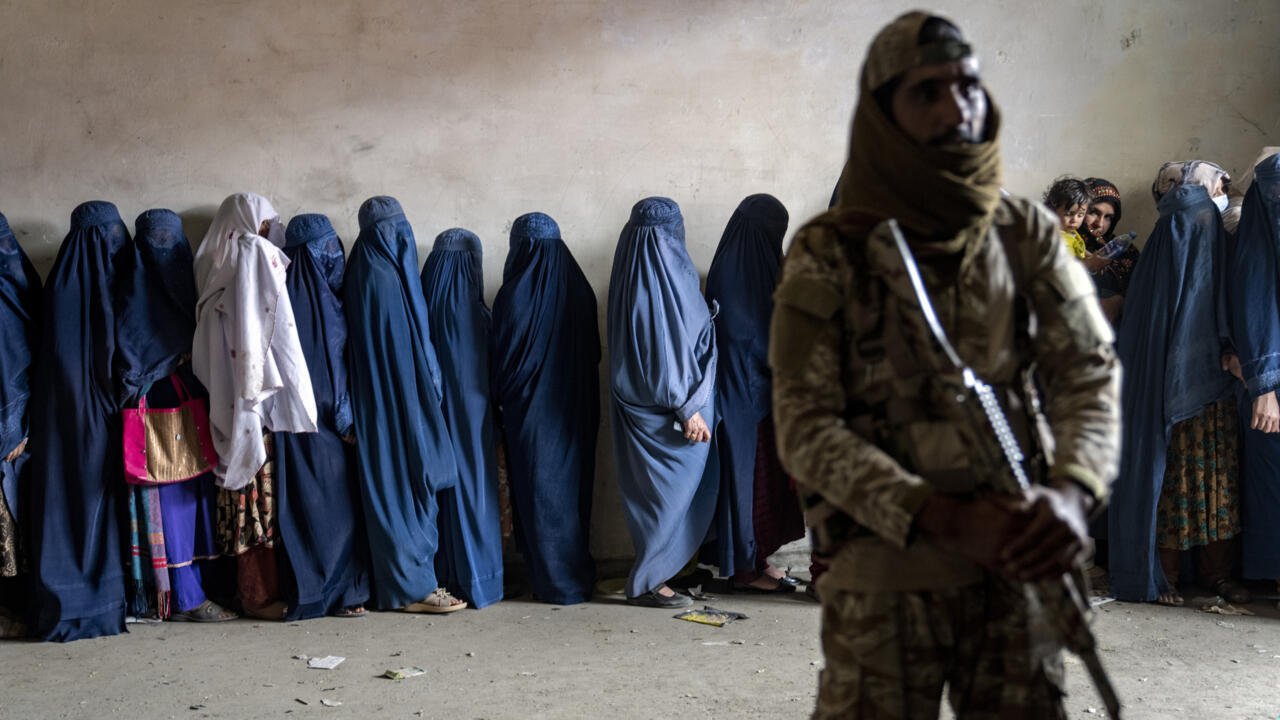
According to the UN Assistance Mission in Afghanistan (UNAMA), the arrests took place between July 16 and 19 in the capital city of Kabul. Although the exact number of women and girls detained has not been disclosed, UN officials described the arrests as “numerous,” noting that the detentions were allegedly based on violations of the Taliban’s hijab policy. The hijab, in this context, refers to a full Islamic head covering that the Taliban has increasingly enforced since reclaiming power in August 2021.
“These incidents serve to further isolate women and girls, contribute to a climate of fear, and erode public trust,” UNAMA said in a statement released on Monday. The mission urged the Taliban government to reverse policies that severely restrict the rights and freedoms of women and girls, including its controversial ban on female education beyond sixth grade.
The Taliban has yet to issue an official response to the UN’s statement, and attempts by journalists to reach Taliban representatives for comment have so far been unsuccessful.
This is not the first time the Taliban has been criticized for its harsh treatment of women under its interpretation of Islamic law. In May 2022, the regime issued a nationwide decree mandating that women cover their faces in public and recommending the wearing of the burqa — a full-body garment that leaves only a mesh screen for the eyes. The edict revived memories of the group’s previous rule from 1996 to 2001, when women were largely confined to their homes and denied access to education, employment, and basic freedoms.
The Ministry for the Propagation of Virtue and the Prevention of Vice — the Taliban’s so-called morality police — has spearheaded efforts to enforce public behavior in accordance with the regime’s religious doctrines. In January 2024, the ministry confirmed that several women in Kabul had been arrested for wearing “bad hijab,” though it did not clarify what standards were used to define the violation. Ministry spokesperson Abdul Ghafar Farooq offered no details on the number of women detained or the conditions of their arrest.
At the time, UNAMA raised serious concerns over reports that some detainees had been subjected to mistreatment, including allegations of extortion and abuse in exchange for their release. Although the Taliban denied any wrongdoing, international watchdogs have expressed skepticism, citing the regime’s opaque detention practices and lack of independent oversight.
Since regaining control of Afghanistan following the withdrawal of U.S. and NATO troops in 2021, the Taliban has consistently rolled back the limited gains made by Afghan women during the two decades of democratic governance. Women have been barred from holding most government jobs, attending universities, or even traveling long distances without a male guardian. Numerous female-focused NGOs have been shut down, and international media access to Afghan women has been increasingly restricted.
Despite repeated calls from the global community, the Taliban has shown little willingness to modify its policies. The regime continues to seek international legitimacy and financial support, often promising moderation — but rarely following through in practice.
One notable development came in July 2025, when Russia became the first country to formally recognize the Taliban as Afghanistan’s legitimate government. The move drew widespread criticism from Western nations and human rights organizations, who accused Moscow of legitimizing a government that systematically suppresses its own citizens, particularly women and minorities.
The humanitarian toll of the Taliban’s policies continues to mount. The UN has warned that the restriction of women’s rights not only undermines social cohesion but also severely hampers Afghanistan’s economic recovery. Female participation in the workforce has plummeted, healthcare access has deteriorated, and girls’ education has all but disappeared in many provinces.
While international agencies struggle to deliver aid under the constraints imposed by the Taliban, Afghan women remain on the front lines of a cultural and political war being waged against their autonomy. For many, daily life has become an exercise in survival, and every trip outside the home carries the risk of arrest, humiliation, or worse.
The UN’s latest condemnation adds to a growing chorus of international voices demanding immediate change. However, without meaningful diplomatic pressure and coordinated global action, the future for Afghan women under Taliban rule remains grim.