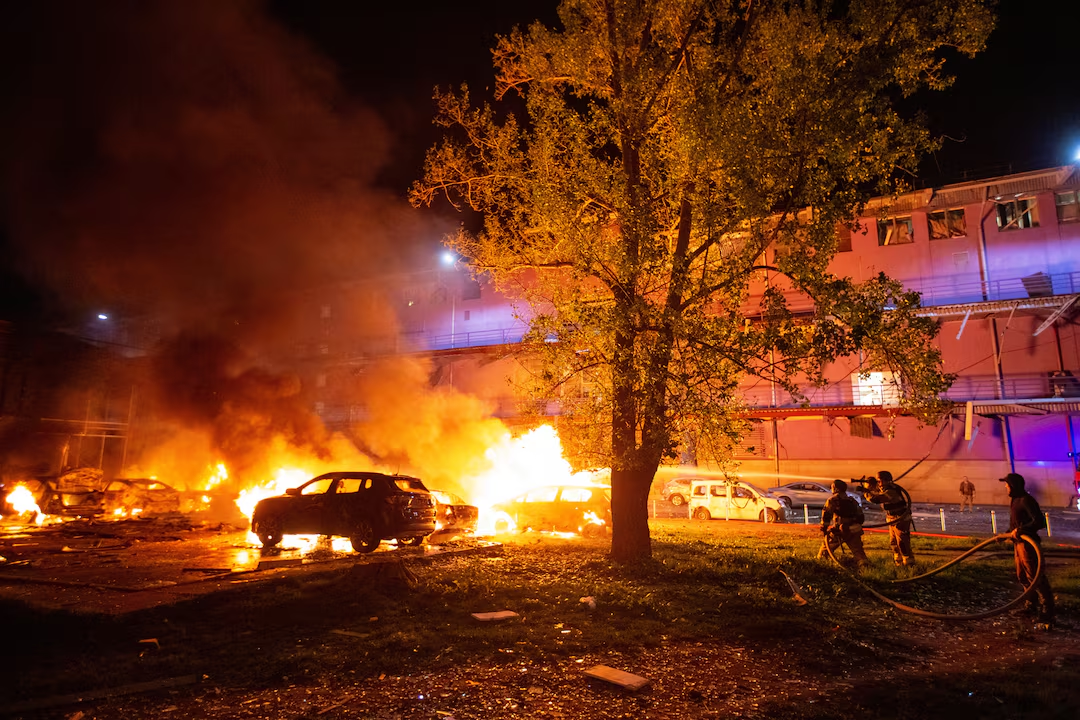
In one of its most extensive overnight assaults in recent months, Russia launched more than 300 drones and over 30 missiles across multiple regions of Ukraine between Friday night and early Saturday morning. The large-scale attack left at least one person dead and several others injured, marking another grim chapter in the ongoing war that has now entered its third year.
Ukrainian President Volodymyr Zelenskyy confirmed the attack in a statement posted on X (formerly Twitter), noting that multiple regions were struck during the overnight bombardment. “Rescue operations are underway following the attack: the Donetsk, Kirovohrad, Dnipro, Sumy, Kherson, Volyn, Zaporizhzhia, Mykolaiv, Odesa, and Zhytomyr regions were affected,” Zelenskyy wrote.
The southern port city of Odesa, a frequent target of Russian aerial attacks due to its strategic location on the Black Sea, was among the worst-hit. According to Odesa’s Mayor Hennadii Trukhanov, the city was targeted by 20 drones and a cruise missile. One of the strikes ignited a fire in a residential apartment building, leading to the death of a woman who had initially been rescued from the flames but succumbed to her injuries. At least six other individuals, including a child, were wounded and are receiving medical care.
The attack in Odesa is part of a broader uptick in Russian aggression, which in recent weeks has seen a significant increase in the number and scale of long-range aerial assaults across Ukraine. Analysts say this could signal preparations for a new phase of escalation, as Russia attempts to exhaust Ukraine’s air defense systems and cripple key infrastructure before winter returns.
In Sumy, northern Ukraine, critical infrastructure was reported damaged, leaving thousands without electricity. Similar damage was inflicted in Pavlohrad, located in the Dnipropetrovsk region, where a residential building and energy facilities were hit. According to regional authorities, this was the most devastating attack on the city since Russia launched its full-scale invasion in February 2022.
The head of Dnipro’s regional military administration described the Pavlohrad strike as “the largest and most destructive” experienced so far, noting that repairs to infrastructure could take weeks amid ongoing threats.
In his address, President Zelenskyy reiterated calls for urgent international support, thanking global leaders who have continued to assist Ukraine in strengthening its defense systems. “We are grateful to our partners who understand how crucial it is to implement joint agreements quickly, especially in the areas of weapons manufacturing, drone production, and the supply of air defense systems,” Zelenskyy said.
He emphasized that modern air defense technologies, including those capable of neutralizing large-scale drone swarms, are vital to protecting civilians and critical infrastructure. Ukraine has been actively seeking support for its domestic drone production, aiming to match Russia’s increasing deployment of cheap, mass-produced aerial vehicles.
The scale of Saturday’s assault follows a disturbing pattern of intensifying attacks. On July 8, Russia carried out a record-breaking onslaught involving more than 741 drones and missiles in a single day — a clear indicator of Moscow’s continued military resolve and the evolving tactics of drone warfare in the conflict.
Meanwhile, Russia’s Defense Ministry announced that its forces had intercepted 71 Ukrainian drones overnight, with 13 of them reportedly approaching the capital city of Moscow. Moscow Mayor Sergei Sobyanin confirmed the attempted drone strike but noted that air defenses prevented any significant damage or casualties.
These cross-border drone skirmishes have become increasingly frequent, with both sides intensifying their use of unmanned aerial vehicles in surveillance, precision targeting, and psychological warfare. Russia has long accused Ukraine of targeting sensitive military and symbolic locations within Russian territory, including oil depots, air bases, and even government buildings.
Saturday’s developments come amid growing international concerns that the conflict could soon spill over into neighboring countries or trigger new regional tensions. NATO members have recently reinforced their military presence along the alliance’s eastern flank, while discussions continue around increasing military aid to Kyiv.
As the war drags on, Ukrainian officials continue to call for enhanced sanctions on Moscow, increased humanitarian aid for displaced civilians, and accelerated timelines for military support deliveries. Civilian infrastructure, including power grids, water systems, and hospitals, remains vulnerable to Russia’s long-range attacks, especially with winter approaching.
The humanitarian toll also continues to mount. According to the United Nations, more than 10 million Ukrainians have been displaced since the conflict began, with tens of thousands of civilian casualties recorded. Aid organizations are urging the international community not to lose focus, especially as global attention shifts to other crises.
Saturday’s attack underscores the dire need for sustained support, not only in terms of weaponry but also in humanitarian assistance and reconstruction aid. As Zelenskyy put it in his latest statement, “This war is not just about territory — it is about the survival of our people and our future.”