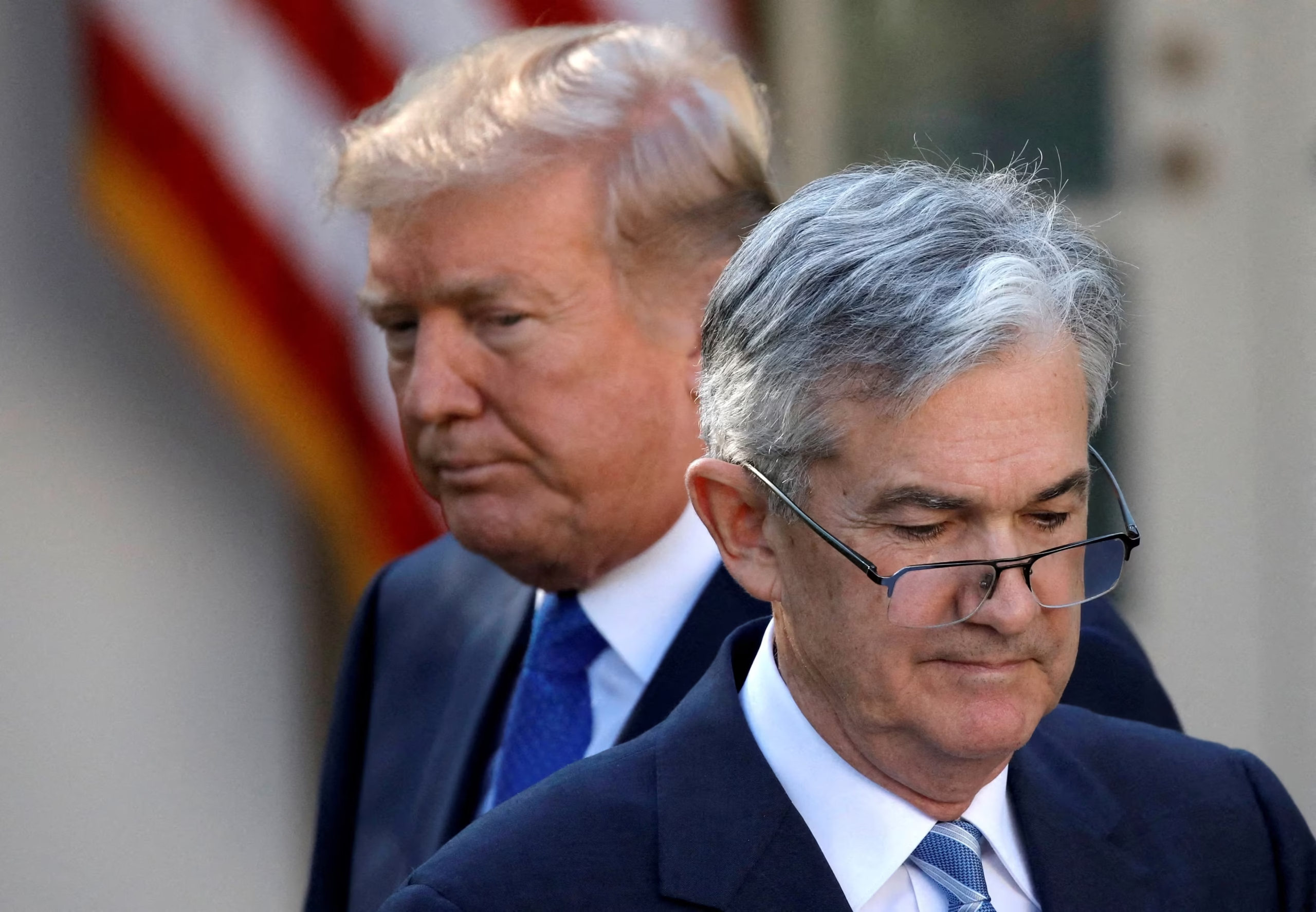


























































As President Donald Trump reportedly considers removing Federal Reserve Chair Jerome Powell, concerns are mounting that such a move could have far-reaching consequences for the U.S. economy—particularly in the fight against inflation. Experts argue that tampering with the central bank’s independence would erode trust in its ability to manage monetary policy and maintain price stability, which could send financial markets reeling and jeopardize the nation’s economic resilience.
The Federal Reserve, while part of the federal government, operates independently when it comes to setting interest rates and monetary policy. This independence is essential because it allows the Fed to prioritize long-term economic health over short-term political pressures. At the heart of its mandate lies the goal of maintaining low and stable inflation, a task that often involves raising interest rates—an unpopular move among politicians focused on growth and job numbers.
President Trump has long expressed frustration with Powell’s leadership, particularly when the Fed raises interest rates to cool the economy and fight inflation. Trump’s economic agenda heavily relies on strong growth and market optimism, and higher borrowing costs often threaten both. Sources close to the administration have suggested that Trump is weighing legal options to dismiss Powell ahead of the expiration of his current term, citing dissatisfaction with his performance.
However, financial experts, economists, and former Fed officials warn that removing Powell could severely undermine the central bank’s credibility, not just in the U.S., but globally. The perception of the Fed as politically compromised could shake investor confidence, drive up inflation expectations, and cause instability in bond and equity markets.
“If the Fed loses its independence, markets may no longer believe it will do what’s necessary to bring inflation under control,” said David Wilcox, a former senior Fed economist now at the Peterson Institute for International Economics. “That could lead to higher inflation expectations and push up long-term interest rates, even if the Fed itself doesn’t hike rates.”
The Federal Reserve’s strength lies in its perceived neutrality. If future rate decisions are believed to be politically motivated, the Fed’s signals to markets could become ineffective. Traders, investors, and international institutions could question whether inflation targets will be met—or abandoned—for political expedience.
Removing Powell, who was originally nominated by Trump himself in 2017 and reappointed for a second term in 2022, would also spark a constitutional debate. The Federal Reserve Act does not explicitly give the president power to fire a sitting Fed chair without cause. Any such action could face legal challenges, setting up a potential crisis between the executive branch and the central bank.
In historical context, attempts to influence the Fed have typically backfired. President Richard Nixon famously pressured then-Fed Chair Arthur Burns to keep interest rates low ahead of the 1972 election—a move that contributed to the runaway inflation of the 1970s. The Fed’s hard-earned independence since that era has been widely credited with helping the U.S. maintain price stability for decades.
This is particularly important now. Although inflation has cooled from its 2022 peak, it remains above the Fed’s 2% target, and economists believe that strong, consistent policy is still needed to bring prices fully under control. If investors sense the Fed’s resolve is weakening under political pressure, inflation could rise again, erasing the progress made since the post-pandemic price surges.
Former Fed Chair Ben Bernanke has previously noted that central bank independence is “not a luxury; it’s a necessity.” Without it, he argued, inflation becomes harder to control, and credibility is lost both domestically and internationally.
Trump’s desire to control the Fed is not without precedent in other parts of the world. In countries where political leaders have overstepped into central bank affairs—such as Turkey or Argentina—the result has typically been surging inflation, plummeting currencies, and declining public trust in financial institutions.
With the 2026 presidential election cycle already heating up, Trump’s economic messaging hinges on promises of growth, low taxes, and job creation. But undermining the institution charged with controlling inflation could threaten the very economic pillars his campaign relies upon.
In the words of a former Fed governor who spoke on condition of anonymity, “Firing Powell would not just be about one man. It would be a statement to the world that the U.S. is no longer committed to a stable and independent monetary policy. That’s a risk no serious economist would ever recommend.”
As the situation develops, all eyes are on the White House and the Federal Reserve—two powerful institutions whose relationship will help shape the future of the American economy.