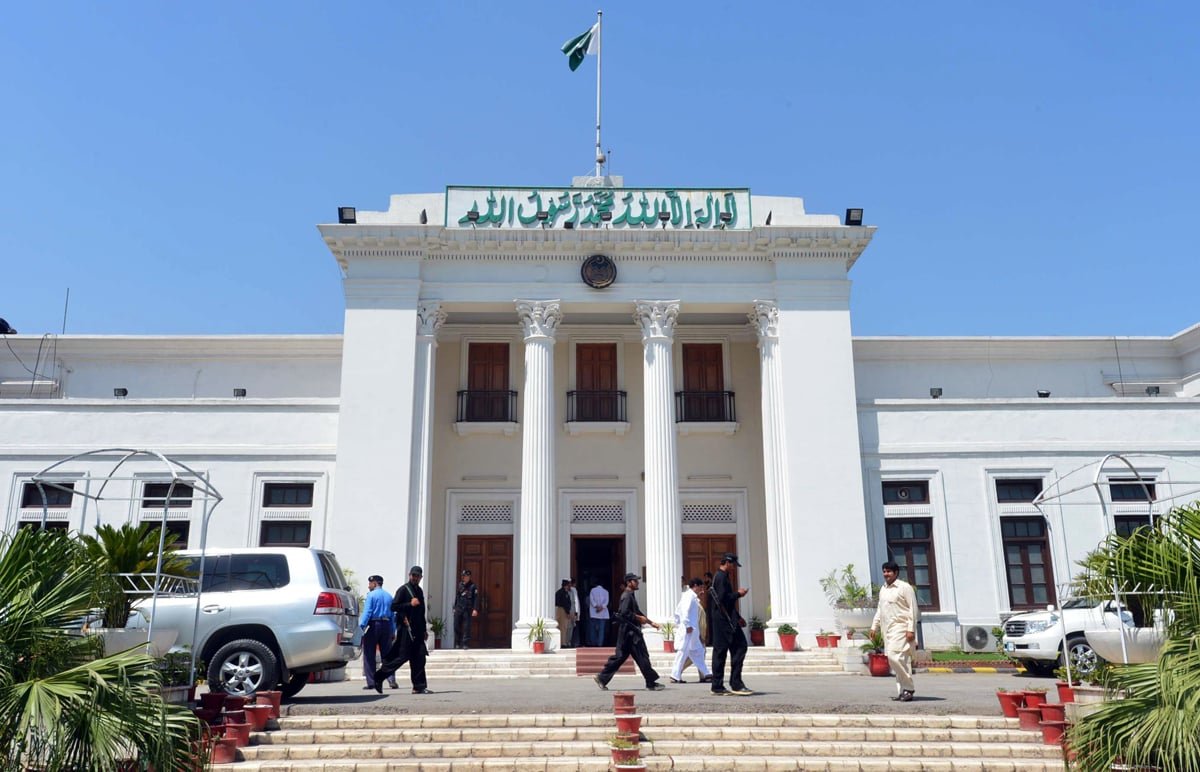


































Khyber Pakhtunkhwa (KP) Chief Minister Ali Amin Gandapur has approached the Peshawar High Court to seek legal recognition for PTI-backed independent lawmakers as members of Pakistan Tehreek-e-Insaf (PTI), calling for a reassignment of reserved seats in the provincial assembly. The move follows a controversial decision by the Election Commission of Pakistan (ECP) that has stirred debate about electoral representation and constitutional fairness in the post-election landscape.
In the petition filed on Thursday, Gandapur urged the court to declare Rule 94 of the Election Rules as unconstitutional. The rule stipulates that a political party not allotted an electoral symbol cannot be treated as a recognized political party for the purpose of assigning reserved seats. Gandapur’s legal team argued that this provision directly undermines the constitutional principle of proportional representation and disenfranchises voters who backed PTI candidates in the general elections.
The petition also challenges a letter issued by the ECP on July 14, which summoned the KP Assembly session to administer oaths to candidates from other political parties who were granted reserved seats. Gandapur contends that this move was unlawful as it ignored PTI’s majority mandate and deprived the party of its rightful share in the reserved seats quota.
The ECP had earlier issued a notification on July 4 allocating reserved seats to parties with a significantly lower general seat count than PTI. Gandapur has asked the court to strike down this notification and direct the ECP to reassign the reserved seats based on actual electoral performance in accordance with the Constitution and the Elections Act, 2017.
Filed through prominent lawyers including Qazi Mohammad Anwar, Alam Khan Adenzai, and Basheer Wazir, the petition maintains that the ECP’s actions misinterpreted a Supreme Court ruling. Gandapur argued that although PTI was denied an electoral symbol ahead of the 2024 general elections, its candidates clearly contested under the PTI banner and had strong public affiliation with the party. He said PTI won 93 general seats in KP—making it the single largest political force in the province.
Because PTI was not officially recognized by the ECP during the election due to technicalities surrounding its symbol, winning candidates were compelled to align themselves with the Sunni Ittehad Council (SIC) post-election in order to meet formal membership criteria. Gandapur pointed out, however, that the ECP has not yet officially issued a notification recognizing PTI candidates as SIC members, leaving them in a legal and political limbo.
The petition emphasized that most candidates had submitted nomination papers as PTI affiliates and ran public campaigns under the party’s banner, regardless of the technical denial of the symbol. Gandapur argued that failure to recognize these lawmakers as PTI representatives has resulted in a distortion of proportional representation, where parties with fewer elected members have received an undue share of reserved seats, sidelining the electoral mandate of PTI voters.
The KP chief minister warned that withholding reserved seats from PTI effectively silences a significant portion of the province’s electorate, leading to an assembly composition that fails to reflect the democratic will of the people.
The case highlights a broader constitutional debate over party recognition, electoral symbols, and the representation of independent candidates. Legal analysts say the outcome could set a precedent for future electoral cycles, especially as Pakistan navigates the complexities of party registration, symbol allotment, and independent affiliations in a deeply polarized political landscape.