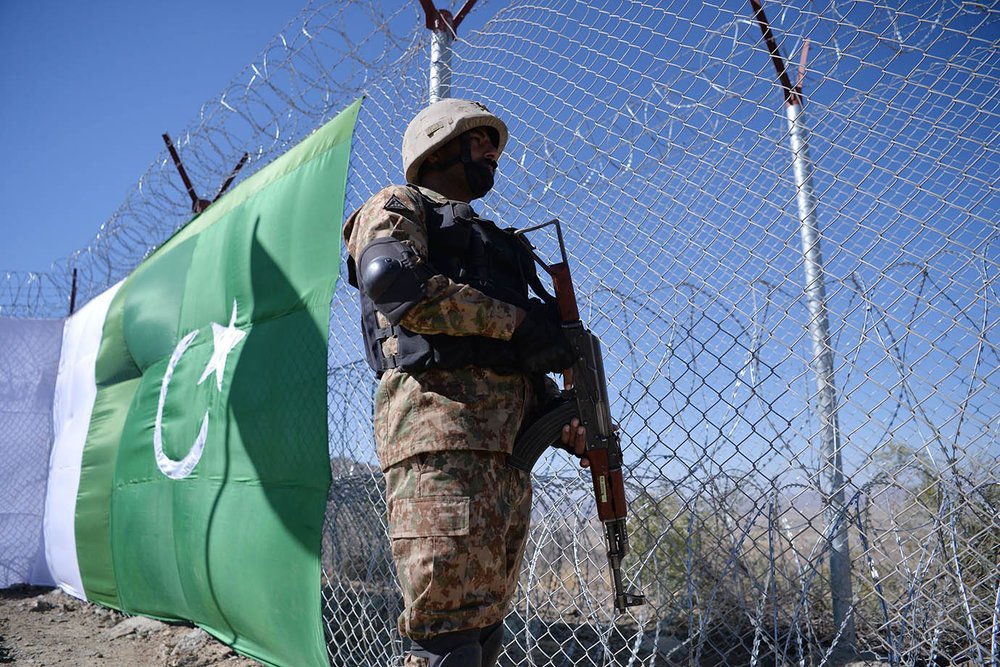





























































Pakistani security forces have successfully foiled a major infiltration attempt by suspected terrorists along the Pak-Afghan border, arresting five alleged suicide bombers in the process. The incident, reported by state broadcaster PTV News, marks yet another escalation in the ongoing conflict with cross-border militant groups, particularly in the wake of renewed threats from Tehrik-i-Taliban Pakistan (TTP) and other extremist factions.
According to official sources, the infiltration was attempted on July 17 at around 5 PM when a group of militants—described by the state as “Khawarij,” a term historically used to refer to violent extremists—tried to enter Pakistani territory through the rugged terrain of the Afghanistan border. Swift intelligence alerts enabled security forces to establish multiple checkpoints along the expected routes. As the militants moved toward Azizkhel and Mandikhel, they were forced to retreat under pressure from the heavily deployed Pakistani forces. They eventually took refuge in a mosque in Besikhel village, where they were quickly surrounded and compelled to surrender without resistance.
The five detained individuals are Afghan nationals aged between 15 and 18, with three of them carrying Afghan identity cards. All suspects have been moved to an undisclosed location for interrogation. Authorities are now investigating the broader network behind the infiltration and have issued alerts across sensitive border areas to prevent further incursions. Ongoing search operations aim to identify and neutralize any additional threats.
Security sources also claimed that foreign involvement—specifically India—is playing a role in stoking unrest through alleged support for separatist movements and terror outfits operating in Pakistan. This allegation has been a recurring theme in Pakistan’s national security narrative, especially amid worsening ties with its eastern neighbor.
Elsewhere, violence continues to escalate in Khyber Pakhtunkhwa. In a separate incident, a quadcopter drone was used to attack the Meryan police station in Bannu district, injuring an assistant sub-inspector and a constable. District Police Officer Saleem Abbas Kulachi confirmed that this marked the sixth time the station had been targeted using drone technology, highlighting a concerning shift in tactics by militant groups.
The injured officers were transported to the district headquarters hospital for medical treatment. The increasing use of unmanned aerial devices to target law enforcement indicates that insurgent groups are adapting quickly and gaining access to sophisticated tools. Officials have called for a unified national front, emphasizing that counterterrorism efforts require both governmental strength and public cooperation.
Pakistan has witnessed a consistent rise in militant activity since late 2022 when the TTP ended its ceasefire with the government. In early July, eight militants were killed during an attempted infiltration into Bajaur district from Afghanistan’s Kunar province. Similarly, in North Waziristan, another infiltration attempt allegedly backed by a foreign proxy was thwarted, with 30 militants neutralized by security forces.
Despite several high-profile attacks, the Pakistan Institute for Conflict and Security Studies (PICSS) reported a slight decline in the number of militant incidents in June 2025. According to their data, 78 attacks occurred across the country during that month, resulting in 100 deaths—including 53 security personnel, 39 civilians, six militants, and two members of local peace committees.
Analysts warn, however, that the nature of these attacks—especially those involving drones and teenage suicide bombers—signals a tactical evolution among militant groups that will require adaptive countermeasures. These trends reflect the broader challenge of securing a porous and volatile border while managing both internal security and international diplomatic relations.
The Pakistani government continues to enhance its surveillance, intelligence, and rapid-response infrastructure along the border regions. However, experts note that meaningful long-term stability will only come through regional cooperation, particularly with Afghan authorities, to dismantle militant sanctuaries and stem the flow of extremism across borders.