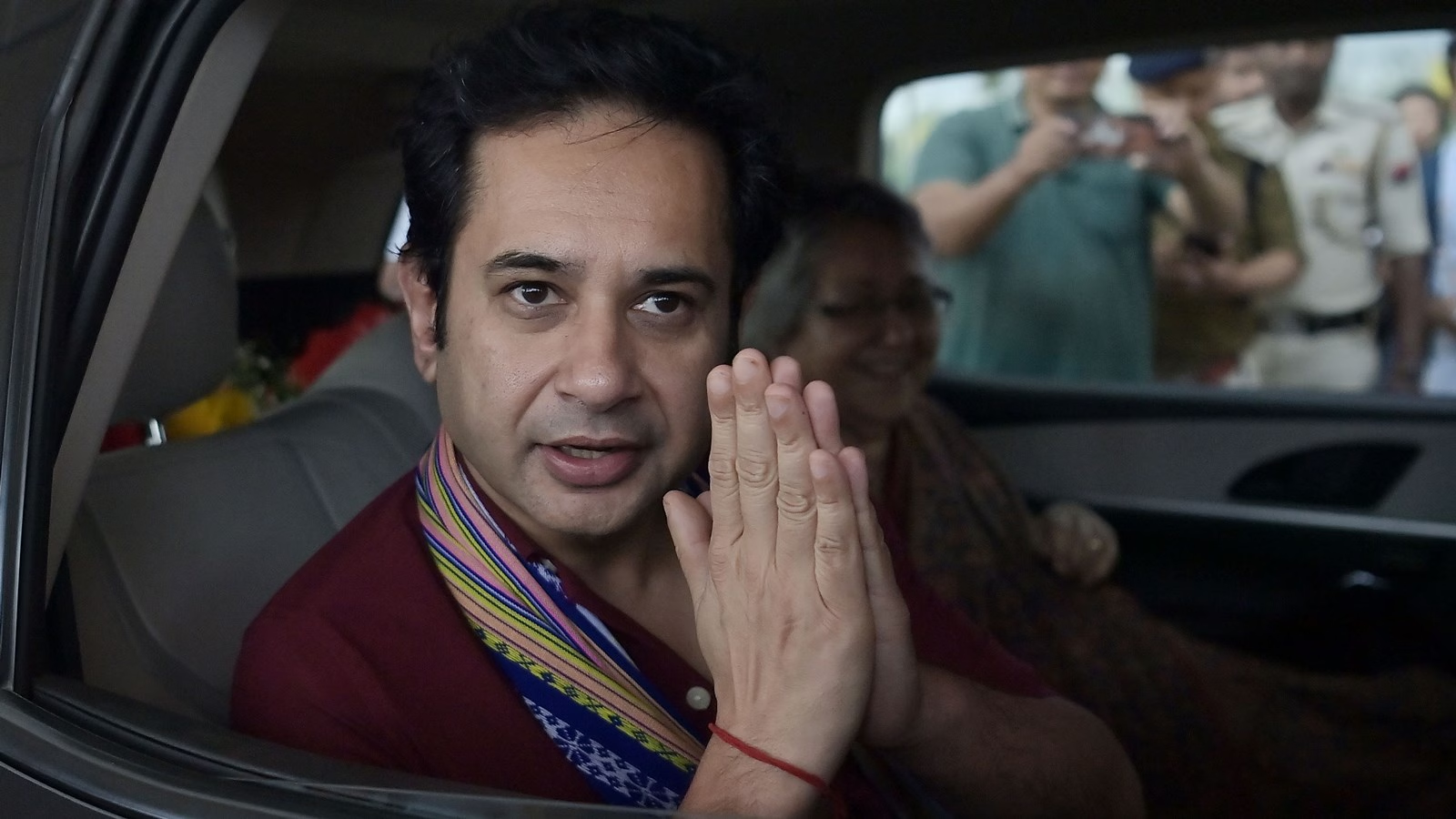




















































Pradyot Kishore Debbarma, the founder of Tripura’s indigenous-focused political party Tipra Motha, has made a bold appeal to the people of the state—both tribals and non-tribals—to unite in combating illegal immigration, which he claims is a growing threat to national integrity. In a recent audio message shared with supporters and the public, Debbarma alleged that illegal migrants from Bangladesh have been entering India and quietly assimilating by acquiring government-issued identity documents such as Aadhaar cards.
“Bangladesh has never truly been a friend of ours,” said Debbarma, in a statement that is likely to stir political and diplomatic discussions. He added, “During the 1980s, 1990s, and early 2000s, our Tiprasa youth were offered arms, camps, and support—by Bangladesh. Today, since the political shift in Bangladesh following the departure of Sheikh Hasina, that country is once again fostering anti-India sentiment.”
The former royal scion and influential tribal leader accused illegal Bangladeshi immigrants of altering their identities to gain legal residence status, not only in Tripura but across multiple Indian states including Assam, Bihar, Uttar Pradesh, and Maharashtra. Debbarma emphasized that his comments are not directed against the non-tribal communities but against those he called “infiltrators” who pose a long-term threat to India’s demographic and national security.
“When I speak against illegal Bangladeshis, I am not targeting you, my non-tribal brothers and sisters. I am speaking against those who cross the border and try to weaken the foundation of our country,” Debbarma said. “Tiprasa alone cannot fight this battle. I need everyone—regardless of ethnicity or background—to stand united.”
He stressed that this was not a political campaign but a civilizational struggle aimed at preserving the identity, land, and future of the region’s indigenous people and broader Indian society. “This is not about elections or parties. It’s about saving our next generation,” he stated.
Debbarma also raised concerns over the credibility of electoral rolls in Tripura and other Northeastern states. Referring to a recent report by a national television network, he noted that the Election Commission of India (ECI) had conducted a special revision of electoral rolls in Bihar, where it discovered that a significant number of illegal migrants from Bangladesh and Myanmar had managed to register as voters.
He questioned why similar attention was not being given to the Northeast. “Why is Bihar treated with urgency but not the Northeast? Are we not also citizens of India?” he wrote on social media, expressing frustration at what he sees as institutional apathy.
He called on Tipra Motha MLAs to formally petition the Election Commission and demand similar voter roll scrutiny in Tripura. He also urged citizens across the Northeastern region to push their respective regional parties to demand greater vigilance and transparency in voter registration processes.
This is not the first time Debbarma has voiced strong opinions on the issue. Over the years, he has repeatedly warned of demographic changes in Tripura, where the tribal population has become a minority due to decades of migration. His latest remarks appear to signal a renewed political strategy centered around indigenous rights, national security, and administrative accountability.
The Tipra Motha leader’s comments are expected to spark a fresh debate over the handling of illegal immigration in India, especially in border states like Tripura that share porous boundaries with neighboring countries. While his critics may view the statements as politically charged, supporters argue that the warnings are grounded in long-standing regional concerns that have often been ignored by the national political establishment.