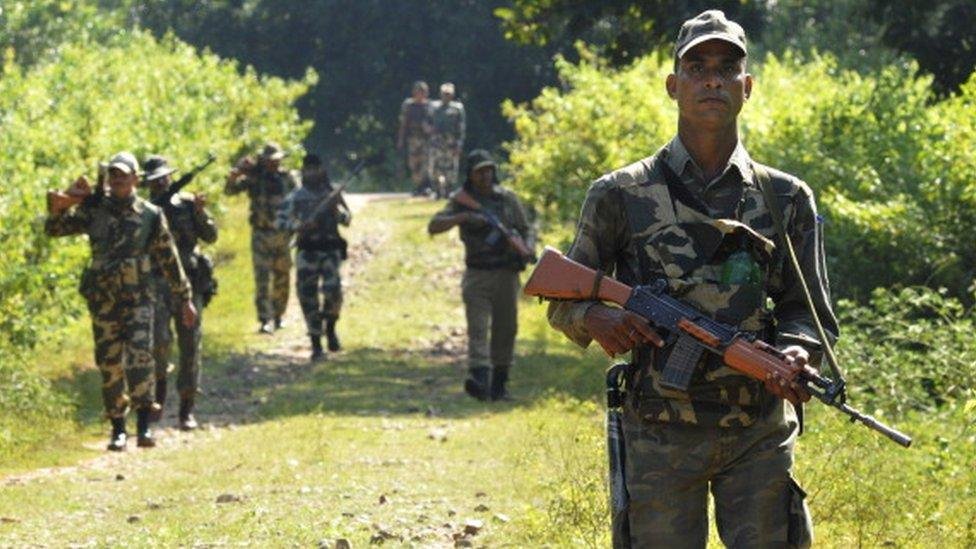
























































Jharkhand’s security forces have intensified their anti-insurgency operations in 2025, targeting Maoist rebel groups across the state. Between January and June, law enforcement agencies have eliminated 17 Maoists — including key regional leaders — and arrested 197 individuals connected to various banned extremist organizations, according to data released by the Jharkhand Police on Friday.
This sweeping crackdown marks one of the most assertive counterinsurgency drives in recent years. Among those apprehended are high-profile leaders from groups like the Communist Party of India (Maoist), the Tritiya Sammelan Prastuti Committee (TSPC), the People’s Liberation Front of India (PLFI), and the Jharkhand Jan Mukti Parishad (JJMP).
Two of the most significant arrests include Aakraman Ganjhu, a regional committee member of TSPC, and Ranvijay Mahato, a senior CPI (Maoist) operative. Both carried bounties of ₹15 lakh each and were considered major players in the Maoist network operating in central and eastern Jharkhand. Police officials said these arrests represent a major blow to insurgent planning and leadership capabilities in the region.
Inspector General of Police (Operations), Michael Raj, confirmed that at least 10 of the 17 killed Maoists were neutralized during operations in Bokaro district alone — a known hotspot for left-wing extremism. These operations were conducted jointly by state police, CRPF units, and elite anti-Naxal forces.
“Maoists have long held ground in Jharkhand’s interior regions, but this year has seen significant setbacks for their leadership structure,” Raj told reporters. “Our strategy combines relentless ground-level operations with community outreach and surrender policies.”
Currently, 55 Maoist operatives remain on the state’s wanted list. Among them, four top leaders carry rewards of ₹1 crore each, while others range from ₹25 lakh down to ₹1 lakh. About 80 percent of these fugitives are linked to the CPI (Maoist), with the rest associated with smaller but violent factions such as TPC, TSPC, PLFI, and JJMP.
Over the past six months, 10 Maoist cadres have surrendered, choosing rehabilitation over continued conflict. Police say their surrender was facilitated through the state government’s policy to offer reintegration, financial support, and vocational training to former insurgents.
The crackdown has also yielded a significant haul of weapons and ammunition. Authorities seized 113 firearms, including AK-series rifles, 8,500 rounds of ammunition, and more than 176 kilograms of explosive materials — indicating the groups’ continued intent to launch attacks despite sustained police pressure.
The state’s anti-extremism strategy includes not just law enforcement action but also long-term development goals in remote regions. Government officials have stated that addressing unemployment, poor infrastructure, and tribal marginalization are crucial to ending Maoist recruitment in the long run.
“This is not just a war fought with guns,” a senior intelligence officer told reporters on condition of anonymity. “It’s also a fight for hearts and minds. Our message to those still holding arms is clear: surrender, and you’ll have a chance at a new life. Continue violence, and the state will not relent.”
Jharkhand, long considered one of India’s most affected states by left-wing extremism, has been a focal point of national security policy for decades. While incidents of Maoist violence have declined nationally, pockets of resistance remain, particularly in mineral-rich and forested belts where state presence is weak.
The Ministry of Home Affairs has expressed satisfaction with the current momentum of anti-Naxal operations and reiterated its commitment to supporting state governments with paramilitary forces, intelligence, and financial assistance under the Security Related Expenditure (SRE) scheme.
As Jharkhand continues to push deeper into Maoist strongholds, the question remains whether this momentum can be maintained — and whether development and reconciliation efforts will match the scale of the military campaign.