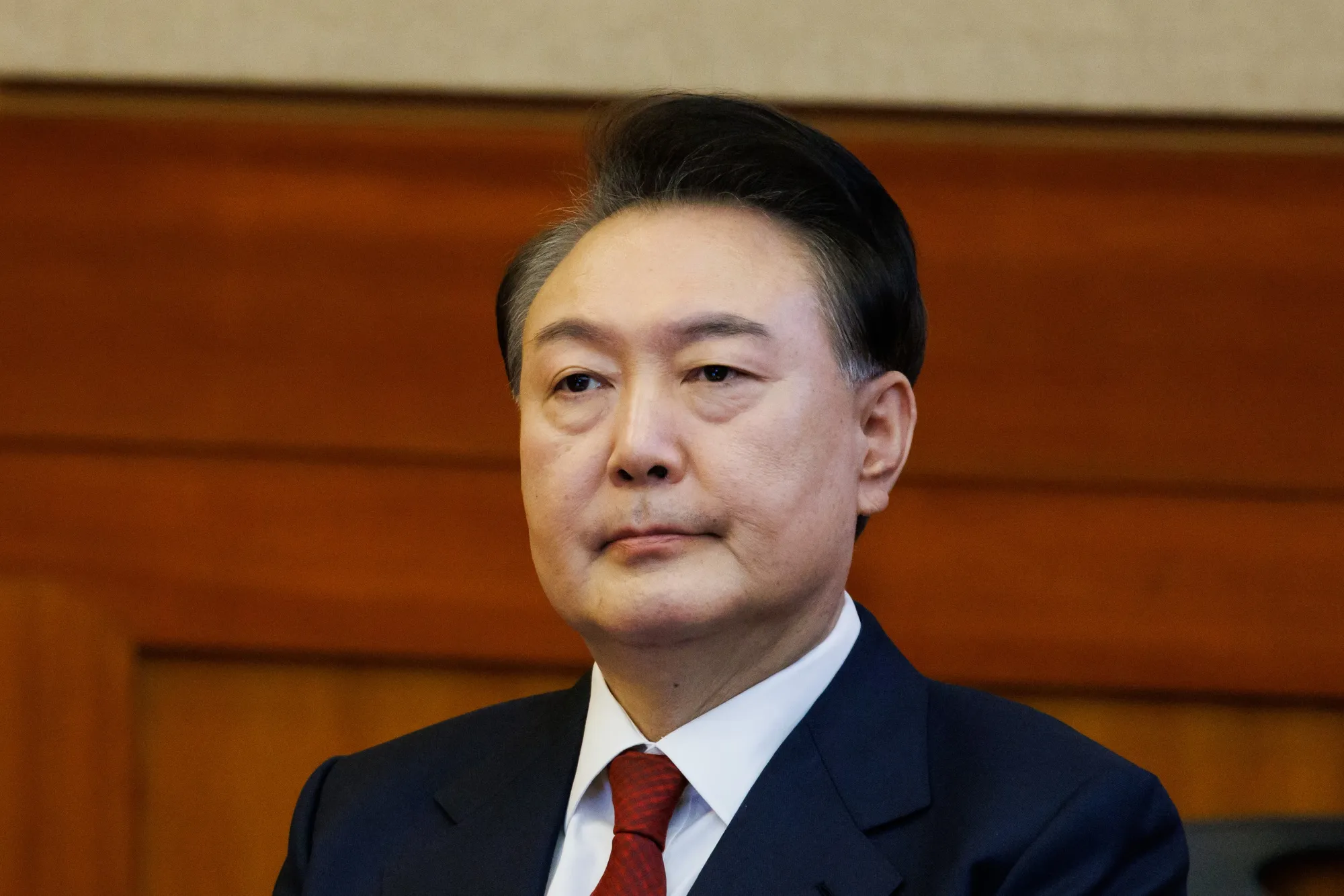






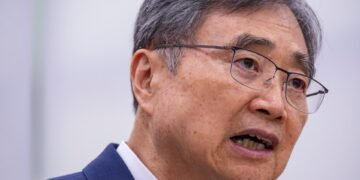

























A South Korean court has rejected former President Yoon Suk Yeol’s appeal to be released from custody, solidifying his ongoing detention over a controversial failed bid to impose martial law. The Seoul Central District Court delivered the decision on Friday, following an hours-long closed-door hearing earlier in the day.
The court found no legal basis to overturn the arrest, citing sufficient grounds for continued detention. “After reviewing the suspect’s statements and all case materials, the court has determined that the request lacks merit and is therefore dismissed,” the court bench declared.
Yoon, who was arrested less than a week ago, had petitioned for his release on Wednesday, claiming the charges against him are either redundant or lack substantiation. He was taken into custody at the Seoul Detention Center in Uiwang, south of the capital, under serious accusations related to a martial law conspiracy dating back to December.
At the heart of the controversy are five core charges, including alleged insurrection, abuse of power, fabricating official documents, and infringing on the constitutional rights of cabinet members. Prosecutors claim that Yoon drafted and circulated an unauthorized martial law plan during his presidency in a bid to extend his hold on power amid mounting political pressure.
During Friday’s hearing, Yoon’s legal team pushed back firmly, arguing that the core allegations are already covered under the broader charge of insurrection for which Yoon is currently on trial. His attorneys further asserted that he poses no flight risk or threat to evidence preservation. They emphasized his deteriorating health as a reason for release, citing liver complications and limited mobility.
“His liver is in poor condition, and he provided medical documentation to support this. He also personally explained the physical difficulties he’s facing,” said Yoo Jung-hwa, one of Yoon’s defense attorneys, following the hearing.
Nonetheless, the prosecution countered that the gravity of the crimes warranted continued detention. The special counsel, led by Cho Eun-suk, highlighted concerns that Yoon could attempt to manipulate witnesses or interfere with ongoing investigations.
Yoon arrived at the court under tight security shortly before 9 a.m., avoiding direct interaction with the media. After nearly six hours of legal debate, he was returned to the detention center, where he is expected to remain while the initial 10-day custody period continues. Notably, the time consumed by the review process does not count toward this detention window.
The special counsel now faces a critical decision: whether to seek a new court order to compel Yoon to attend questioning sessions or move forward with formal indictment in absentia. Since his detention, Yoon has repeatedly refused to cooperate with prosecutors and has boycotted his own trial proceedings, demanding the removal of the special counsel team from the case.
This marks the second time Yoon has been arrested in connection to the case. He was first detained in January but was released in March after a court accepted his appeal for dismissal. The renewed arrest, however, underscores the mounting legal pressure surrounding the former leader and his contentious tenure.
Political observers note that this latest development further intensifies an already polarized political climate in South Korea. Public opinion remains deeply divided, with some viewing the legal proceedings as overdue accountability and others perceiving them as politically motivated retribution.
As the special counsel inches closer to a decision on whether to indict Yoon formally, the case continues to cast a long shadow over the nation’s political landscape—raising critical questions about the balance between justice, power, and the rule of law in post-presidency South Korea.