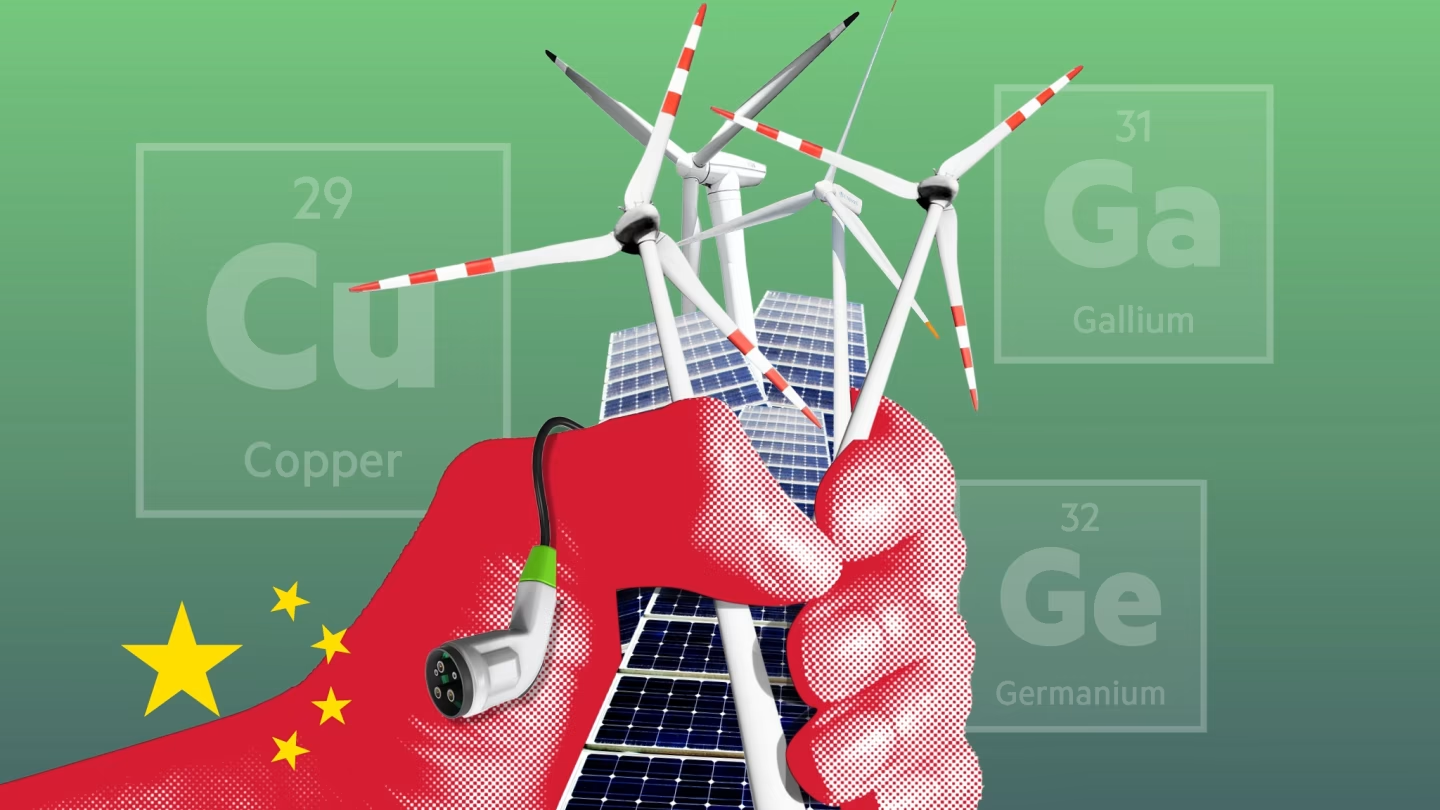





























































China’s rapid progress in green and low-carbon technology innovation is accelerating the global transition toward sustainability, according to new data released by the China National Intellectual Property Administration (CNIPA). During the ongoing 14th Five-Year Plan (2021–2025), the country has demonstrated unprecedented momentum in patent activity, particularly in clean energy and environmental protection technologies.
In 2024 alone, China granted 53,000 invention patents in green and low-carbon sectors—double the number recorded in 2020. This reflects an impressive average annual growth rate of 19.2 percent, said Liang Xinxin, a senior official from CNIPA, during a press conference held Thursday to highlight recent achievements in intellectual property.
Liang emphasized that China’s surge in green innovation not only serves its own environmental and economic goals but also contributes meaningfully to global climate action. The country’s efforts are closely aligned with international sustainability frameworks, including the Paris Agreement and the United Nations Sustainable Development Goals.
The clean energy and energy storage sectors emerged as two of the fastest-growing segments in 2024. Invention patent authorizations in clean energy rose 34.9 percent, while patents in energy storage technologies increased 32.8 percent year-on-year. These growth rates were the highest among all categories tracked under green technology, underscoring China’s leadership in renewable energy and smart grid development.
Several Chinese companies are playing a central role in this green technology boom. In 2024, four Chinese enterprises ranked among the world’s top 10 entities in terms of green and low-carbon invention patents. These included state-owned giants such as State Grid Corporation of China, China Huaneng Group, and China Southern Power Grid, as well as the private sector leader Contemporary Amperex Technology Co., Limited (CATL), a major global supplier of electric vehicle batteries.
China’s green innovation is also gaining traction on the global stage through increased participation in international IP frameworks. The country filed 6,356 Patent Cooperation Treaty (PCT) applications related to green and low-carbon technologies in 2024, representing a 130 percent increase from 2020. This marks the fourth consecutive year China has maintained its top global ranking in this domain, highlighting its growing influence in shaping the future of sustainable technologies.
Liang further noted that Chinese companies have submitted more than 12,000 green technology solutions to WIPO GREEN, a global platform under the World Intellectual Property Organization designed to connect providers and users of eco-friendly technologies. These contributions are aimed at helping countries around the world adopt innovative solutions to reduce carbon emissions and protect natural ecosystems.
Experts suggest that China’s strong IP portfolio in green innovation gives it a strategic advantage in the global race to decarbonize economies. By securing patents in key emerging sectors—such as hydrogen power, battery recycling, and carbon capture—China not only protects its technological gains but also positions itself as a dominant exporter of green know-how.
The CNIPA said it will continue to bolster this momentum by enhancing patent examination procedures, tightening IP protections in environmental sectors, and promoting faster, more efficient authorization of green technology patents. It also plans to expand its analytical and statistical oversight of green and low-carbon tech trends, with the goal of guiding research and investment toward areas with the greatest environmental impact.
Looking ahead, Liang said the administration is working to improve standards for evaluating green innovation and to support enterprises in scaling up their patented solutions for real-world deployment. This includes better linkage between IP systems and climate finance mechanisms to help commercialize green technologies in both domestic and international markets.
China’s push to lead in green and low-carbon innovation comes at a critical juncture. As global temperatures continue to rise and pressure mounts for countries to meet their climate pledges, technological innovation will be the key to balancing economic growth with environmental responsibility. With robust IP systems and a fast-growing green tech ecosystem, China appears poised to play a defining role in shaping a more sustainable future.