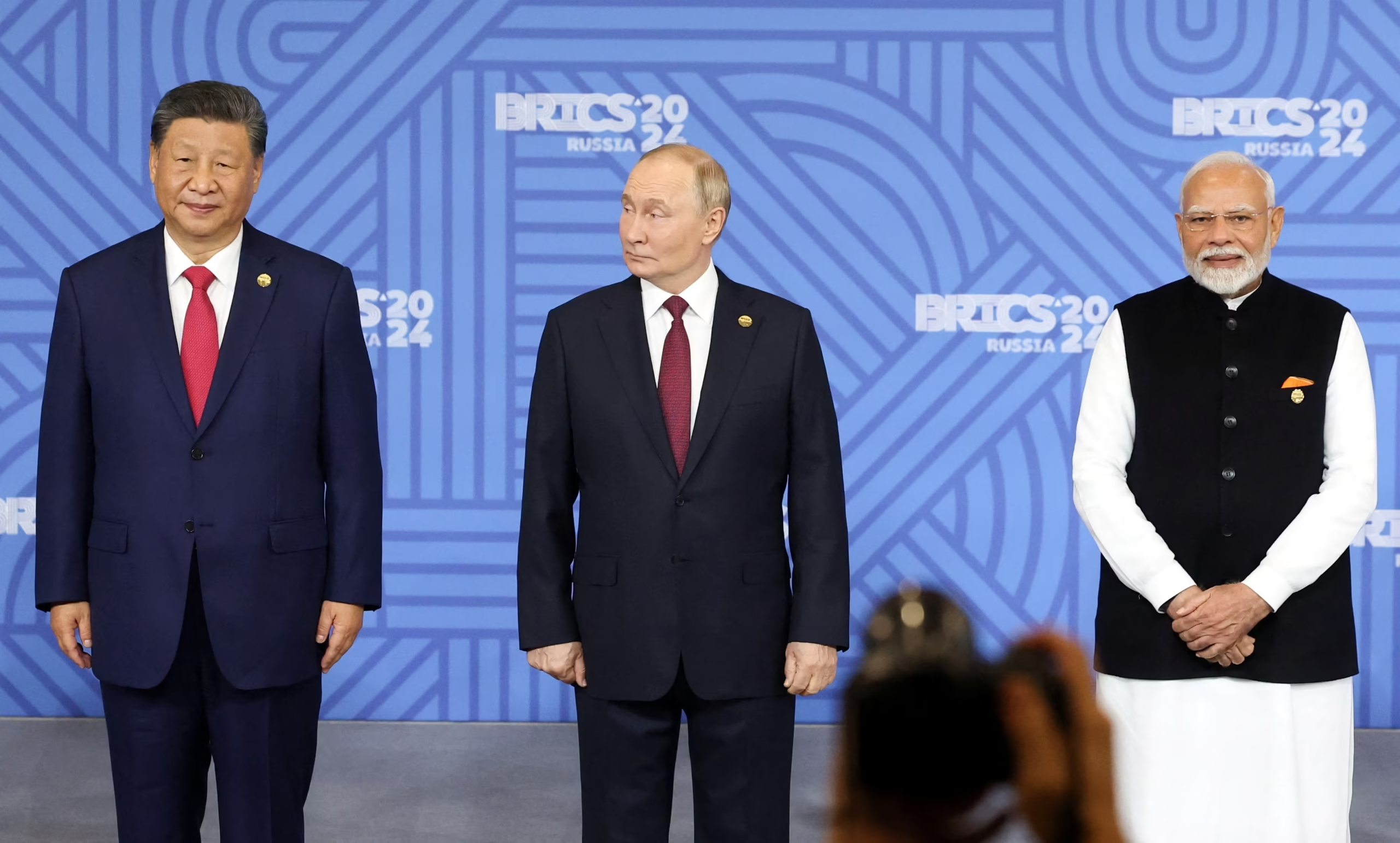



















































China has expressed openness to resuming high-level trilateral cooperation with Russia and India, affirming that such engagement serves the shared interests of all three nations and contributes meaningfully to regional and global peace and stability. The statement comes amid ongoing discussions about reviving the long-dormant Russia-India-China (RIC) trilateral format, which has historically functioned as a platform for dialogue on geopolitical coordination, security, and development.
Speaking at a regular press briefing on Thursday, Chinese Foreign Ministry spokesperson Lin Jian confirmed that Beijing is willing to remain in communication with Moscow and New Delhi to promote and advance trilateral cooperation under the RIC framework.
“Cooperation among China, Russia, and India is consistent with the core interests of the three countries,” Lin said. “It contributes to regional and global peace, security, stability, and progress. China is ready to maintain dialogue with Russia and India on this matter.”
Lin’s remarks followed recent comments from Russian Deputy Foreign Minister Andrei Rudenko, who told Russian media outlet Izvestia that discussions about reviving the RIC format have been raised in negotiations with both China and India. “The topic of the trilateral cooperation format appears in our negotiations with both of them,” Rudenko said.
The RIC format was first launched in the early 2000s as a diplomatic initiative aimed at fostering strategic trust among the three major Eurasian powers. Though it has functioned mostly as a consultative mechanism, it has periodically led to coordinated stances on issues such as terrorism, global governance reforms, and multipolarity in international relations.
In recent years, however, the format has faced challenges due to strained bilateral ties—particularly between China and India following the 2020 border clashes in the Galwan Valley. The geopolitical fallout temporarily froze high-level trilateral meetings, making Rudenko’s comments and Beijing’s response a notable development in regional diplomacy.
Analysts view the possible revival of the RIC dialogue as part of a broader shift in global alignments, especially amid rising tensions between the West and both Russia and China. With Russia under Western sanctions over its ongoing conflict in Ukraine and China facing increasing strategic competition with the United States, both countries have emphasized the importance of fostering non-Western multilateral platforms.
India, while maintaining a non-aligned posture and deepening ties with Western countries through forums like the Quad, has also consistently signaled interest in multipolar engagement. As a member of multiple groupings such as BRICS, the Shanghai Cooperation Organization (SCO), and G20, India remains a key interlocutor in forums that include both China and Russia.
Reviving the RIC dialogue could offer all three nations a chance to explore common ground on pressing issues, including regional security in Asia, the future of global governance, energy security, and economic cooperation in the Global South. It may also provide a diplomatic channel for managing bilateral tensions in a more constructive, multilateral setting.
From Beijing’s perspective, reinvigorating the RIC format would not only demonstrate China’s commitment to dialogue-based diplomacy but also reaffirm its strategic partnership with Russia and its desire to stabilize relations with India. For Moscow, the platform is a way to demonstrate continued international engagement despite diplomatic isolation from the West. For New Delhi, participating in a trilateral dialogue with China and Russia could enhance its leverage and reinforce its strategic autonomy on the global stage.
While concrete steps toward resuming high-level trilateral meetings have yet to be announced, the current diplomatic signals from all three capitals suggest a growing interest in restoring the RIC mechanism as a stabilizing force in a rapidly changing international landscape.
As geopolitical competition intensifies and the world becomes increasingly multipolar, the revival of the China-Russia-India trilateral framework could play a pivotal role in shaping a more balanced and cooperative regional order—if the three sides can successfully manage their differences and find common purpose in a shared vision for peace and development.