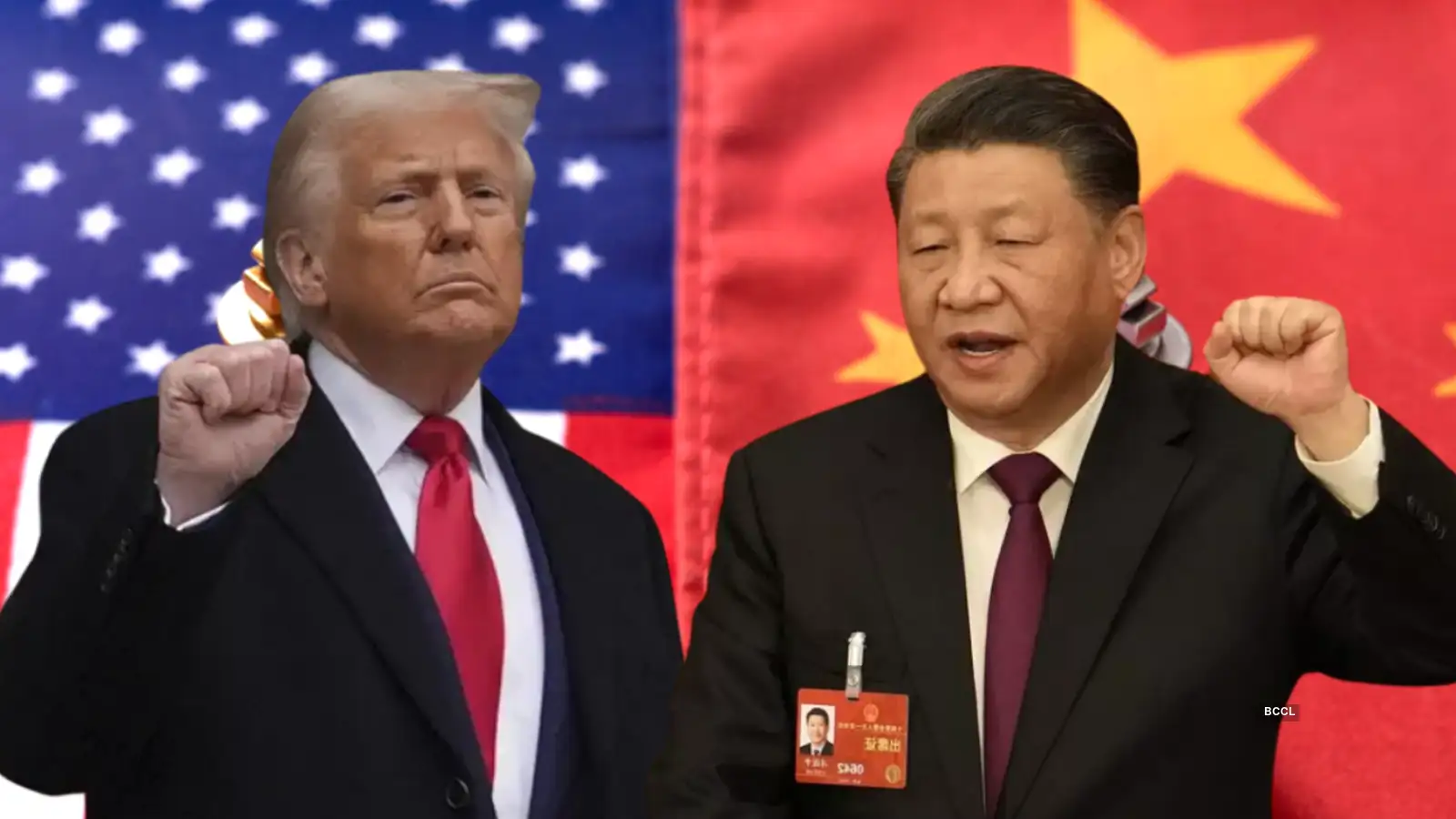

















































The Chinese government has issued a strong response to a recent report by U.S. Senate Democrats that frames China as a growing global threat and calls for renewed American efforts to counter Beijing’s influence on the world stage. In a statement made during a regular press briefing on Friday, Chinese Foreign Ministry spokesperson Lin Jian condemned the report’s tone and intentions, accusing it of perpetuating a Cold War mindset and promoting confrontation rather than cooperation.
The report, released Monday by Democratic members of the U.S. Senate Foreign Relations Committee, criticised the diplomatic posture of the Trump administration, claiming it had allowed China to expand its international influence unchecked. The document urged U.S. policymakers to urgently restore and modernise America’s diplomatic and strategic tools to compete more effectively with Beijing. However, Chinese officials view the report not as a policy blueprint, but as a political statement driven by outdated thinking.
Lin Jian rejected the premise of the report outright, stating that it is “filled with Cold War mentality” and designed to hype up the so-called “China threat” in order to justify U.S. efforts to contain and suppress China’s development. He emphasized that such rhetoric does not serve the interests of peace or global cooperation and instead fuels division and distrust between two of the world’s most powerful nations.
“China adheres to an independent foreign policy of peace,” Lin said. “We do not seek hegemony, nor do we compete with any country for spheres of influence. China consistently aims to act as a positive, stabilizing, and constructive force in international affairs.”
China’s foreign ministry has consistently reiterated that it favors dialogue and multilateralism over confrontation, and Lin reiterated Beijing’s call for American officials to approach China with objectivity and rationality. He urged U.S. lawmakers to abandon efforts to distort China’s intentions and instead contribute to a healthier and more sustainable bilateral relationship.
This latest exchange comes amid an already tense backdrop in China-U.S. relations. The two nations remain at odds over a wide array of issues, including trade, technology, military presence in the Asia-Pacific, and Taiwan. Despite recent high-level diplomatic engagements aimed at reducing tensions, such as meetings between U.S. and Chinese officials in Beijing, mutual suspicion continues to hinder progress.
The language in the Senate Democrats’ report echoes growing sentiment in Washington that the U.S. must compete more aggressively with China on the global stage—not only in military and economic arenas but also in diplomatic influence, technological leadership, and governance models. In response, Chinese officials have frequently warned that such framing reduces complex global issues to a simplistic power rivalry, which is counterproductive to solving shared challenges like climate change, economic recovery, and pandemic preparedness.
Lin’s remarks serve as a broader rebuke to the U.S. political establishment’s increasingly bipartisan consensus around “strategic competition” with China. Chinese authorities argue that framing every Chinese action as a geopolitical maneuver feeds into a cycle of provocation and retaliation that undermines the stability of the international system.
“Smearing and attacking China will not solve America’s internal problems,” Lin added, urging U.S. policymakers to stop viewing the world through a lens of ideological rivalry. Instead, he said, both sides should prioritize dialogue, cooperation, and mutual respect.
Observers note that the tension reflected in the exchange is emblematic of a broader trend in international relations, where major powers are reassessing their global roles amid shifting economic and political dynamics. While Washington seeks to shore up alliances and reassert leadership in global institutions, Beijing is steadily expanding its own global influence through trade partnerships, investment initiatives like the Belt and Road, and multilateral forums.
Despite the rhetoric, both countries remain deeply intertwined economically, and analysts believe that a complete decoupling is neither feasible nor desirable for either side. Still, the growing trust deficit continues to cast a long shadow over bilateral ties.
China’s response to the Senate report signals that it will continue to push back firmly against any narrative that paints it as an adversary or a destabilizing force. Whether that resistance results in constructive dialogue or further confrontation will depend largely on the willingness of both sides to recalibrate their approach.